
Pakistan’s prime minister credits the US president with averting further escalation during last year’s military confrontation, while renewing Islamabad’s demand for a settlement on Kashmir. India rejects the claim of third-party mediation and maintains that Jammu and Kashmir is an integral part of the country.
Pakistan Prime Minister Shehbaz Sharif used his address to the 81st United Nations General Assembly on Friday, September 25, to raise the Kashmir dispute and thank US President Donald Trump for what he described as a timely intervention during the 2025 military conflict between India and Pakistan.
In his roughly 23-minute speech, Sharif praised Trump’s leadership, claiming that American intervention had prevented a wider conflict between the nuclear-armed neighbours and saved hundreds of millions of lives in South Asia.
The address placed Kashmir and regional security at the centre of Pakistan’s diplomatic message, as tensions between New Delhi and Islamabad continue following last year’s military confrontation.
India has consistently rejected Pakistan’s claims over Kashmir at international forums and has denied that any third party mediated the ceasefire in May 2025.
Sharif credits Trump for preventing escalation
Sharif thanked Trump for his “resolute and visionary leadership”, crediting the American president’s intervention with helping halt the conflict between India and Pakistan. The Pakistani prime minister argued that the intervention prevented the confrontation from escalating into a much wider war.
Trump has repeatedly claimed credit for helping secure the ceasefire, including in his own address to the UN General Assembly earlier this week. New Delhi, however, has consistently maintained that the cessation of hostilities was achieved through direct military communication between India and Pakistan, without third-party mediation.
The competing accounts reflect a continuing diplomatic disagreement over the circumstances that brought the May 2025 fighting to an end. Sharif’s remarks also underline Pakistan’s efforts to strengthen its diplomatic relationship with Washington and acknowledge Trump’s role in regional affairs.
Kashmir returns to the centre of the UN debate
The Kashmir dispute was a major component of Sharif’s address. The Pakistani leader argued that a just and fair settlement of the Kashmir issue was necessary to prevent another military confrontation between the two countries. He said the events of 2025 demonstrated the dangers of allowing longstanding disputes to remain unresolved and called for renewed international attention to the issue.
India has repeatedly rejected Pakistan’s assertions on Kashmir, maintaining that Jammu and Kashmir is an integral and inalienable part of India. New Delhi also regards the dispute as a bilateral matter and opposes attempts to internationalise it.
The disagreement has remained a defining feature of India-Pakistan relations since the partition of British India in 1947. Both countries claim the region in full but administer separate portions of the territory. Sharif’s decision to raise Kashmir at the UNGA continues Pakistan’s longstanding diplomatic strategy of using international forums to press its position.
Background: The 2025 India-Pakistan conflict
The military confrontation between India and Pakistan in May 2025 followed the April 22 Pahalgam terrorist attack in Jammu and Kashmir, which killed 26 civilians. India launched Operation Sindoor on May 7, targeting what it described as terrorist infrastructure in Pakistan and Pakistan-administered Kashmir.
Pakistan responded with military action, and the confrontation escalated into exchanges involving missiles, drones and air strikes. The fighting raised concerns about the possibility of a wider conflict between two nuclear-armed countries.
On May 10, India and Pakistan announced an understanding to halt military action. Trump subsequently claimed that US diplomatic intervention had helped bring about the ceasefire, a claim repeatedly disputed by India. The episode remains central to the diplomatic positions of both countries, with Islamabad emphasising the importance of international mediation and New Delhi insisting on bilateral engagement.
Indus Waters Treaty also remains a point of contention
Sharif’s remarks come amid continuing tensions over the Indus Waters Treaty, the water-sharing agreement between India and Pakistan signed in 1960. Following the Pahalgam attack, India announced that the treaty would be held in abeyance until Pakistan credibly and irrevocably ended its support for cross-border terrorism.
Pakistan has opposed India’s position and has continued to call for the treaty to be respected. The dispute over the treaty has added another dimension to the already strained relationship between the two countries, particularly given the importance of the Indus river system to agriculture and water security in Pakistan. The treaty’s future remains a major bilateral issue, with potential consequences for regional water management and diplomatic relations.
India prepares its response
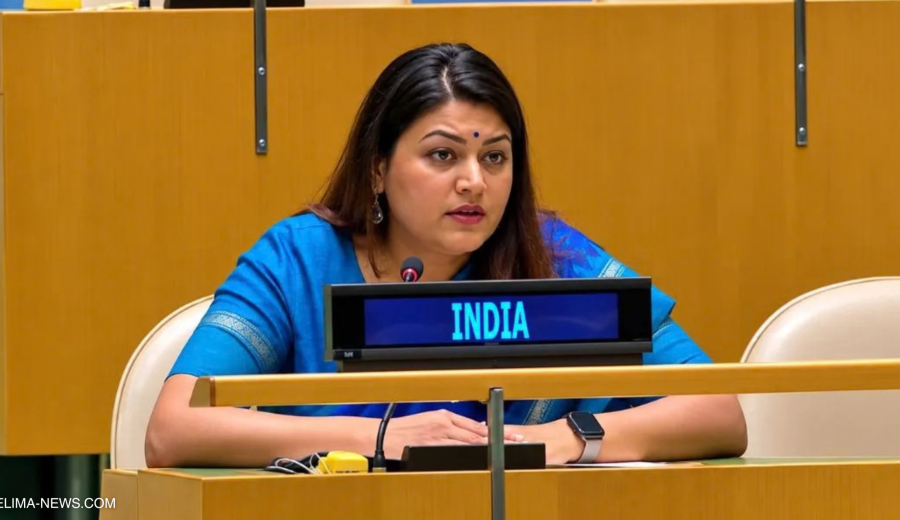
India is expected to exercise its Right of Reply to Sharif’s address through a diplomat from its Permanent Mission to the United Nations. New Delhi has traditionally used the right of reply to respond to Pakistani statements on Kashmir and other bilateral disputes at the General Assembly.
India’s position is that Jammu and Kashmir is an integral part of the country and that Pakistan’s allegations do not alter its territorial claims. The response is likely to reiterate India’s objections to Pakistan’s efforts to raise the dispute in international forums and its position on cross-border terrorism.
A familiar dispute at a critical diplomatic moment
Sharif’s address demonstrates that Kashmir remains a central issue in Pakistan’s foreign policy, even as both countries face broader regional security challenges. By thanking Trump, the Pakistani prime minister has also sought to reinforce Washington’s role in preventing further escalation and maintaining regional stability.
However, the conflicting accounts of the 2025 ceasefire highlight the continuing differences between New Delhi and Islamabad over mediation, security and the status of Kashmir. The UN General Assembly provides both countries with an international platform to present their positions, but it does not itself resolve their bilateral disputes.
For now, the renewed exchange of claims at the UN underscores how the consequences of the 2025 conflict continue to shape relations between India and Pakistan, with Kashmir and the Indus Waters Treaty remaining among the most sensitive issues in their diplomatic relationship.