The US Supreme Court began its new term on 5 October with arguments in a climate liability suit against oil companies, and its calendar already includes cases on assault-style rifles, Catholic preschools and Trump administration deportation policies.
The US Supreme Court opened its 2026 term on Monday, 5 October, with a docket that includes cases on religious liberty, guns, immigration and the environment, according to a report by the Catholic outlet Angelus News, which draws on the US Conference of Catholic Bishops and legal advocates. On the first day the court heard a climate change liability case brought against oil companies and a disability benefits case concerning incarcerated veterans.
The religious liberty cases are the main focus of the Angelus report. St. Mary Catholic Parish v. Roy, set for argument on 3 November, involves Catholic preschools that were excluded from Colorado’s universal pre-kindergarten programme because of their admissions policies, which follow Catholic teaching. The question is whether faith-based schools can take part in state-funded programmes while keeping those policies. Mark Rienzi, who is quoted in the report, said that Colorado’s definition of universal excludes all the Catholic schools.
A second case, Missionaries of St. John the Baptist v. Frederic, concerns a Kentucky zoning dispute that prevented a religious organisation from building a Marian shrine on its own land. It tests the federal protections for religious land use, and the argument date had not been set in the report.
The Second Amendment case is Viramontes v. Cook County, set for argument on 2 December, which challenges local ordinances that ban AR-15s and similar semiautomatic rifles. The bishops’ conference is quoted as stressing the traditional authority of political communities to regulate weapons. The report is a summary of one side’s view, and the details of the ordinances and the lower court rulings are not given.
The immigration cases include a challenge to the Trump administration’s third-country deportation policies and a case on mandatory detention during deportation proceedings, according to the report. It does not give the case names or dates, so they are listed only in outline here.
The new term follows a major one. A search summary of the court’s previous term says that in Learning Resources v. Trump the court ruled 6-3 on 20 February 2026 that the International Emergency Economic Powers Act does not authorise the president to impose tariffs, after argument on 5 November 2025. In Trump v. Barbara it struck down the president’s executive order on birthright citizenship.
The midterm elections on 3 November also loom over the court. An ABC News headline from the opening of the term says that the court reconvened with a new wave of Trump cases as the election approaches, and a search summary says that the court is expected to face election-related litigation, but the details of those cases were not available in the sources reviewed.
Delima News will follow the arguments as they are heard, starting with the religious liberty case on 3 November and the AR-15 case on 2 December.
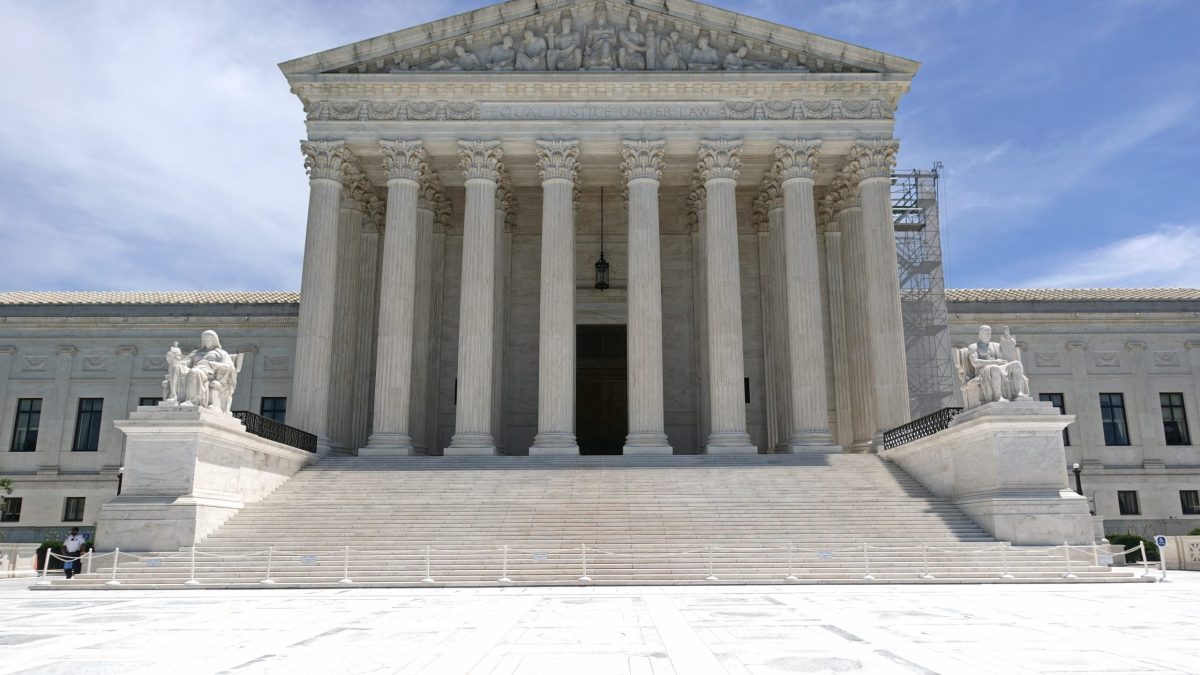
Image: The US Supreme Court building in Washington (file photo). Photo: 颐园居 / Wikimedia Commons (CC BY-SA 4.0)