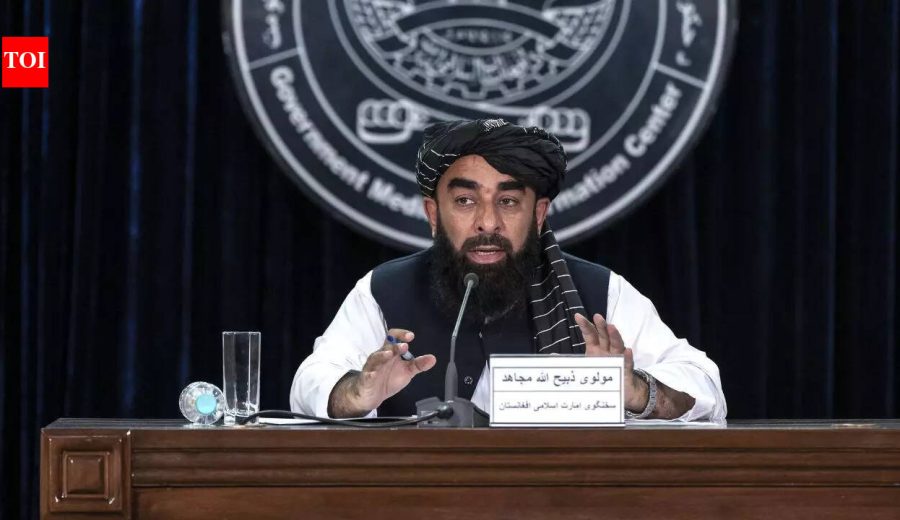
Escalating tensions between the Taliban and Pakistan have intensified following recent airstrikes, reflecting deeper regional instability. The standoff underscores Pakistan’s security challenges and Taliban’s consolidating power in Afghanistan. This conflict has broader implications for South Asian geopolitics and international security.
Cross-border strikes expose the dangerous vacuum left by decades of failed Western intervention in South Asia.
Seventy-three percent of conflict-affected states receive less humanitarian aid per capita than a single European refugee. The Taliban’s vow of retaliation against Pakistan following alleged airstrikes on a Kabul hospital shows how this global neglect breeds regional instability that threatens millions.
Mathematics of abandonment tell a stark story. Afghanistan receives roughly $1.2 billion in humanitarian aid annually for 40 million people. That’s $30 per person per year. The math is sobering. Compare this to Ukraine, which received $100 billion in just two years for a population of 44 million.
Humanitarian Aid and GDP Allocation — Delima News Data
This isn’t about supporting the Taliban. It’s about recognizing how selective global attention creates dangerous power vacuums. When the West withdrew from Afghanistan in 2021, it didn’t just end military engagement. Officials froze $9.5 billion in Afghan central bank reserves and severed most development funding.
Pakistan’s alleged cross-border strikes reveal the predictable consequences. The Taliban, denied legitimacy and resources, has turned to confrontation as governance. Pakistan, struggling with its own $130 billion external debt burden, sees military action as cheaper than diplomatic engagement.
Yet this crisis extends far beyond Afghanistan’s borders. The timing is striking. Just as Pakistan negotiates another IMF bailout package, it’s escalating tensions with its western neighbor. Pakistan spends 4.1 percent of GDP on defense while allocating just 2.8 percent to education and 1.2 percent to health. That is a staggering imbalance.
Demographics tell another sobering story. Afghanistan’s median age is 18.4 years. Pakistan’s is 22.8 years. These are young populations that need jobs, education, and opportunity. Instead, they get cross-border artillery exchanges and frozen bank accounts.
Western powers spent $2.3 trillion over two decades in Afghanistan but invested virtually nothing in regional economic integration. They built military bases instead of trade corridors. They trained armies rather than teachers. The policy failure runs deeper than military withdrawal.
Climate change adds another layer of instability. Afghanistan faces severe drought affecting 25 million people. Pakistan just endured floods that submerged one-third of the country. Both disasters received minimal international climate finance compared to European extreme weather events. Nobody is saying that publicly.
But there’s a path forward that doesn’t require military intervention. The proposed reforms are straightforward. First, release frozen Afghan assets under UN supervision for humanitarian purposes. Second, establish regional development banks that prioritize South-South cooperation over Western conditional lending.
Third, implement actual climate reparations. Rich nations have pledged $100 billion annually for climate action in developing countries but delivered less than half. Afghanistan and Pakistan contribute 0.3 percent of global emissions combined yet bear massive climate costs. The math doesn’t add up.
Taliban-Pakistan tensions won’t be resolved through more airstrikes or diplomatic isolation. For weeks now, this standoff has been building. Young Afghans and Pakistanis need reasons to build rather than fight. Regional stability depends on economic opportunity, not military dominance.
Still, the choice remains clear. We can pursue proactive development assistance or reactive crisis management. The alternative is more hospital bombings — more refugee crises — more regional conflicts that eventually reach global markets and migration routes. The choice isn’t between engagement and isolation.
The Taliban-Pakistan conflict reflects how Western withdrawal without economic support creates regional instability that affects global security. Young populations in both countries need development opportunities, not military confrontation, to prevent broader South Asian chaos.
The Pakistan-Afghanistan border remains a flashpoint for regional tensions amid economic crisis.
Source: Original Report