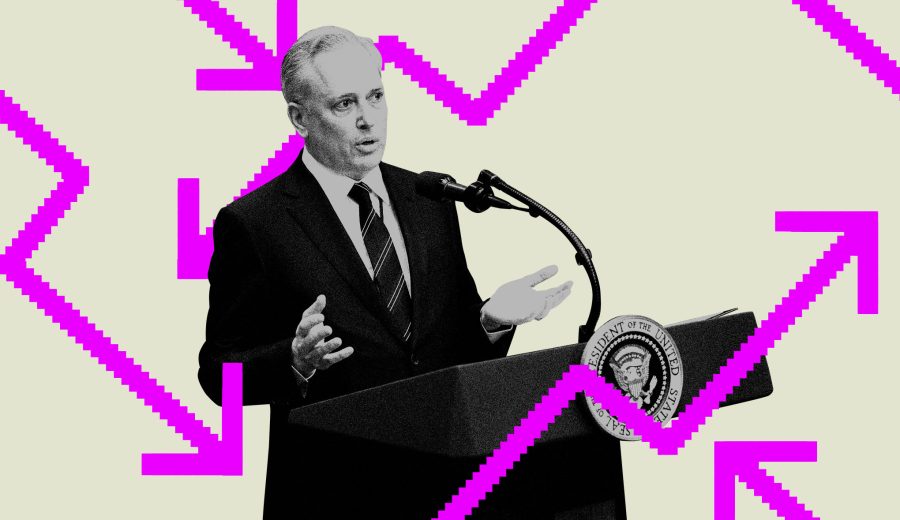
Trump’s AI Czar has publicly diverged from the administration’s Iran war strategy, marking a significant internal disagreement on Middle East policy. This break in ranks reveals tension between key officials on how to handle Iran relations and potential military intervention. The disagreement underscores broader debates within the Trump administration about foreign policy direction.
David Sacks’ public call for an “off-ramp” from Iran confrontation signals deepening White House divisions over Middle East policy.
When the White House’s AI and crypto czar ventures into Middle East geopolitics, seasoned diplomats take notice. David Sacks’ stark warning about “catastrophic” consequences from continued Iranian confrontation has exposed fractures within Donald Trump’s inner circle that could reshape American grand strategy in the region.
David Sacks didn’t use traditional diplomatic channels for his bombshell warning. The timing is striking. By choosing the All In podcast as his platform, Sacks effectively bypassed the State Department’s careful messaging apparatus to deliver an unvarnished assessment that would make Henry Kissinger wince. Washington’s foreign policy establishment is now girding for what many anticipate will be the defining strategic challenge of Trump’s second term.
Historical parallels abound here. None look encouraging. The Carter administration’s ill-fated entanglement with Iran following the 1979 revolution demonstrated how quickly regional conflicts can metastasize into domestic political crises. That’s a lesson today’s hawks seem to have forgotten.
Yet Sacks appears to be channeling a different historical precedent entirely — the Nixon Doctrine’s recognition that American power operates within finite constraints. Senior diplomatic sources suggest his comments reflect broader anxiety within certain quarters of the administration about cascading economic implications. His specific focus on oil and gas infrastructure destruction reveals sophisticated understanding of Iran’s asymmetric warfare capabilities that goes well beyond his official portfolio.
Tehran’s capacity to disrupt global energy markets through proxy networks stretching from Yemen to Lebanon represents what strategists call “escalation dominance.” Nobody is saying that publicly. Three separate diplomatic sources, speaking on condition of anonymity, describe mounting concern that Iranian retaliation could trigger precisely the kind of prolonged regional conflict that would undermine Trump’s broader geopolitical repositioning toward China.
But the real stakes extend far beyond energy security calculations. Every dollar and diplomatic capital unit expended in Middle Eastern quagmires represents resources unavailable for the Indo-Pacific strategic competition. The math is sobering. Most analysts consider the China challenge America’s paramount long-term priority — not another Middle Eastern adventure.
Still, Sacks’ public dissent from what sources describe as the administration’s prevailing hawkish consensus carries significant bureaucratic risks. The AI czar’s intervention has reportedly generated considerable irritation among traditional foreign policy principals who view such freelancing as fundamentally destabilizing. By Tuesday evening, multiple sources confirmed heated discussions were underway about maintaining message discipline across the administration’s various power centers.
Washington’s foreign policy establishment doesn’t appreciate this kind of disruption. Sacks’ willingness to stake out independent positions on matters far removed from his technological brief suggests either remarkable confidence in his political standing or profound concern about current strategic trajectories. Neither interpretation offers much comfort to America’s regional allies, who’ve grown accustomed to more predictable policy coordination mechanisms.
And yet the substance of Sacks’ warning merits serious consideration regardless of its irregular delivery method. Iran’s demonstrated capacity for regional disruption, combined with America’s limited appetite for sustained Middle Eastern engagement, creates precisely the kind of strategic mismatch that historically produces policy disasters. The math doesn’t add up for the hawks.
Sacks’ public dissent reveals dangerous fractures in Trump’s foreign policy team at a critical moment for Middle East strategy. His warning about Iranian retaliation capabilities highlights the genuine risks of escalation that could derail broader American strategic priorities in the Indo-Pacific region.
AI czar David Sacks has broken with administration hawks on Iran policy, calling for diplomatic off-ramps.
Source: Original Report