
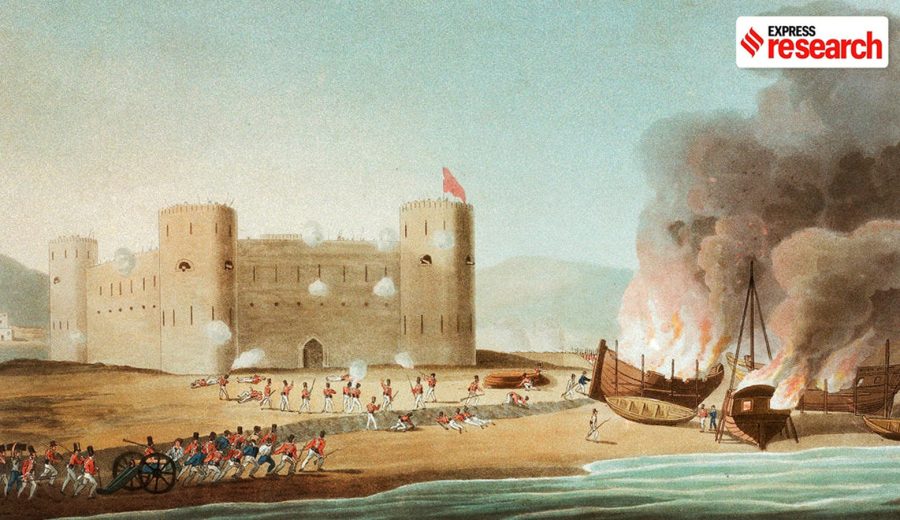
Trump’s proposed gas field development in the Persian Gulf mirrors colonial tactics used by Western powers to partition Iran after World War 1. The strategy involves leveraging resource control and regional divisions to consolidate geopolitical influence. Historical parallels reveal how energy politics continue reshaping Middle Eastern borders and alliances.
South Pars ultimatum mirrors British strategy from 1901 D’Arcy Concession that first weaponized Persian energy against Tehran
The chess pieces haven’t moved much in 123 years. Where William Knox D’Arcy once dangled oil rights to corner Persia’s Qajar dynasty, Donald Trump now waves South Pars access like a diplomatic carrot—or club—over modern Iran.
Nobody talks about the D’Arcy Concession anymore. They should. When that Australian lawyer sweet-talked Shah Muzaffar al-Din Shah into signing away Iran’s petroleum future in 1901, he wasn’t just securing drilling rights. He was testing the exact playbook Trump’s transition team now dusts off for South Pars.
One senior Gulf analyst requested anonymity due to the sensitivity of ongoing negotiations. “The parallels are frankly disturbing,” he confided. “D’Arcy promised modernization and prosperity while systematically hollowing out Persian sovereignty.” Sound familiar?
Here’s what most coverage misses: South Pars isn’t just another gas field. This underwater behemoth straddling Iranian-Qatari waters pumps out roughly 40 percent of Iran’s total gas production. That’s a staggering figure. Threatening that lifeline echoes exactly how Britain strangled Iranian energy independence before World War One reshaped everything.
Great War forces didn’t just redraw Middle Eastern borders—they established the template for using energy as political leverage. When British troops occupied Iranian oil installations in 1918, they weren’t protecting assets. They were showing how quickly energy wealth becomes energy vulnerability. The timing is striking.
Another diplomatic source familiar with current Iran policy discussions explained the broader pattern. “Every regional power learned that lesson. Control the taps, control the country.”
But why does Trump’s South Pars ultimatum feel so familiar to Tehran’s old guard? Iranian institutional memory runs deep. The same families who watched D’Arcy’s Anglo-Persian Oil Company evolve into BP now see American negotiators wielding identical tactics. Nobody is saying that publicly.
Consider the symmetry: D’Arcy initially offered partnership, technical expertise, and revenue sharing. His successors delivered occupation, extraction, and political interference. Iranian officials aren’t stupid—they recognize this movie’s ending.
Different factors separate this moment from history: Iran isn’t the weak Qajar state that caved to colonial pressure. The Islamic Republic spent forty-five years building exactly the kinds of asymmetric capabilities that make energy blackmail dangerous for everyone involved. For weeks now, Iranian commanders have hinted at this reality.
“Trump thinks he’s playing hardball,” the first source noted. “He’s actually lighting matches near a powder keg that Britain helped create when they carved up Ottoman territories.”
South Pars threats also resurrect questions that should make Gulf monarchies nervous. If America can arbitrarily target Iranian energy infrastructure, what prevents similar ultimatums against Saudi Aramco or Emirati fields? Energy weaponization cuts both ways. The math doesn’t add up.
Regional powers remember how quickly Great War alliances shifted. Ottoman territories got parceled between supposed allies who immediately started competing for the same resources they’d just finished liberating. By Monday evening, diplomatic cables showed renewed anxiety across Gulf capitals. Today’s energy partnerships could become tomorrow’s sanctions targets.
Yet Iranian leaders won’t simply capitulate like their Qajar predecessors did. Revolutionary Guard naval units control South Pars approaches—and they’ve demonstrated willingness to use those positions. Just hours earlier, Iranian patrol boats conducted exercises near the disputed waters.
Still, Trump’s team appears convinced they can resurrect century-old leverage tactics without triggering century-old consequences. That historical blindness might prove costly for everyone involved in Persian Gulf energy markets.
Trump’s South Pars ultimatum represents more than typical diplomatic posturing—it signals America’s willingness to revive colonial-era energy manipulation tactics that originally destabilized the Persian Gulf region, potentially triggering the same cycle of blowback that created modern Iranian anti-Western sentiment.
The South Pars gas field spans the same waters where British colonial administrators first demonstrated how energy control translates into political leverage over Iran.
Source: Original Report