
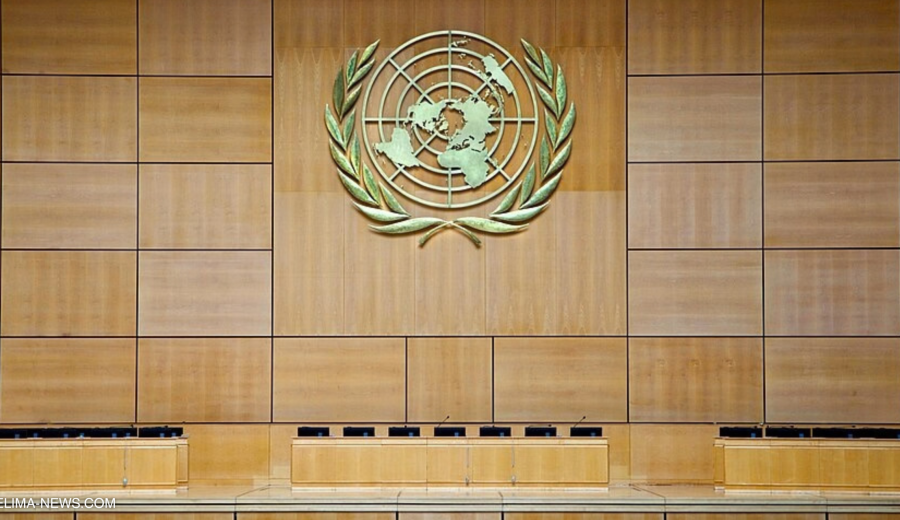
World leaders have gathered in New York for the 81st United Nations General Assembly amid wars in the Middle East and Ukraine, growing concerns over artificial intelligence, climate pressures and questions about the future of global institutions.
The 81st session of the United Nations General Assembly opened its high-level week on September 22, bringing nearly 130 heads of state and government to New York. This year’s theme — “Restoring trust, managing transformation: A United Nations that delivers for all” — reflects a central concern running through the meeting: whether international institutions can respond effectively to a world increasingly divided by war, economic competition and geopolitical rivalry.
With the General Debate continuing through September 28, several major issues have already emerged as defining moments of the gathering.
Guterres delivers his final UNGA address
One of the most significant moments came from UN Secretary-General António Guterres, who is approaching the end of his decade-long tenure. In his final General Assembly address, Guterres warned that geopolitical divisions were deepening and argued that the international system was struggling to keep pace with changes in global power. He identified four major tests — war and peace, inequality, climate change and artificial intelligence — as central challenges for the international community.
Guterres also renewed calls for reform of the UN Security Council, particularly highlighting the absence of permanent African representation. His comments matter because they go beyond individual conflicts. They raise a broader question about whether institutions created in the aftermath of the Second World War adequately reflect today’s distribution of political and economic power.
Trump puts Iran and Ukraine at the centre
US President Donald Trump used his September 22 speech to defend American foreign policy while addressing the wars involving Iran and Ukraine. On Iran, Trump warned that the United States could “annihilate” Iran if a peace agreement was not reached, while simultaneously indicating that diplomacy could produce a deal. His remarks came as diplomatic efforts were taking place around the UN gathering.
On Ukraine, Trump said the United States was working with both Kyiv and Moscow and expressed confidence that the conflict could eventually be resolved. The significance is that the UN gathering has become another venue for diplomacy surrounding conflicts that have major consequences for global security, energy markets and international alliances.
Ukraine seeks an energy ceasefire
Ukrainian President Volodymyr Zelenskyy is using the General Assembly to maintain international attention on Russia’s war and explore potential diplomatic openings. After meeting Trump in New York, Zelenskyy said Ukraine was prepared to consider an “energy ceasefire” if Russia agreed not to attack Ukraine’s energy infrastructure. He also indicated that Kyiv remained open to a possible trilateral meeting involving Trump and Russian President Vladimir Putin. The proposal is significant because attacks on energy infrastructure have direct consequences for civilians, particularly as Ukraine approaches another winter during the continuing war.
Gaza remains one of the biggest divisions
The war in Gaza has remained a central issue at the Assembly. Turkish President Recep Tayyip Erdoğan called for greater international pressure over Gaza and urged countries that do not recognize a Palestinian state to reconsider their positions. He also criticized the structure of the Security Council, arguing that five permanent members exercise disproportionate influence over the wider UN membership.
French President Emmanuel Macron also challenged Trump’s presentation of Gaza diplomacy, saying that humanitarian access remained inadequate. Israeli Prime Minister Benjamin Netanyahu, meanwhile, is scheduled to address the Assembly on September 24 and has said he intends to defend Israel’s military actions and respond to international criticism.
The competing positions demonstrate why Gaza remains one of the most politically divisive issues at the UN, with disagreements extending beyond the battlefield to questions of international law, humanitarian access, Palestinian statehood and Israel’s security.
Climate change moves higher on the agenda
Climate action is another major component of the 2026 gathering. A high-level meeting on climate action and a just transition is scheduled for September 23. The UN says the meeting will focus on accelerating the energy transition, improving energy security and addressing climate impacts on vulnerable countries.
The Assembly will also hold a September 24 meeting focused on the threat posed by rising sea levels. These discussions are important because climate change increasingly intersects with other international concerns, including food security, migration, disaster preparedness and development.
Artificial intelligence becomes a diplomatic issue
AI has emerged as another major theme. Guterres called for stronger international governance of artificial intelligence and warned against allowing machines to make life-and-death decisions without meaningful human accountability. He also called for international mechanisms to manage AI-related risks.
The issue represents a major shift in the UN agenda. Artificial intelligence is no longer being discussed only as a technological or economic subject. Governments are increasingly debating its implications for security, warfare, employment, information and international governance.
India prepares for its turn
India’s delegation is being led by External Affairs Minister S. Jaishankar, who is scheduled to address the General Assembly on September 26. The Indian delegation is also expected to participate in bilateral and plurilateral meetings during the high-level week. India’s presence comes at a time when questions about reform of global institutions, representation of developing countries and the role of emerging powers are prominent across the UN agenda.
Why this year’s General Assembly matters
The 2026 General Assembly is taking place at a moment when many of the assumptions underpinning the post-1945 international order are being tested. Wars in Gaza and Ukraine, tensions surrounding Iran, climate change, technological disruption and demands for reform of international institutions are all competing for attention. At the same time, the UN itself is confronting questions about its effectiveness and ability to bring major powers together.
The Assembly does not by itself resolve these disputes. Its importance lies in providing a forum where governments can publicly state their positions, conduct diplomacy and negotiate collective responses. With several days of speeches and high-level meetings still ahead, the central question of the 81st session is whether the gathering can translate its emphasis on restoring trust into concrete cooperation on the crises dominating the international agenda.