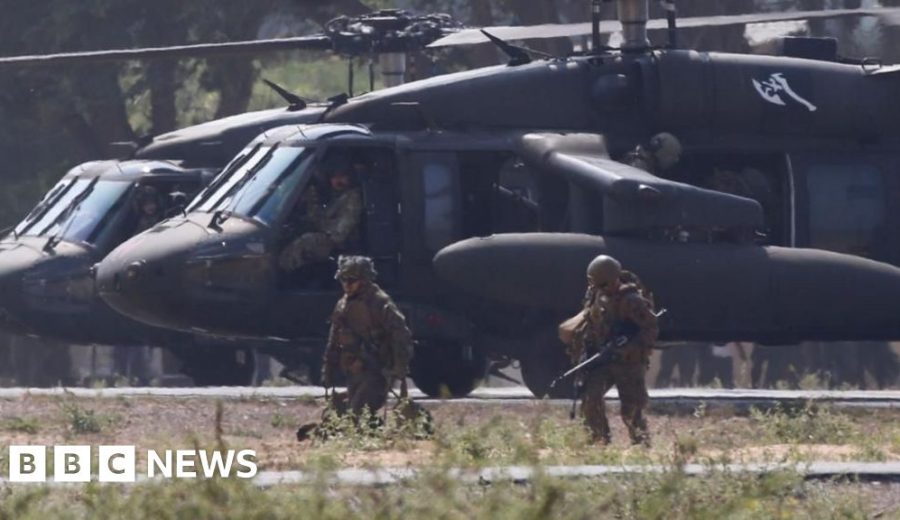
The US has deployed Marines stationed in Japan along with warships to the Middle East as part of a military escalation response. The amphibious ready group transfer represents a significant strategic repositioning of forces.
The deployment of an amphibious ready group from Japan represents an unusual shift in American military positioning amid regional tensions.
Washington’s moving additional Marines and warships to the Middle East. This includes forces from an amphibious ready group that’s typically stationed in Japan, CBS News reports. The deployment marks a major escalation in US military presence there. Regional tensions keep rising. A CBS official confirmed the move. They didn’t disclose specific personnel numbers or timelines.
Marines and naval vessels usually based in the Pacific will join the reinforcements. They’re part of America’s forward-deployed forces in Japan. This marks an unusual redeployment from one critical theater to another. The Pentagon clearly sees serious Middle East security challenges.
Moving Japan-based forces shows the strain on US military resources. The Pentagon’s trying to maintain readiness across multiple global hotspots simultaneously. American military leaders balance Pacific commitments while tensions with China stay high. They’re also addressing escalating Middle East situations.
Regional threats have reached a threshold. Immediate reinforcement became necessary.
Amphibious ready groups typically include three ships. They carry approximately 2,000 Marines. Aircraft, landing craft, and equipment come too. These units handle rapid deployment and crisis response. They’re among the most flexible forces in the US military arsenal.
Japan-based Marine units previously focused on Pacific operations. They’ve maintained alliance commitments with regional partners. That’s included Japan, South Korea, and the Philippines.
But this redeployment carries major implications for US strategic positioning globally. Moving forces from the Pacific to the Middle East temporarily reduces American military presence there. China’s been increasingly assertive in that region. The move also signals something important to regional allies and adversaries.
Washington views current Middle East tensions as needing immediate military attention. They’re requiring resources too.
Defense officials haven’t provided detailed public statements about the specific mission. They won’t say how long this deployment will last. The move comes as the Pentagon continues assessing regional security needs. They’re adjusting force positioning accordingly.
Military analysts note something important about such cross-theater deployments. They’re not unprecedented. But they’re typically reserved for situations requiring urgent response capabilities.
Yet the deployment adds to existing US military presence in the Middle East. American forces already occupy multiple countries and installations there. This latest movement represents a major expansion of ready response capabilities. Officials haven’t specified how long these Japan-based units will remain there.
Such deployments typically last several months. Duration depends on operational requirements and threat assessments.
Still, by Monday evening, Pentagon sources confirmed the strategic shift. For weeks now, military planners have weighed these difficult cross-theater decisions. Just hours earlier, regional commanders received final deployment orders.
The cross-theater deployment of Marines from Japan to the Middle East demonstrates complex global security challenges. US military planners face these daily. This move signals heightened American concern about Middle East stability. It potentially affects Pacific region security arrangements. The decision reflects how regional crises can rapidly reshape international military positioning. Alliance commitments worldwide shift too.
US amphibious ready groups consist of Marines, ships and equipment designed for rapid deployment to crisis zones.
Source: Original Report