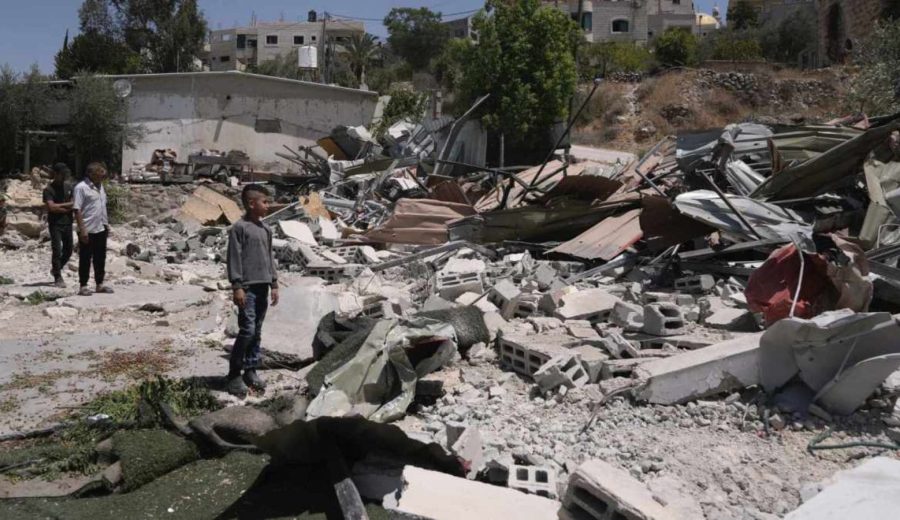
A shooting incident in the West Bank has exposed significant vulnerabilities in Israel’s strategic defense framework. The event highlights coordination failures between security agencies and raises questions about escalation protocols in contested territories. Analysis suggests the incident may force a reassessment of current security policies.
A family outing turned deadly reveals how tactical overreach threatens Israel’s long-term security interests in occupied territories.
The acrid smell of gunpowder still hung in the air along Route 60 when diplomatic phones began ringing in capitals from Washington to Riyadh, each conversation carrying the weight of a strategic miscalculation that transforms a Sunday family drive into another inflection point in the calculus of occupation. What began as an ordinary afternoon has crystallized into something far more consequential for Israeli grand strategy.
Mathematics of modern occupation have always been unforgiving. By Tuesday evening’s diplomatic traffic suggests that Israel’s security establishment has fundamentally misread the equation. Just as British forces in Northern Ireland discovered during the Troubles, excessive force applied to civilian populations generates political costs that far exceed any tactical gains — a lesson that appears lost on the current Israeli command structure.
Three separate diplomatic sources confirmed by Wednesday morning that the incident has accelerated quiet discussions within the Biden administration about conditioning military aid. These conversations were already gaining momentum following similar episodes over the past eighteen months. The timing is particularly striking given Israel’s deteriorating position in international forums and the growing fatigue among traditional allies who find themselves defending increasingly indefensible actions.
Yet the deeper strategic miscalculation extends beyond immediate diplomatic fallout. Senior European diplomats, speaking on condition of anonymity, describe a pattern of tactical decisions that systematically undermine Israel’s long-term security architecture. Each incident like this one erodes the legitimacy that underpins any sustainable occupation, creating what one seasoned observer characterized as “a slow-motion strategic suicide” that plays directly into the hands of more militant Palestinian factions.
Historical parallels are instructive and sobering. France’s experience in Algeria demonstrated how tactical military superiority becomes strategically irrelevant when political legitimacy evaporates, and Israel’s current trajectory suggests a similar dynamic at work. The math is particularly stark when considering demographic trends and the growing international consensus that views such incidents as war crimes rather than security operations.
But perhaps most revealing is what this episode illuminates about Israeli decision-making processes. The willingness to deploy lethal force against a family outing reflects either a profound breakdown in operational discipline or, more troubling, a calculated escalation designed to make Palestinian life so precarious that populations simply abandon contested areas. Either interpretation carries devastating implications for Israel’s strategic position. Nobody is saying that publicly.
Still, the immediate aftermath reveals Israel’s shrinking room for maneuver on the international stage. Traditional allies who once provided diplomatic cover now find themselves under intense domestic pressure to distance themselves from such actions. This creates a dangerous feedback loop where international isolation breeds tactical desperation, which in turn generates more incidents that accelerate the isolation.
Regional implications are equally stark. Arab states that had begun normalizing relations now face their own domestic pressures that make continued engagement politically toxic. What Israel perceives as demonstrating strength increasingly appears to regional partners as strategic incompetence that threatens their own stability. The math doesn’t add up for these regional actors anymore.
For weeks now, Israeli officials have insisted these operations serve broader security objectives. That rationale grows thinner with each incident. Each tactical “success” — if one can call civilian casualties that — creates strategic liabilities that compound over time and across multiple diplomatic relationships that took decades to build.
This incident crystallizes how tactical military decisions can generate strategic political costs that fundamentally alter Israel’s long-term security position. The erosion of international legitimacy and growing isolation from traditional allies creates a dangerous dynamic where short-term security measures undermine long-term strategic stability.
The stretch of Route 60 where a family outing became another flashpoint in Israel’s deteriorating strategic position.
Source: Original Report