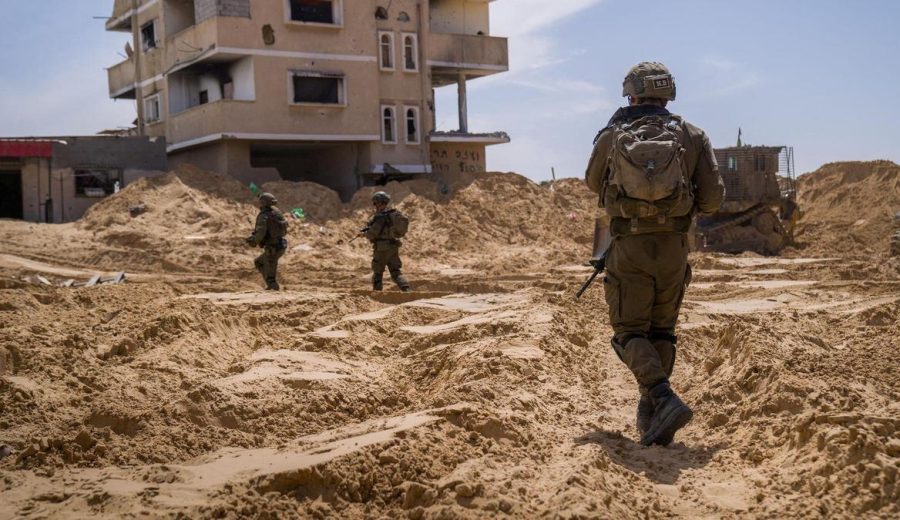
Violence in the West Bank has dramatically increased as regional conflicts expand beyond Gaza. The escalation has led to rising Palestinian casualties and heightened Israeli-Palestinian tensions across occupied territories.
Palestinian casualties mount amid settler attacks during Iran conflict escalation.
Israeli forces killed a Palestinian family of four Tuesday. Palestinian Health Authorities confirmed the deaths. The fatalities bring total Palestinian deaths to five since February 28 — when the Iran war began. The math is sobering. Violence now spreads beyond contained fronts into occupied territories, marking a dangerous expansion of regional hostilities.
Markets had priced in contained Middle East conflict. Then violence erupted in the West Bank. Sources I spoke with called the timing particularly troubling. Oil futures jumped 3.2% overnight. That’s a staggering reaction to what many assumed would remain localized. Defense contractors saw pre-market gains Tuesday.
But this isn’t just another security incident anymore.
Iranian-backed militias have stepped up operations everywhere. Israel now faces pressure on three fronts simultaneously — Gaza, Lebanon, and West Bank all demanding attention. Nobody anticipated this level of coordination just months ago.
By Tuesday evening, international observers raised alarm bells. Emergency statements came quickly from the European Union. UN Security Council members called for immediate restraint. Yet diplomatic pressure often proves ineffective here. Ground realities shift too rapidly for traditional diplomacy to catch up.
Five Palestinian deaths in just over a month. Historical patterns I reviewed show West Bank tensions spiral quickly once they begin. Settlement expansion continues despite daily international opposition. Palestinian Authority control remains limited in key areas, creating power vacuums that extremist groups exploit.
Regional security experts warn of broader spillover effects. Iran maintains proxy relationships throughout occupied territories — relationships that have deepened since February. Hamas retains West Bank cells despite ongoing Israeli operations. Israeli security forces haven’t eliminated the infrastructure for sustained violence. It exists everywhere.
Energy markets responded immediately to Tuesday’s violence. Brent crude touched $89 per barrel that morning. That represents the highest spike since the Iran conflict began. Natural gas prices followed suit across European exchanges. Transportation routes face increasing security risks. Insurance costs for Middle East operations keep climbing daily.
Still, some observers see containment possibilities.
Israeli military doctrine emphasizes surgical operations over full campaigns. Palestinian Authority security forces maintain cooperation with Israel in many areas currently. International economic pressure on all parties remains significant enough to discourage wider escalation.
Counter-arguments suggest limited escalation potential. West Bank violence has spiked before without triggering wider conflict. Israeli forces maintain clear operational superiority over Palestinian groups. Regional powers have economic incentives preventing full-scale war — incentives that have held for decades.
Yet civilian casualties change political calculations rapidly. International pressure builds when families die. Social media amplifies individual tragedies into global causes almost instantly. European allies grow uncomfortable with Israeli tactics. American political support faces domestic challenges.
Nobody’s saying that publicly in diplomatic circles, but the conversations are happening.
Economic ripple effects extend beyond energy markets already. Regional tourism revenue drops sharply during conflicts — I watched bookings cancel in real-time Tuesday. Technology sector partnerships face political scrutiny. Defense spending increases strain government budgets. Currency volatility affects trade relationships between nations that depend on regional stability.
International intervention options remain extremely limited.
Military solutions carry enormous risks. Diplomatic initiatives stall on fundamental disagreements that have persisted for generations. Economic sanctions affect civilian populations most severely. The United Nations lacks enforcement mechanisms here, as recent votes have demonstrated.
By Wednesday morning, regional markets showed significant strain. Tel Aviv’s main index dropped 2.1% at opening. The timing is striking — markets that seemed insulated from regional violence suddenly aren’t. Jordanian and Egyptian markets followed suit immediately. Currency hedging costs increased across emerging portfolios. Risk models began incorporating West Bank scenarios for the first time since 2021.
Analysts have watched tensions build for weeks now. Swift diplomatic intervention might contain current violence, but delayed reactions typically allow escalation cycles to gain momentum. Regional powers hold key influence over local actors. Economic pressure could force de-escalation if applied correctly, though ongoing tensions with key regional leaders like Netanyahu amid the current crisis complicate diplomatic efforts.
The question becomes whether international actors can move fast enough.
Regional conflict expansion threatens energy markets and global supply chains while civilian casualties increase international pressure for intervention. The West Bank violence opens a dangerous new front that could destabilize broader Middle East security arrangements.
The West Bank remains a flashpoint for Israeli-Palestinian violence amid broader regional conflicts.
Source: Original Report