Jammu and Kashmir has been the long standing issue between India, and Pakistan. The violence has done nothing but haunt the people living there. In an attempt to explain which territories are controlled by which nation.
You must have come across maps, when you were a student, or you’re just simply interested in it. Either way, you must be familiar with the term ‘borders’. International borders define the boundaries of two countries. But the borders we see on map isn’t what the actual picture represents, and the borders in reality are extremely complicated.
There is a whole bunch of terms for different types of borders. International Borders are the official recognised borders by majority of countries. De Facto borders are the borders of a country not recognised by the UN, but actually exists in reality, some examples of De Facto regions are Northern Cyprus (breakaway from Cyprus), and Somaliland (breakaway from Somalia).
Disputed Borders arise when two countries claim the same region, thus making it a disputed region, Google Maps show this region with dotted line, for example, the divide between Northern Cyprus and Cyprus is shown by dotted lines, which means the border is disputed, as Cyprus claims the whole island as Cyprian territory, whereas Northern Cyprus views itself as a legitimate country.
Lines of Control are the actual borders that divide the countries in reality, for example, LoAC is the actual border that divides Indian state of Ladakh with Chinese occupied Indian Ladakh. Enclaves are territories that exists within another countries territory (including territorial waters). Madha is an Omani territory in UAE land, with another UAE enclave Nahwa inside Madha.
The main question that arises now is, who decides what borders of a country should be. The most sensible answer is that military might and United Nations. India and Pakistan had a war where India were rapidly gaining land against Pakistan, but a UN intervention saw both nations draw LOC where they currently were, and that LOC is still in effect. Russia’s annexation of Crimea and Donetsk of Ukraine was an example where military might prevailed over UN.
Jammu & Kashmir — One Region, Three Powers, Multiple Borders
Historical background
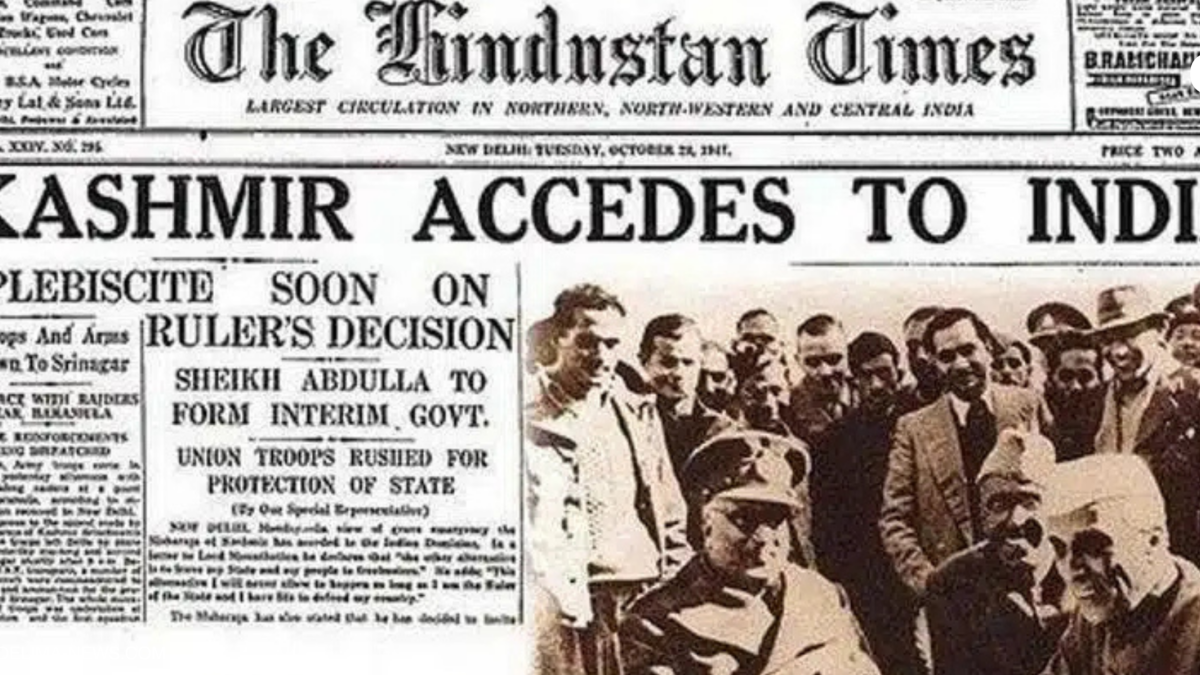
Jammu & Kashmir used to be a princely state. During partition in 1947, it was given a choice to either join India and Pakistan, and at that time, the state didn’t join either country but promised India that it would join India.
However, Pakistan attacked Jammu & Kashmir, so India jumped in and retaliated. Indian army was far superior than the Pakistani army and gained a considerable area, but our then PM, Nehru went to UN consulate to settle this matter, and UN told both armies to stay where they are, and that border is now known as LOC.
The Three Areas of Control
Jammu & Kashmir is controlled by three countries as of now. India, Pakistan, and China. India claims full authority over Jammu & Kashmir, and condemns the illegal occupation of the region by Pakistan and China.
India controls the Jammu & Kashmir region of the state along with Ladakh, while Pakistan has illegally occupied the region and named it Azad Jammu & Kashmir and Gilgit-Baltistan. China also occupied two regions of Ladakh named Aksai Chin and Trans-Karakoram region, which Pakistan ceded to China in 1963.
India has also stated that China occupies 38,000 sq km in Indian territory and disputes the arrangement of China-Pakistan boundary.
The Borders that aren’t Quite Borders
Even though the region is disputed and it is discussed globally, there are different names for control lines with Pakistan and China. LoC (Line of Control) separates Pakistani controlled territories with India, while LAC (Line of Actual Control) is the line dividing India and Chinese occupied territories. This one is unusual because India and China do not mutually agree on the boundary.
India views Jammu & Kashmir and Ladakh as integral part of India, and regards Pakistani occupation illegal and demands to vacate the territories. Indian claims of Aksai Chin as Indian is also a norm.
Pakistan claims sovereignty to Indian Jammu & Kashmir while it doesn’t claim the Chinese occupied Aksai Chin and Trans Karakoram, which it ceded to China in 1963. China claims Aksai Chin and doesn’t agree with Indian side of the border agreement.
Jammu & Kashmir remains one of the most talked about disputed regions on earth, and it has led to multiple wars with Pakistan, which Pakistan lost both times, and continues to terror Indian side of the Kashmir to stop the region from prospering, at the expense of its people. Pakistan just cares about the land, and not it’s people.
India leaves no room for discussion about Jammu and Kashmir, and maintains a firm stance that every inch of Jammu and Kashmir belongs to India.