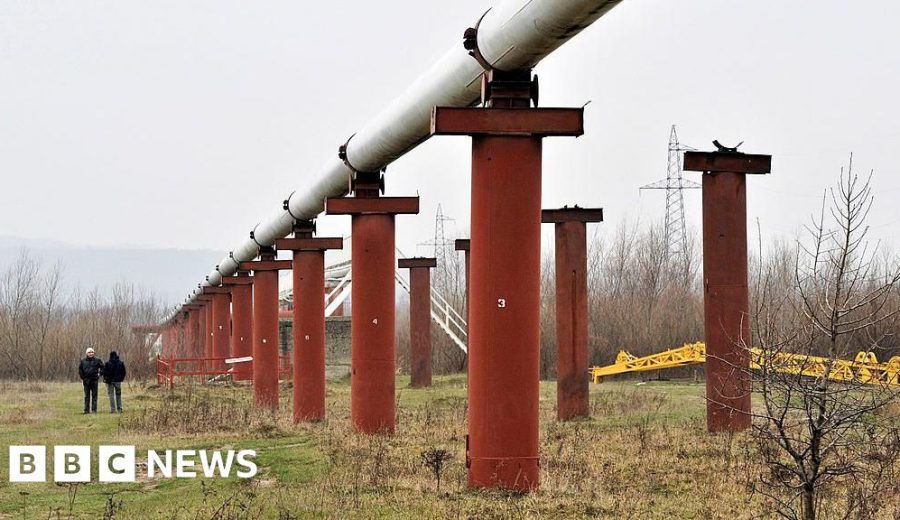
Ukrainian President Zelensky has publicly accused the European Union of employing “blackmail” tactics concerning a Russian oil pipeline. The dispute centers on energy sanctions and their enforcement against Russia. This statement highlights growing tensions between Ukraine and EU member states over sanctions compliance.
Ukraine’s president warns that restoring Russian oil flow would undermine sanctions regime as Brussels pressures Kyiv to reopen transit routes.
The money keeps flowing, even when the bombs are falling. Volodymyr Zelensky’s explosive accusation that EU allies are “blackmailing” Ukraine over Russian oil pipelines exposes the dirty arithmetic of European energy politics. Behind the diplomatic language lies a billion-dollar question: who profits when principles meet petroleum?
Druzhba pipeline tells the real story. This Soviet-era artery still pumps Russian crude through Ukrainian soil into Hungary, Slovakia, and the Czech Republic, generating millions in transit fees that flow straight into Moscow’s war chest. Ukraine finally moved to choke off this financial lifeline. Brussels started applying pressure. The timing is striking — just as winter approaches and energy prices spike, European capitals suddenly discovered urgent concerns about their oil security.
Money trails reveal the hypocrisy crystal clear. Hungary’s Viktor Orban has been the most vocal critic of Ukraine’s pipeline restrictions, but his motivations aren’t exactly altruistic. Budapest locked itself into long-term contracts with Russian energy giant Rosneft, a company run by Igor Sechin — Putin’s old KGB colleague who now sits at the heart of the Kremlin’s energy empire. Slovakia’s Robert Fico echoes similar concerns. He conveniently ignores that his country’s Slovnaft refinery is majority-owned by MOL Group, which has deep ties to Russian crude suppliers.
Siloviki connections run deeper than most realize. Rosneft isn’t just an oil company. It’s a financial weapon controlled by Putin’s security elite, funneling petrodollars through a maze of offshore accounts and shell companies. Every barrel that flows through the Druzhba pipeline generates roughly three dollars in transit fees for Russia. Daily flows hit around 250,000 barrels. That’s three quarters of a million dollars flowing into Moscow’s coffers every single day. The math is sobering.
But here’s where it gets really cynical. The same EU officials pressuring Ukraine to restore oil flows spent months crafting sanctions packages designed to strangle Russian energy exports. They celebrated each restriction as a moral victory while quietly carving out exemptions for landlocked member states. These carve-outs allow roughly 15 percent of pre-war Russian oil exports to continue flowing into Europe. That is a staggering figure.
Zelensky’s frustration isn’t just about principle — it’s about watching European allies play both sides of their own sanctions regime. By Tuesday evening, Ukrainian officials were privately describing the EU pressure as “moral bankruptcy.” For weeks now, the same Brussels bureaucrats had been lecturing Kyiv about maintaining unity against Russian aggression. Nobody is saying that publicly.
Human costs get lost in these calculations. Every dollar flowing to Moscow through pipeline fees helps fund the artillery shells landing in Ukrainian cities. The Kremlin’s energy revenues directly finance military operations that have killed thousands of civilians and displaced millions more. European leaders frame their pipeline concerns in terms of “energy security.” They won’t acknowledge they’re essentially demanding Ukraine help fund its own destruction.
Yet the biggest scandal might be the silence. Major European media outlets have largely ignored the pipeline controversy, focusing instead on abstract discussions about sanctions effectiveness. The uncomfortable truth stings: European energy companies, their government allies, and Kremlin-connected oligarchs all benefit from maintaining the status quo. They’ve built a system that profits from war.
Still, this pipeline dispute reveals something deeper than mere hypocrisy. Western sanctions against Russia contain fundamental weaknesses that economic interests consistently exploit. Just hours earlier, these same officials were proclaiming their unwavering support for Ukraine’s sovereignty.
This pipeline dispute reveals the fundamental weakness in Western sanctions against Russia, showing how economic interests consistently override stated principles. The controversy also highlights growing tensions between Ukraine and its European allies over the costs and contradictions of maintaining unity against Moscow.
The Soviet-era Druzhba pipeline continues pumping Russian crude through Ukrainian territory into EU markets despite ongoing sanctions.
Source: Original Report