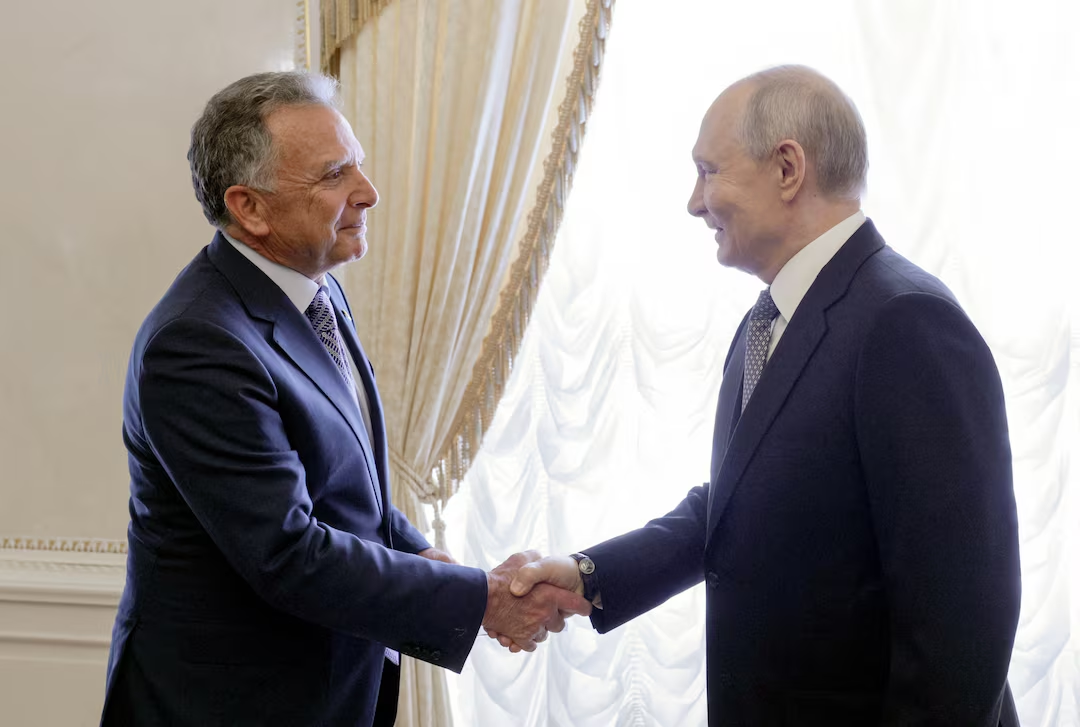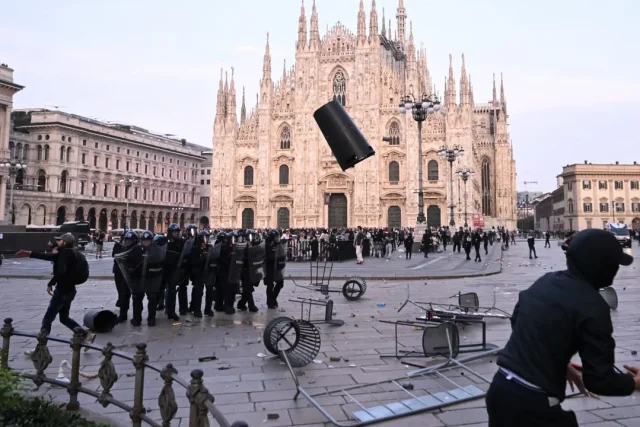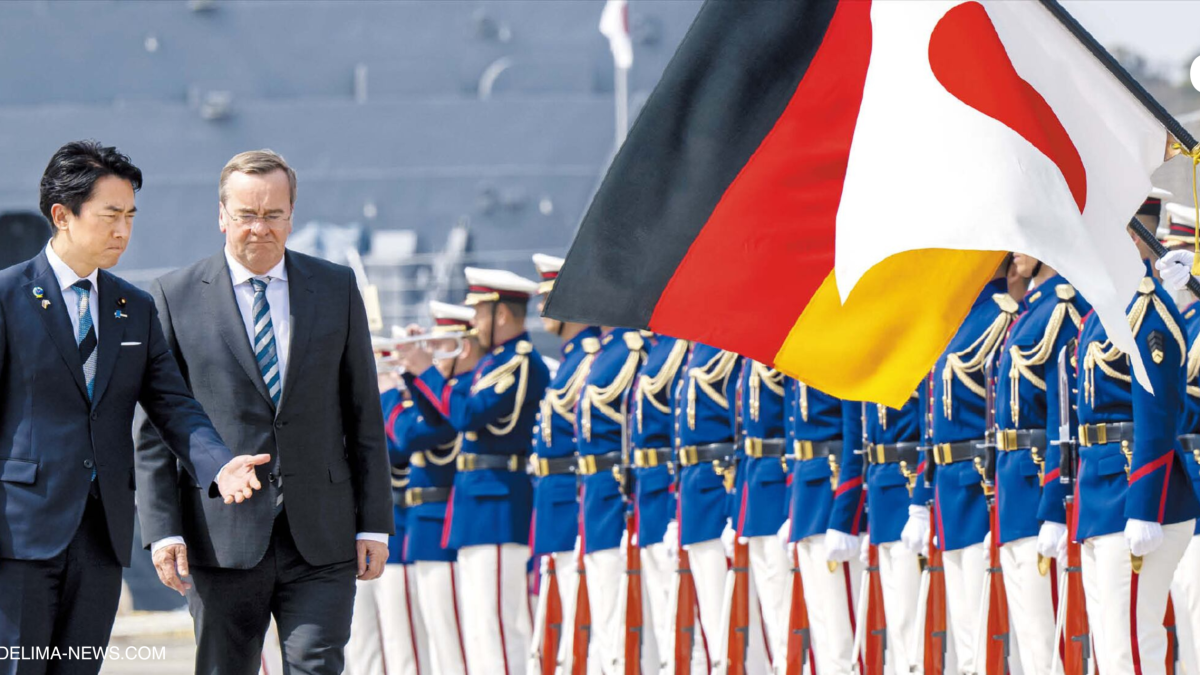
Once forced to confront the consequences of militarism, Berlin and Tokyo are now rebuilding military power — but the enemies they fear are very different.
Eighty years after the guns fell silent in Europe and Asia, two of the countries most deeply scarred by the Second World War are once again building military strength.Germany is expanding its armed forces at a pace unimaginable for much of the postwar era. Japan is pouring money into missiles, naval power, air defence and long-range strike capabilities. Both are moving away from decades of military restraint.
The irony is hard to miss. The defeated powers of 1945 are once again becoming major military players. But this is not a return to the militarism of the 1930s. Germany and Japan are not rearming for the same reason — and neither sees itself as preparing for another war of conquest. Instead, both argue that the world around them has become too dangerous to remain militarily weak.
And that difference matters.
For Germany, the turning point came with Russia’s full-scale invasion of Ukraine in February 2022. For decades, Berlin had enjoyed the security umbrella provided by NATO and the United States while keeping defence spending relatively restrained. The German military became notorious for equipment shortages, ageing systems and slow procurement. Then Russia invaded Ukraine.
The shock forced Berlin to confront a question it had largely avoided since the end of the Cold War: What happens if Europe actually has to fight a major war? Then-Chancellor Olaf Scholz called the invasion a Zeitenwende — a historic turning point — and announced a €100 billion special fund to rebuild Germany’s military.
Four years later, the transformation is becoming much larger. Germany is moving toward becoming Europe’s leading conventional military power, while its new military strategy places greater emphasis on preparing for a direct confrontation involving NATO’s eastern flank. Analysts increasingly describe Berlin’s shift as an attempt to make Germany the military backbone of a more self-reliant Europe.
The political logic is straightforward: if Russia represents the most immediate military threat to Europe, Germany cannot remain Europe’s economic giant but a military lightweight. There is another factor — Washington.
Growing uncertainty over the future of American security commitments has pushed European governments to think harder about defending the continent without relying so heavily on the United States. German public attitudes toward Washington have also shifted, with recent polling showing declining confidence in the US as a reliable NATO partner. Germany’s rearmament, therefore, is not simply about weapons. It is about Europe taking responsibility for its own survival.
Thousands of kilometres away, Japan is undergoing its own military transformation. But Tokyo is looking in a completely different direction. Japan’s security fears are concentrated in the Indo-Pacific — particularly around China, North Korea and the increasingly complicated military balance of East Asia. For decades, Japan’s military posture was constrained by the pacifist principles of its postwar constitution. Article 9 famously renounced war as a sovereign right, creating a political culture in which military expansion was treated with exceptional caution.
That era is fading. Japan’s defence spending has surged, reaching a record level as Tokyo accelerates a military buildup announced in 2022. The country is acquiring longer-range missiles, strengthening missile defence, expanding its capabilities in space and cyberspace, and developing the ability to strike enemy missile launch sites. The immediate concern is China.
Beijing’s rapidly expanding military, its pressure around Taiwan and its increasingly assertive behaviour in the East China Sea have fundamentally altered Tokyo’s calculations. Then there is North Korea.
Pyongyang’s nuclear arsenal and expanding ballistic-missile programme have made the threat much harder for Tokyo to ignore. Japan’s 2026 defence white paper has now triggered fresh anger from North Korea, which has accused Tokyo of pursuing military expansion and threatened additional military measures. Japan’s argument is similar to Germany’s but geographically reversed: If the neighbourhood is becoming more dangerous, military restraint alone cannot guarantee peace.
This is where the parallel between Germany and Japan becomes fascinating. Both nations spent decades trying to distance themselves from their wartime pasts. Both became economic powerhouses rather than military powers. Both relied heavily on the United States for security. And both are now discovering that economic strength without sufficient military power can leave a country vulnerable when the international order begins to fracture.
But their strategic maps point in opposite directions. Germany is preparing for Russia. Japan is preparing for China and North Korea. Germany’s nightmare is a major land conflict in Europe. Japan’s nightmare is a missile or naval conflict in the Indo-Pacific. Germany wants to build the military strength necessary to defend NATO’s European front. Japan wants to make itself capable of surviving — and deterring — a conflict in its own neighbourhood.
Perhaps the most uncomfortable question is not whether Germany and Japan should rearm. It is what their rearmament means for the world. China has condemned Japan’s military expansion, while North Korea has reacted with increasingly aggressive rhetoric. In Europe, meanwhile, Germany’s military revival is reshaping the balance of power inside NATO. There is a risk that deterrence can produce its own dangerous feedback loop: one country’s attempt to feel safer can make its rivals feel less safe, prompting them to build even more weapons.
Yet there is an equally powerful argument on the other side. Germany and Japan are not returning to the battlefield because they have abandoned the lessons of 1945. They are doing so because they believe the world may once again be entering an era in which military weakness is dangerous. The great irony of the postwar era is therefore unfolding before our eyes. The countries once forced to disarm after catastrophic wars are rebuilding their military power. But this time, they insist, the purpose is not conquest.
It is deterrence. And whether that deterrence succeeds may help determine whether the world avoids another major war — or merely prepares more effectively for one.
This decision proves one thing, military weakness is punished, as seen in Russian-Ukraine conflict. The rearment is a must for self-defence in these times.