A comedian whose parody about losing his vote drew 1.7 million views says Instagram removed it two days later, citing “local laws”. Other Indian satirists report the same. A newspaper says the government issued nearly 195,000 blocking orders in five months; the government rejects the suggestion that this is excessive.
Indian satirists say their work is being removed from social media as protests against the country’s election chief spread, Al Jazeera reported on October 9.
One Comedian’s Case
Stand-up comic Brijesh Jha posted a parody video on Instagram after his name, along with his father’s and sister’s, was removed from a voter list in the state of West Bengal.
- It was posted on September 29
- It drew 1.7 million views
- Meta, which owns Instagram, took it down two days later, citing “local laws” without further explanation
“I felt very helpless that day. I have only one thing in this country – that I can vote,” Jha told Al Jazeera. “As an artist, I can just make art, or I can protest.”
The video alleged that Chief Election Commissioner Gyanesh Kumar had disenfranchised millions of voters at the behest of the ruling party. The commission and the government deny any political motive.
A Cartoonist Too
Political cartoonist Satish Acharya said several of his cartoons, some up to three years old, were removed, and that his Instagram account was blocked in India from September 28.
The Blocking Orders
According to the Indian Express, the government issued nearly 195,000 content-blocking orders to Instagram, Facebook and YouTube between March and July this year. That is an average of one every 68 seconds.
The government rejected the report’s implication.
“With 600 million users in India posting up to 78,703 items every 68 seconds, it is reasonable to expect that on average, one of these items may not be lawful,” it said in a statement.
The New Rules
The government tightened its rules on online content in February.
Platforms must now remove content that a government authority or court has declared “unlawful” within three hours of receiving the order. The previous limit was 36 hours.
The Background
The disputed voter revision, known as the Special Intensive Revision, was launched in June last year to identify deceased, duplicate or doubtful entries. It has removed more than 130 million names, nearly 14 percent of India’s voters.
An Indian Express investigation found that two of the commission’s three members had formally objected at least 14 times to decisions taken by their chief.
Humour as Protest
Al Jazeera noted that the current protests stand out for their inventive use of humour, art and music, much of it online. The Cockroach Janta Party, which has led many of them, itself began as political satire.
The BJP says the opposition is “deliberately attacking India’s democracy and constitutional institutions”.
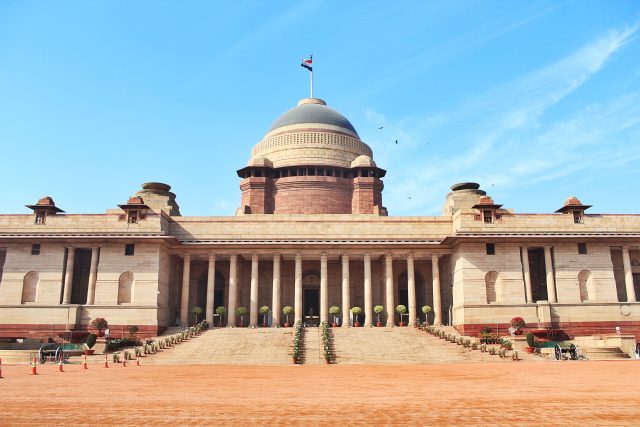
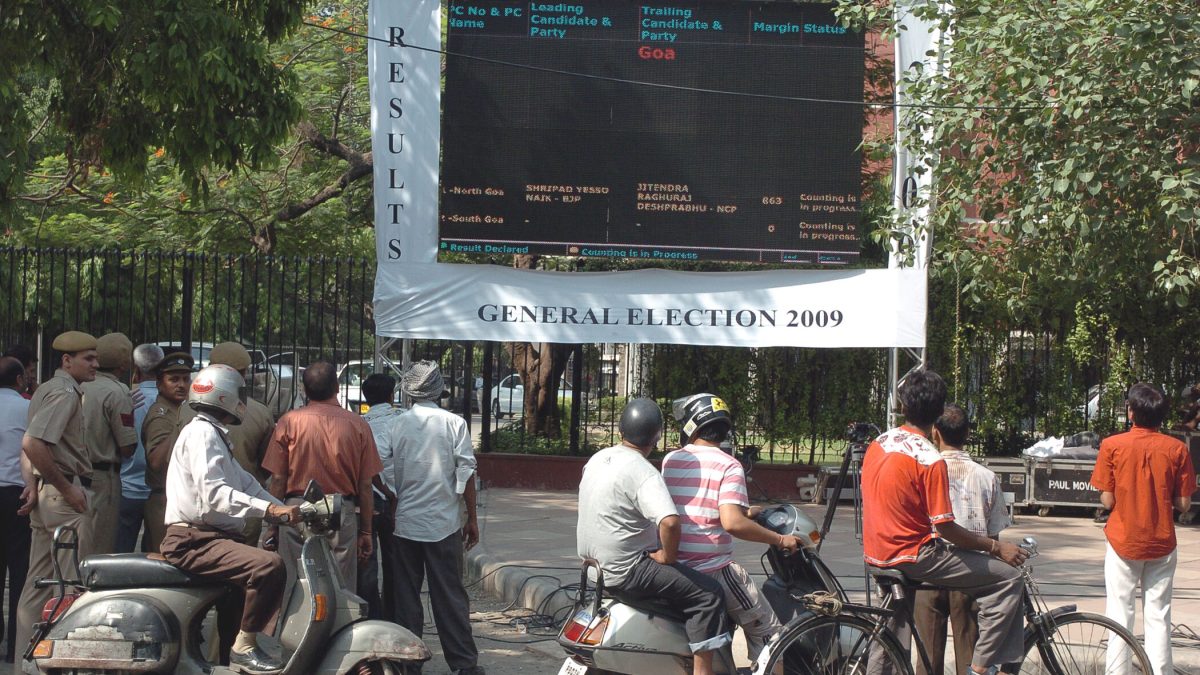
Image: An election results board outside the Election Commission of India in 2009 (file photo). Photo by the Election Commission of India via Wikimedia Commons, GODL-India.