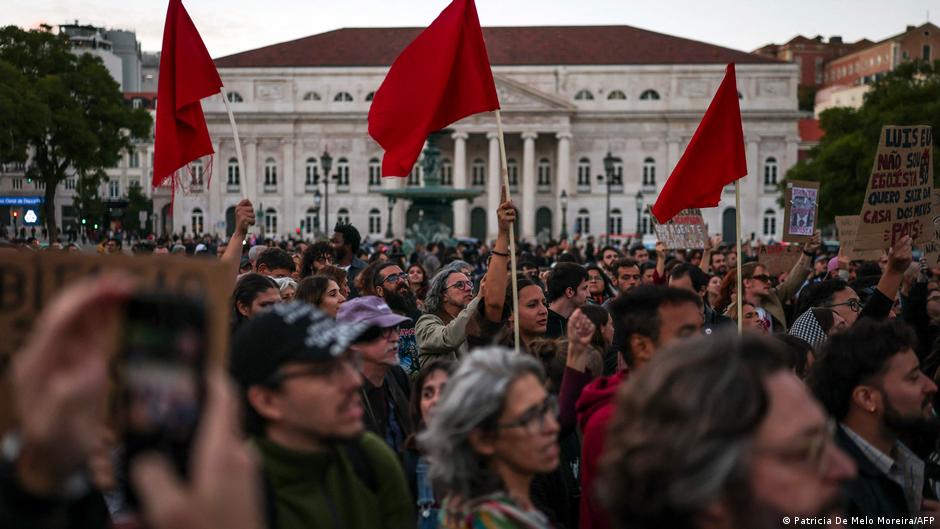
Portuguese police cleared protest camps in Lisbon’s Rossio Square and Porto’s Dom João I Square early on October 21, 2026, and 55 people were arrested and later released pending court appearances, according to Al Jazeera, but protesters returned the same day, with organisers reporting more than 1,000 at each location. The Lisbon camp, which had around 200 tents, had been occupied since Saturday, and the Porto camp for about 10 days. The protesters want the government to withdraw a bill that would ease evictions and end rent caps on new leases. Police superintendent Sérgio Soares described the clearance as “calm, proportionate and appropriate”, while camp spokesperson Carla Valadão called the Lisbon operation “very aggressive”.
The case that the protesters have a strong grievance is made by the housing data in the report. Purchase prices in Portugal have doubled since 2017, and rents for new leases have nearly doubled, with the pressure most severe in the major cities where the camps were set up. Young people such as 19-year-old Jorge Paixão, who called it “a societal crisis”, and 41-year-old Debora Miranda, who said “If people don’t feel at home… they can’t move forward”, describe the effect on daily life. The speed with which more than 1,000 people returned to each camp within hours of the clearance suggests that the movement is broader than a few hundred activists, and its demand is specific: withdrawal of one bill that would remove limits on rents for new leases and make evictions easier.
The case for the authorities is that they acted to remove camps in public squares. Superintendent Soares said the clearance was calm, proportionate and appropriate, and the 55 people arrested were released pending court appearances rather than being held. The report did not set out the government’s reasons for the bill, but a government can argue that easing evictions and ending rent caps on new leases will encourage owners to put more homes on the market, an argument that is made in many countries and that supporters of the bill are likely to make. The scale of the return also shows that the clearance did not end the protest, and it is unclear that further police action would help.
The protests matter because they are part of a wave of cost-of-living unrest across southern and western Europe, with demonstrations also reported in France, Belgium, Italy and Spain. In each country, the same combination of high prices, low wages and housing costs is driving people into the streets, and governments are responding with a mix of concessions and security measures. For Portugal, the bill is a test of whether the government will bend or hold firm. For tenants and young people looking for a first home, the outcome will decide whether renting in Lisbon and Porto becomes any easier. The 55 people arrested were released pending court appearances, so the legal consequences of the clearance are still to come, and the next steps will depend on whether the government changes the bill.
The camps were cleared and refilled within a day. Portugal’s government now has to decide whether to withdraw its housing bill or face a longer standoff in its two biggest cities.