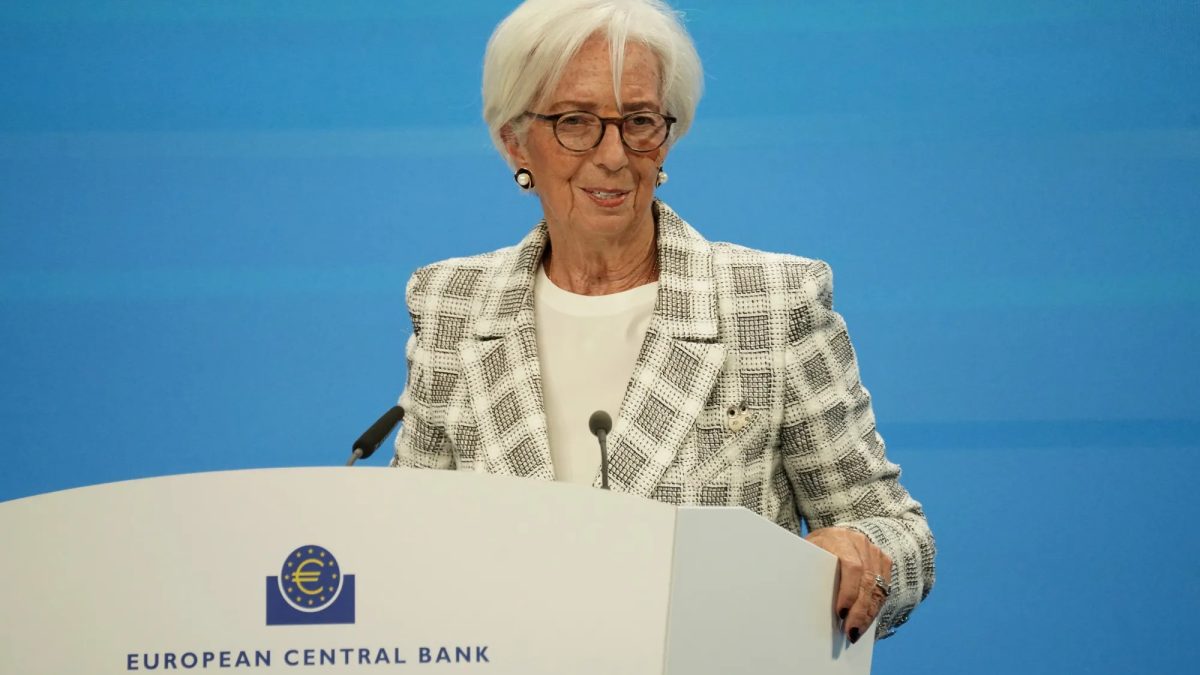
Christine Lagarde announced on Thursday, 29 October, that she will step down as president of the European Central Bank on 7 February 2027, ending months of speculation about her future. Her term was due to run to October 2027. In a short video she said, “I leave this institution with a sense of good work done and an ECB that is fit for the future.” The decision came on the day the ECB kept its deposit rate at 2.5% and signalled another increase, possibly in December. European Council President António Costa said the process to find a successor would begin immediately, and that the choice would be made by EU leaders meeting in the euro-area format.
The case for the timing is that an early announcement gives Europe time to choose a successor in an orderly way. According to The National, her departure lets EU leaders pick a new president before the French presidential election, in which polls show Marine Le Pen as the favourite. Two former central bank governors, Klaas Knot of the Netherlands and Pablo Hernández de Cos of Spain, are seen as frontrunners. Costa praised her “steady and determined stewardship” through a series of crises, and the economist Marcel Fratzscher of the DIW institute praised her sense of responsibility toward Europe. RTE reported that the appointment may be handled as part of a wider set of ECB posts, since Isabel Schnabel leaves in early January and the chief economist Philip Lane leaves in May. Naming a successor well ahead of the departure would also avoid a leadership gap.
The case against is about trust and timing. Markus Ferber, a member of the European Parliament from the centre-right EPP group, said an early exit sent “the wrong signal”, and the economist Paul De Grauwe said it was “debasing the institution”. Jean-Philippe Tanguy, who helps draft economic policy for Le Pen’s campaign, called the move an insult. Three months ago, Lagarde dismissed talk of an early exit and said she could not leave while inflationary “clouds” were gathering. Those clouds have not cleared. The inflation pressure is attributed to an energy price surge linked to the Iran war, and RTE reports that money markets price three more rate rises by the end of next year, which would take the rate to 3.25%. The reports also differ on markets: The National described a surge in government bond yields, especially in France, while RTE said markets barely reacted.
The decision matters beyond Frankfurt. The ECB sets borrowing costs for the countries that share the euro, and its president is the single most visible voice on how those countries manage prices, debt and banks. A change of leadership in the middle of a rate-rising cycle, with a far-right candidate leading the French polls and an energy shock linked to a Middle East war, raises the stakes of the appointment far above the usual routine. Households and businesses in France, whose borrowing costs have risen, have the most direct interest in who is chosen.
Lagarde’s exit is early, but it is not abrupt, and the process to replace her has begun. What markets and governments will watch now is whether the next president keeps the bank’s independence while inflation, energy prices and politics all pull in different directions.