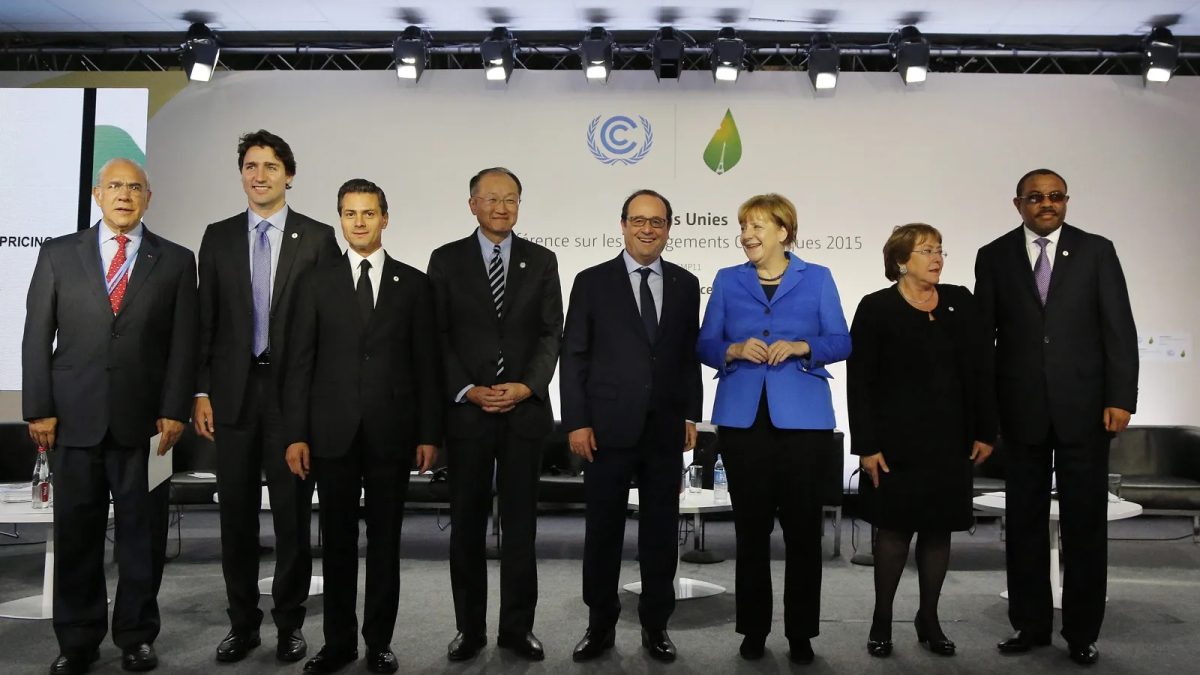
The Paris Agreement marked its tenth anniversary on 4 November 2026, a decade after the treaty adopted by 196 parties at the Paris climate summit in December 2015 entered into force. It commits countries to hold global warming well below 2C above preindustrial levels and to pursue efforts to limit it to 1.5C, and today 194 parties belong to it. The anniversary came a day after Brazil, which hosted the COP30 summit last November, published the first global roadmap for phasing out fossil fuels, a document meant to move climate diplomacy from negotiating goals to carrying them out. The United States, the world's second-largest emitter, left the agreement again in January this year. Washington has now joined and left twice, both times on Trump's orders, with Joe Biden rejoining in February 2021.
The case that the agreement has worked rests on how much the outlook has changed. When it was signed, existing policies put the world on course for about 3.6C of warming by 2100, according to the figures Al Jazeera cites, and that projection has since fallen to about 2.6C as countries adopted climate policies and clean energy expanded. Investment in clean energy is now almost double that in fossil fuels. The treaty also created a system in which each government sets its own targets through nationally determined contributions, renewed every five years, with a Global Stocktake checking collective progress on the same cycle. Nearly 60 countries have even formed a separate coalition of the willing to write their own phase-out plans for fossil fuels, which they launched at a meeting in Santa Marta, Colombia, in April.
The case that it has fallen short is stronger on the thermometer. In 2024 the planet was more than 1.5C warmer than preindustrial levels across a full calendar year for the first time, and 2023 to 2025 were the three hottest years on record, averaging more than 1.5C. The long-term average is about 1.4C, and scientists expect it to pass 1.5C around the end of this decade. In October the UN Environment Programme said the chance of keeping warming to 1.5C without overshooting it had been lost. Progress has stalled since 2021, and China, the United States and India together produce more than half of annual emissions. China alone emits more than the United States, India, Russia and Japan combined, and Indonesia has climbed into the top 10 emitters, replacing Canada. The agreement also does not force countries to meet their targets, since it relies on transparency and international pressure.
The stakes are highest for countries with the least capacity to adapt, from small island states to farming regions facing deadly floods, heatwaves and wildfires. Brazil's roadmaps are voluntary, contain no deadlines or milestones and leave each country to assess its own dependence on fossil fuels. Imperial College London's Joeri Rogelj said they fall short because they show no pace of change, while Brazil's COP30 president, André Corrêa do Lago, argues that they are documents of implementation for finance, energy and transport ministries.
The Paris Agreement has bent the curve of future warming without bending it enough. The next decade will be judged by whether voluntary roadmaps turn into binding cuts, and whether the world can limit the overshoot it now seems likely to face.