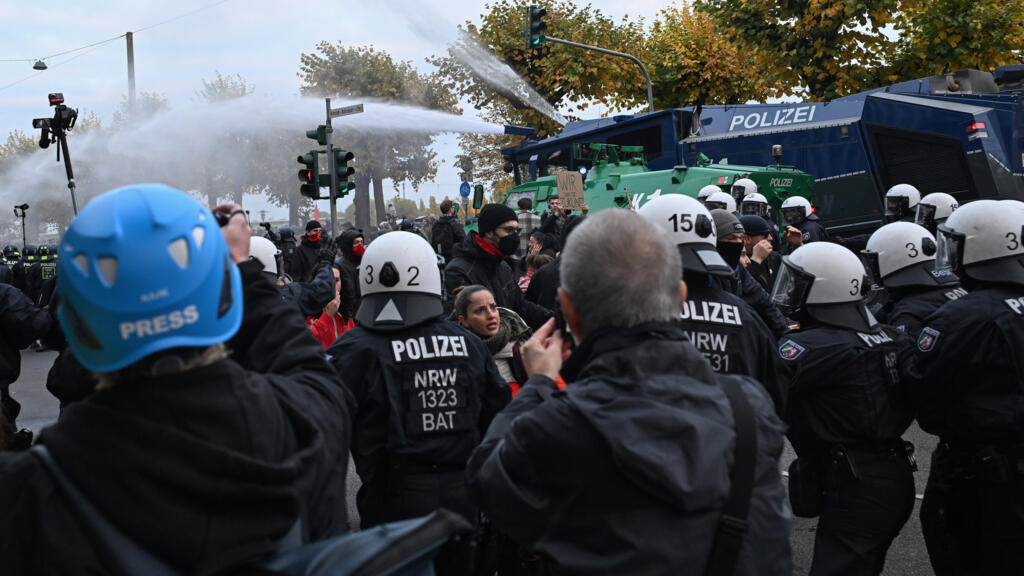
Tens of thousands of young people took part in the Gen Z regelt protests in more than 30 German cities on 31 October 2026, demanding more funding for schools, action on living costs and an end to the push towards compulsory military service. Organisers reported about 120,000 participants nationwide, according to AFP, while Democracy Now put the figure at about 182,000, and there is no agreed national police count. The daytime marches were largely peaceful, but after dark there were clashes in Frankfurt and Hamburg, and police also confronted violent groups in Cologne and Berlin. Police in Frankfurt reported Molotov cocktails thrown at emergency personnel, and in Hamburg water cannon was used to disperse crowds near the main railway station.
The case for taking the protesters seriously rests on the substance of their complaints. Germany's statistics office reported preliminary consumer price inflation of 2.8 percent in October, with energy prices about 12.2 percent higher than a year earlier, which is a real burden for young people starting out on low incomes. The conscription question is also concrete. A law that took effect on 1 January 2026 sends a questionnaire on suitability and willingness to serve to every 18-year-old German citizen, and men must answer it, with eligible men facing a compulsory medical assessment. Protesters fear that the questionnaire is a first step towards compulsory call-ups, and supporters note that the demonstrations themselves were mostly peaceful.
The case against is that the movement has weakened its own message. In Frankfurt, a Reuters witness saw at least two shops looted and police arrested a suspect after a gun shop was targeted, and Hesse's interior minister Roman Poseck estimated that about 100 left-wing extremists infiltrated the protest, although that is his assessment and not an established finding. In Hamburg, about 6,700 people joined the daytime march before stones and fireworks were thrown and the organiser ended the march early. The Anadolu Agency reported more than 200 arrests, but no confirmed national totals exist. The demands are also broad, ranging from education and mental health to climate and surveillance, and the government points out that military service remains voluntary, because compulsory call-ups would require a further law passed by parliament. Inflation has also eased, from 3.3 percent in September to 2.8 percent in October.
The protests matter because they test how Europe handles a generation that is anxious about cost of living and war at the same time. The government cites Russia's war against Ukraine as the reason for its military service law, and it needs volunteers, so how it treats the youth movement will affect recruitment. The Bundesschülerkonferenz, the national school-student body, has distanced itself from the campaign committee and announced separate protests for 20 November, the day Gen Z regelt plans to join further protests across Europe, so the movement is already splitting.
The demonstrations raised legitimate questions and then lost the headlines to the violence that followed. Organisers rejected violence and said they could not control events after their rallies ended, and the next test will be whether the protests on 20 November stay peaceful enough to keep the focus on the demands.