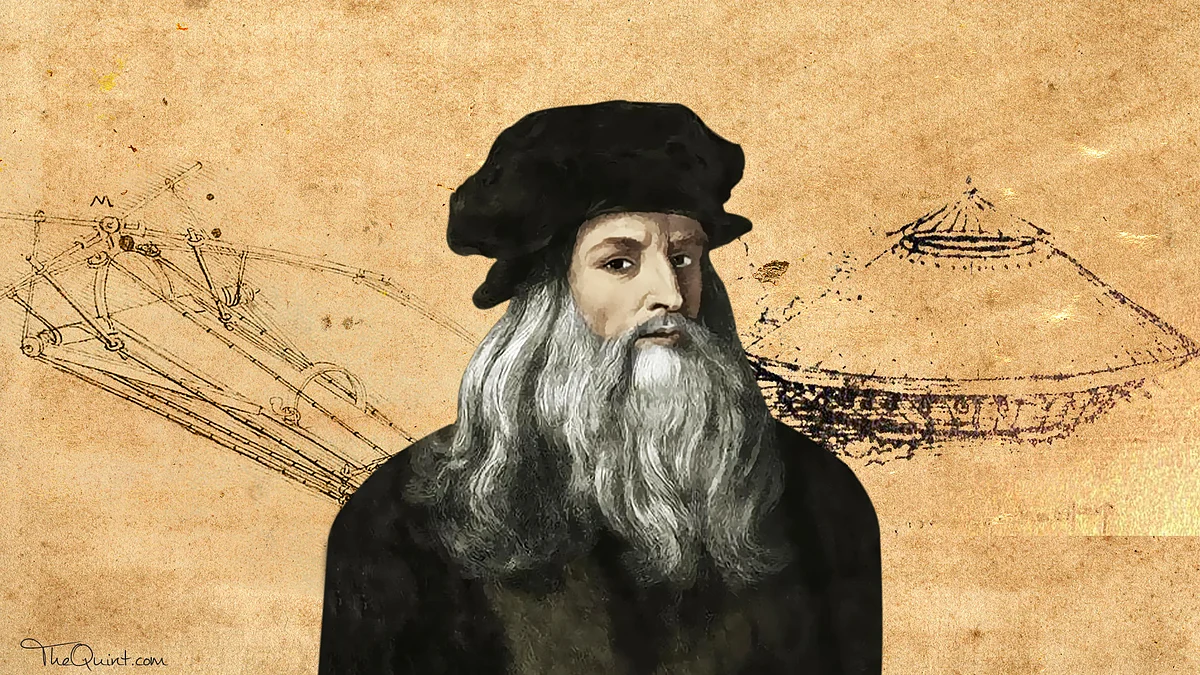
Leonardo da Vinci (15 April 1452 to 2 May 1519) was an Italian painter, draughtsman, engineer and scientist of the High Renaissance. He painted The Last Supper and the Mona Lisa, two of the most famous works in the history of art, and he filled notebooks with studies of anatomy, flight, water and machines. He is often described as the archetype of the "Renaissance man". He died at the age of 67 at Clos Lucé in France. This biography follows his life and work.
Leonardo da Vinci at a Glance
| Full name | Leonardo di ser Piero da Vinci |
| Born | 15 April 1452, possibly Anchiano, near Vinci, Republic of Florence |
| Died | 2 May 1519, Clos Lucé, Amboise, France (aged 67) |
| Profession | Painter, engineer, scientist and inventor |
| Best-known works | The Last Supper (c. 1495 to 1498); Mona Lisa (begun c. 1503); Vitruvian Man |
| Patrons | Ludovico Sforza of Milan; King Francis I of France |
| Training | Workshop of Andrea del Verrocchio, Florence |
| Surviving works | Fewer than 25 attributed major works |
Early Life and Training
Leonardo was born out of wedlock to Piero da Vinci, a Florentine notary, and Caterina di Meo Lippi. His birthplace is uncertain, but it was probably the hamlet of Anchiano near the town of Vinci. At about the age of 14 he joined the Florence workshop of the painter and sculptor Andrea del Verrocchio, and he was an apprentice by 17. He worked with Verrocchio on The Baptism of Christ, painted around 1472 to 1475.
Milan
In 1482 Leonardo went to Milan to work for Ludovico Sforza, the city's ruler, and he stayed there until 1499. During that time he painted The Virgin of the Rocks and The Last Supper, the large mural in the refectory of the church of Santa Maria delle Grazie. He also designed machines and studied anatomy, mathematics and the proportions of the human body, and the Vitruvian Man dates from this period.
Return to Florence and the Mona Lisa
Leonardo left Milan in 1499 and began the Mona Lisa around 1503. He kept working on the portrait for many years, and sources date its completion to different years up to about 1517. It now hangs in the Louvre in Paris. He dissected human bodies in Rome and made notes for a treatise on anatomy and the voice.
Notebooks and Inventions
Leonardo recorded his observations in notebooks that cover anatomy, flying machines, water, optics and engineering. He drew flying machines and other engineering designs. The notebooks show how closely he linked his art to his study of nature.
France and Death
In 1516 Leonardo entered the service of King Francis I of France, who gave him the manor of Clos Lucé near the Château d'Amboise, and he spent his last three years there. He died at Clos Lucé on 2 May 1519, at the age of 67, and he was buried at the Château d'Amboise.
Legacy
Fewer than 25 major works are attributed to Leonardo, which makes each of them very valuable. The painting Salvator Mundi, attributed to him in whole or in part, sold at auction in 2017 for $450.3 million, a record for a work of art, although some experts dispute how much of it he painted himself. His reputation rests on how he combined painting with scientific enquiry.