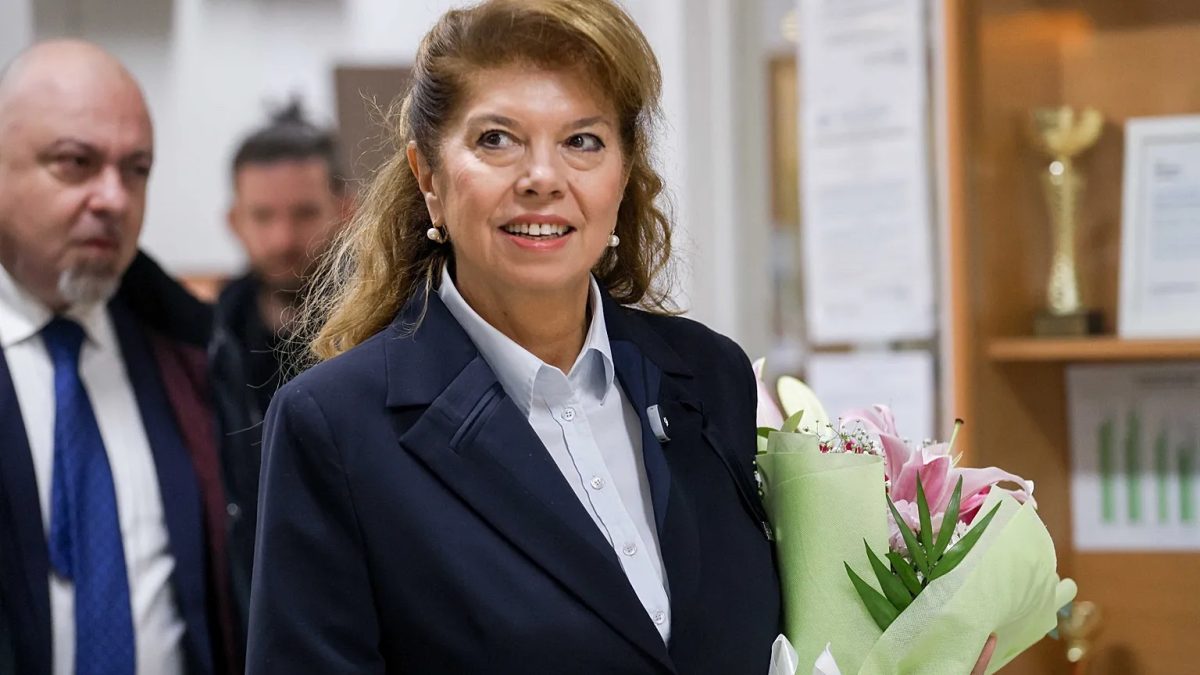
Acting President Iliana Yotova won Bulgaria's presidential runoff on 1 November 2026, finishing with 57.566 percent of the vote against 39.5 percent for the liberal, pro-Western candidate Andrey Gyurov, according to the final count reported by the Sofia News Agency. She finished 343,601 votes ahead, and Gyurov conceded, saying that this is how the Bulgarian citizens have voted. Yotova, who is 62, became acting president in January when Rumen Radev stepped down to run for Parliament, and she becomes the first woman elected to head the Bulgarian state. She is expected to be inaugurated on 22 January.
The case for treating the result as a strong mandate begins with its size. Yotova's margin was 18.1 percentage points, and it was a clear improvement on the first round a week earlier, when she led with 34.76 percent against Gyurov's 31.95 percent. She also offers continuity, having served as vice president under Radev after being elected in 2016 and 2021, and she has said her goal is a strong state with its own foreign policy in a strong Europe. European Commission President Ursula von der Leyen praised her and said she looked forward to cooperation on security, defence, competitiveness and energy independence, which suggests that Brussels does not expect Bulgaria to leave its European path. Supporters also argue that a first elected woman president is a historic step for a country that joined NATO in 2004 and the European Union in 2007.
The case against begins with participation and power. Parallel counts by polling agencies put runoff turnout at only about 27.5 to 29.1 percent, which means that fewer than three in ten voters decided who will lead the armed forces and sign international treaties. Her backing also comes from the governing party: Radev's Progressive Bulgaria endorsed her and won 131 of the 240 seats in Parliament in April's election, an outright majority, and observers warn that holding both the presidency and the parliamentary majority could weaken checks and balances. Critics also point to her positions on Ukraine. She opposes further Bulgarian military aid, argues that the war has no military solution, and is expected to favour better relations with Russia and the lifting of sanctions, which is why several outlets described her as Russia-friendly.
The result matters far beyond Sofia because Bulgaria is a NATO and EU member on the Black Sea, in a region where drone attacks and sanctions policy are live issues. The presidency is largely ceremonial and major policy needs the approval of Parliament, but the president can veto legislation and leads the armed forces, which gives the office influence over how Bulgaria votes and speaks inside the alliance. Other governments will watch whether Sofia becomes a more reluctant partner on Ukraine aid and Russia sanctions, and whether the European Union can keep a common line when one of its smaller members elects a head of state who questions the policy of arming Kyiv.
Yotova's victory is decisive on paper and thin in participation, a combination that gives her a clear title to the office but a less certain claim to speak for the whole country. Whether it strengthens Bulgaria's democracy or concentrates power will depend on how she uses the veto and her voice on foreign policy once she takes office in January.