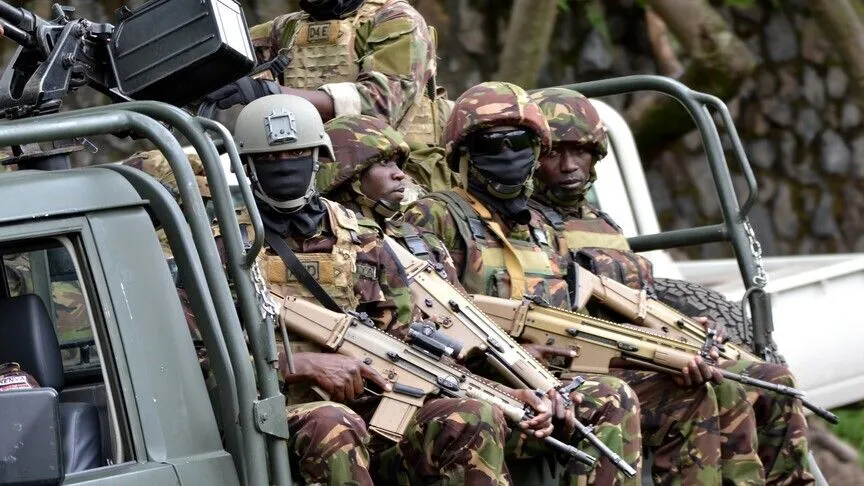
A military court in Walikale, in North Kivu province in eastern DR Congo, has sentenced at least 66 soldiers to death for cowardice, mutiny and refusing to obey orders, according to local media reports carried by the BBC. The court tried 71 soldiers. Four were acquitted and one was sentenced to 10 years in prison. The men were reportedly arrested on 20 October in Walikale and accused of abandoning their positions and fleeing during clashes with fighters of the Front for the Refoundation of the Nation (FRN), a rebel coalition that includes the M23 group. The army said the trial was intended to improve discipline among troops as they battle armed groups in the east of the country.
The army's case rests on the argument that a force that dissolves under fire cannot protect civilians in a region that has endured decades of conflict. The campaign against armed groups, including the M23, has long been undermined by poor discipline and disorganisation within the ranks, and the government has presented harsh punishment as the way to fix that. In March 2024 DR Congo lifted a 20-year moratorium on the death penalty, citing the need to remove "traitors" within the army, and the government said capital punishment would also apply to people involved in armed groups, insurrection, treason and war crimes. The Walikale verdict is not an isolated one. Last month, another 27 soldiers were sentenced to death on similar charges of cowardice after reportedly withdrawing from the frontline during clashes with rebels, which adds up to 93 soldiers sentenced to death for cowardice in about a month, on the figures reported by the BBC.
The counter-argument comes from rights groups and from the soldiers themselves. The decision to reinstate the death penalty was widely criticised by rights groups, and the army has faced persistent criticism over its lack of professionalism and discipline. Soldiers, for their part, have complained of poor pay and inadequate equipment. A conscript who is underpaid, badly armed and facing a better organised enemy may flee for reasons that a death sentence does not address, and punishing the men at the bottom of the chain does nothing about the officers, supply failures or pay arrears that may sit behind the retreats. There is also a practical question that the reports leave open: no formal executions have been carried out since the moratorium was lifted, which suggests the sentences may be working more as a warning to the ranks than as a punishment that will be carried out, although the reports do not say what the authorities intend.
The scale of the military justice drive is large. According to figures compiled by the French broadcaster RFI, at least 507 soldiers have been convicted since the beginning of 2025, including 381 death sentences. The political layer of the war is just as heavy. In October 2025, former Congolese President Joseph Kabila was sentenced to death in absentia on charges including war crimes and treason. He denied the accusations but did not appear in court to defend himself, and he has since been named as the FRN's leader. The government has repeatedly accused neighbouring Rwanda of supporting the M23, an allegation denied by both Kigali and the rebels, so the soldiers sentenced this week were fighting a coalition whose leadership is itself under a death sentence handed down by the same state.
What happens next will show whether the sentences are a deterrent or a signal. The facts to watch are whether any of the condemned men are actually executed, whether the verdicts are appealed and what happens to them, and whether the army addresses the pay and equipment complaints that soldiers have raised. Without that, the trials risk deepening resentment inside the ranks of the force that is supposed to turn the tide against the FRN. For civilians in North Kivu, who have lived with the fighting for decades, the more immediate test is whether the front lines hold, and whether a harsher disciplinary regime produces soldiers who stay at their posts or simply produces more verdicts.