
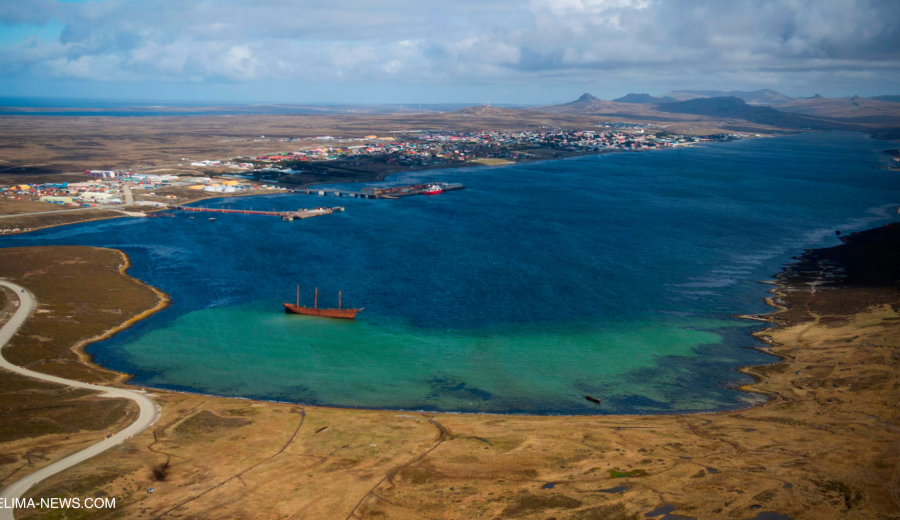
Argentina’s government said Monday it will pursue criminal charges against Israeli energy company Navitas Petroleum and several of its executives over the company’s oil and gas activities in the Falkland Islands, escalating Buenos Aires’ longstanding sovereignty dispute with the United Kingdom.
The decision follows remarks by Argentine President Javier Milei on Friday, when he announced plans to impose sanctions on companies involved in hydrocarbon exploration and production in the British-administered South Atlantic territory.
According to a statement from the Argentine presidency, Foreign Minister Pablo Quirno will file a criminal complaint against several Navitas subsidiaries, business partners and their corporate directors. The government alleges that the companies breached Argentine law by holding hydrocarbon exploration and production licences issued by the United Kingdom for operations in the North Falkland Basin.
Navitas Petroleum did not immediately respond to a request for comment.
The dispute centres in part on the Sea Lion offshore oil project, which has become a focal point of Argentina’s latest efforts to challenge energy development around the islands. The project is operated by Tel Aviv-listed Navitas Petroleum, which holds a 65% interest.
Gideon Tadmor, a prominent figure in Israel’s energy industry and chairman of Navitas Petroleum, owns approximately 9% of the company, according to LSEG data.
Milei has moved to increase economic and legal pressure on companies involved in Falklands energy projects as his administration seeks to reinforce Argentina’s sovereignty claim over the islands. Last week, the Argentine president said his government would target companies participating in oil and gas development in the territory. Potential penalties could extend beyond the companies themselves to shareholders, directors and suppliers.
Milei has also warned that companies involved in developing Falklands oil projects without the approval of the Argentine government could be prevented from conducting business in Argentina. His latest campaign has gained additional significance following comments by US President Donald Trump suggesting that Washington could reconsider aspects of its longstanding position on the Falklands dispute.
In a televised address last week, Milei said there were “winds of change” internationally that could strengthen Argentina’s position. He argued that the United States was reassessing its approach because Argentina had emerged as a reliable Western partner with strategic importance to Washington. Trump, when asked whether he was reviewing the US position on the Falklands, said: “I always review every position – that’s just one of many.” Milei described the remarks as a potentially significant development rather than a routine diplomatic statement.
The British government has rejected Argentina’s renewed claims, maintaining that sovereignty over the Falkland Islands should remain with the territory’s population. UK ministers quickly condemned Milei’s comments and reiterated that the islands would remain British for as long as their residents wished.
The sovereignty dispute dates back centuries. Britain first claimed the islands in the late 17th century and has maintained control over them, with the exception of periods of competing claims and occupation, since 1833. Argentina invaded the islands in 1982, triggering a military conflict with Britain. The UK subsequently retook control following a campaign that resulted in the deaths of more than 900 people on both sides and established the issue as one of the most enduring sources of tension between London and Buenos Aires.
The United States officially maintains a neutral position on the question of sovereignty. However, Washington has historically recognised British administration of the islands and provided substantial diplomatic support to London during the 1982 conflict.
Speculation that Washington could alter its position has intensified in recent months, potentially introducing a new dimension to the dispute. In April, a leaked Pentagon email reportedly suggested that the United States could review its position on the Falklands in response to disagreements with Britain over foreign and defence policy. The speculation emerged amid broader tensions between the Trump administration and NATO allies over defence spending and US military commitments.
Any substantial shift in Washington’s position would carry significant diplomatic implications for Britain. While it would not automatically alter sovereignty over the islands, a change in US policy could weaken Britain’s traditional diplomatic position and provide Argentina with greater international leverage.
The Falklands dispute therefore extends beyond the immediate question of oil exploration. The islands sit in a strategically important part of the South Atlantic, while offshore energy development has created a growing economic dimension to the sovereignty dispute. Argentina’s decision to pursue criminal proceedings against Navitas represents a further escalation. For international energy companies, the case also highlights the legal and geopolitical risks associated with investing in disputed territories where competing governments claim jurisdiction over natural resources.
As Buenos Aires increases pressure on companies operating in the Falklands and London continues to defend the territory’s existing status, the future of offshore oil development is becoming increasingly intertwined with the broader diplomatic struggle over sovereignty.