Argentina’s consumer prices rose 1.9% in September, up from 1.7% in August, the second month in a row below 2%, while the annual rate eased to 33.4%.
Argentina’s consumer price index rose 1.9% in September 2026 from the previous month, up from 1.7% in August, according to the national statistics institute INDEC as reported by the Rio Times and IndexBox. Bloomberg’s headline of 13 October says that Argentina posted a second straight month of inflation below 2%.
The annual inflation rate was 33.4% in September, a slight fall from 33.5% in August, according to Trading Economics. Prices have risen by 23.6% in the first nine months of the year, according to IndexBox.
The August figure of 1.7% was the lowest in 14 months, according to a Rio Times headline of that report. September’s 1.9% is therefore a small step up from a low base.
The biggest increases were in housing, water, electricity, gas and other fuels, which rose 3.1% in the month, followed by education, which rose 3.0%, according to the search summary. Food and non-alcoholic beverages made the largest contribution to monthly inflation across most regions, except in Greater Buenos Aires, where housing and utilities had the largest effect.
The figure tests President Javier Milei, whose central goal is to bring down monthly price rises before the 2027 election, according to the Rio Times. The article gives no target for monthly inflation.
The numbers can be put in context with simple arithmetic. A monthly rate of 1.9% compounded over 12 months gives an annual rate of about 25%, which is Delima News’ calculation and is below the reported annual rate of 33.4%. The difference shows that the annual figure still includes months of higher inflation from the past year.
The year-to-date figure of 23.6% in nine months implies an average of about 2.4% a month, a calculation by Delima News that shows how the first part of the year was faster than the recent months. The sources reviewed do not give the monthly figures for the early months.
Argentina’s prices are set against a global background of higher energy costs. The US consumer price index rose 3.7% in the year to September, as Delima News has reported, which is far lower than Argentina’s annual rate.
Prices of housing and utilities rose fastest, 3.1% in a month, which is about 1.6 times the headline rate of 1.9%. That is a calculation by Delima News from the two figures, and it shows that the cost of services like electricity and gas drove the household cost of living. The sources reviewed do not say whether these increases follow changes in regulated tariffs.
Education rose 3.0%, which is also well above the headline. Together the two categories show that the headline rate hides large differences between categories, and the sources reviewed do not give the rates for the other categories, such as transport and clothing.
The two lowest monthly readings of the year so far are the last two, at 1.7% and 1.9%, according to the Rio Times, which describes August as the lowest in 14 months. Whether that marks the start of a trend or a pause is not something the sources reviewed can answer.
The next INDEC release will show whether monthly inflation stays below 2%, and Delima News will report it.
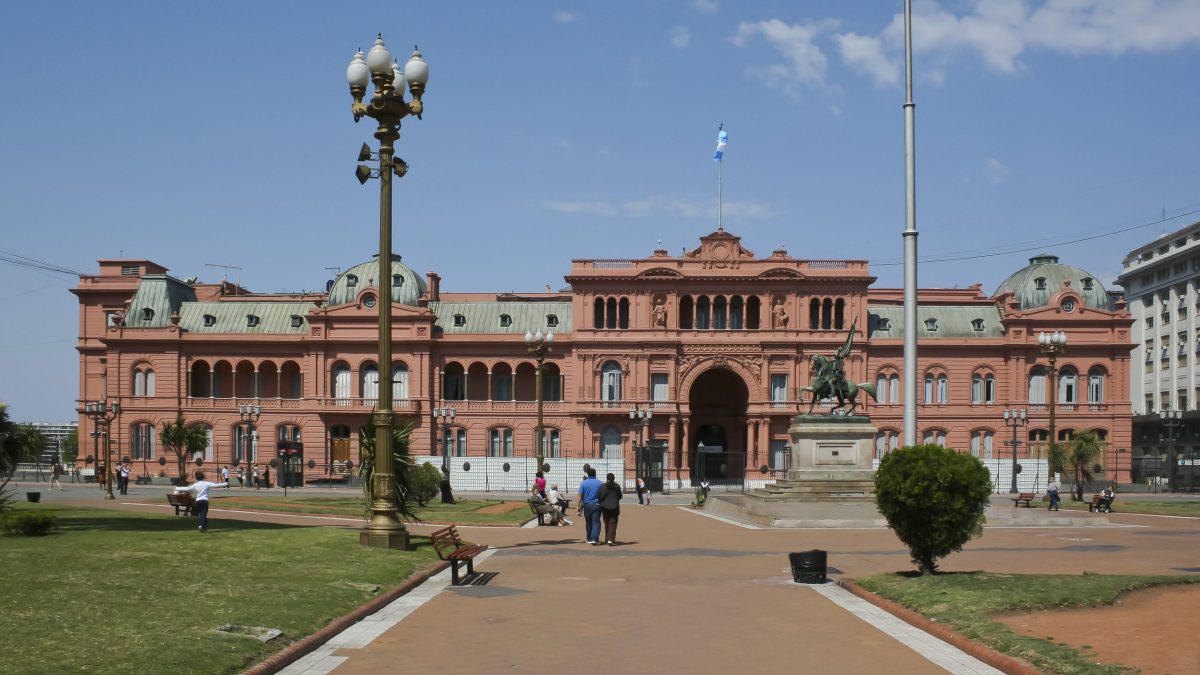
Image: The Casa Rosada in Buenos Aires (file photo). Photo: Diego Delso / Wikimedia Commons (CC BY-SA 3.0)