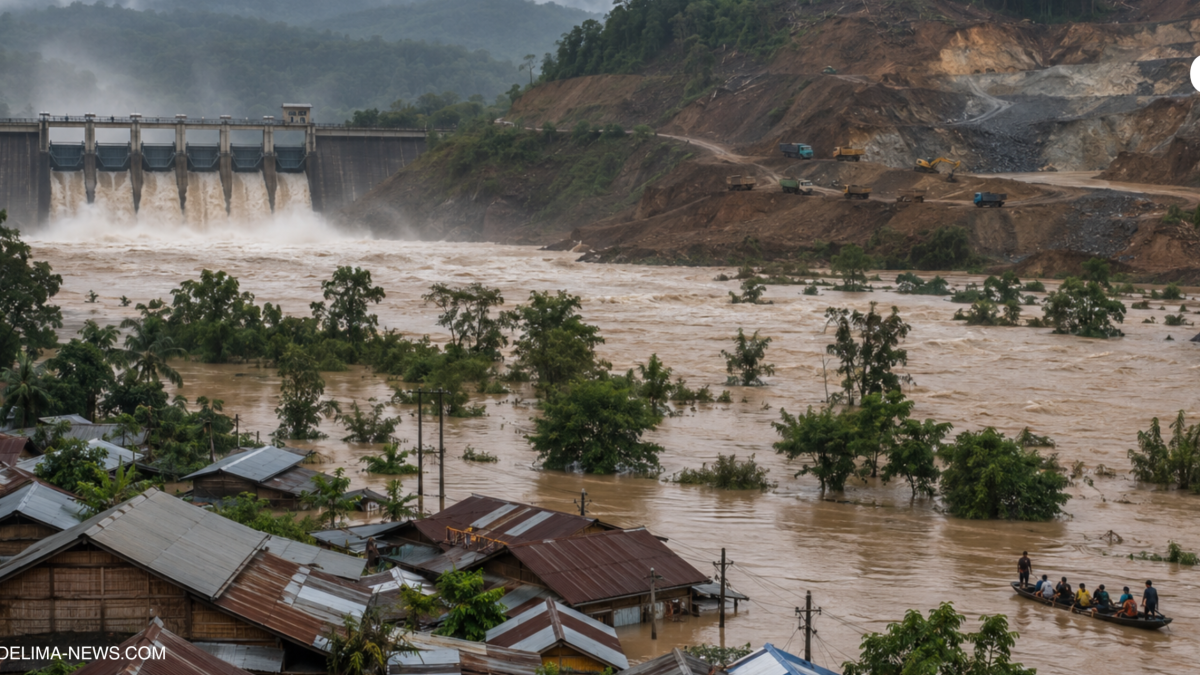
Assam recently got hit by major floods during monsoon. It’s geopgraphy is partly responsible and it floods every monsoon, but this time it’s different.
Every year, the arrival of the monsoon transforms Assam’s lush landscape into one of India’s most flood-prone regions. While seasonal flooding is a natural part of the Brahmaputra River’s ecosystem, increasingly intense rainfall and environmental changes have made these floods more destructive than ever. The 2026 Assam floods once again exposed the state’s vulnerability, claiming 85 lives, affecting 1.92 lakh people, and causing widespread damage to homes, agriculture, infrastructure, and wildlife.
The primary reason Assam experiences annual floods is its unique geography. The state lies in the vast floodplains of the Brahmaputra River, one of Asia’s largest and most powerful rivers. More than 50 tributaries feed the Brahmaputra, carrying enormous volumes of water during the monsoon. Heavy rainfall across Assam and the Himalayas, combined with snowmelt, causes rivers to overflow and inundate nearby communities.
Several natural and human-made factors have made the situation worse. Climate change has increased the frequency of extreme rainfall events, while deforestation, urban expansion, riverbank erosion, and encroachment on floodplains have reduced the land’s ability to absorb excess water. Sediment deposition also raises riverbeds over time, making floods more frequent and severe.
Days of relentless rainfall caused rivers across Assam to rise rapidly, flooding hundreds of villages and towns. Roads, bridges, and railway lines were submerged, cutting off access to many communities. Thousands of families were forced to evacuate as floodwaters entered residential areas, while relief camps provided temporary shelter for displaced residents.
The floods also disrupted schools, healthcare facilities, and local businesses, creating economic challenges that will continue long after the waters recede. Agricultural losses were especially severe, with standing crops destroyed, livestock lost, and fertile farmland covered in silt.
The floods had devastating consequences for both people and wildlife. Many lives were lost due to drowning, landslides, and flood-related accidents, while hundreds of thousands of residents were displaced from their homes.
Assam’s economy, which depends heavily on agriculture, suffered significant setbacks. Farmers lost crops, livestock, and income, threatening food security across rural communities.
Wildlife was also heavily affected. Kaziranga National Park, home to the endangered one-horned rhinoceros, experienced widespread flooding. Animals were forced to move to higher ground, increasing the risk of road accidents and human-wildlife conflict. Although seasonal floods help maintain the park’s ecosystem, unusually severe flooding can damage habitats and result in animal deaths.
The National Disaster Response Force (NDRF), State Disaster Response Force (SDRF), Indian Army, and local authorities launched large-scale rescue operations using boats and helicopters. Thousands of stranded residents were evacuated to relief camps, where they received food, drinking water, medical care, and temporary shelter.
Community volunteers played an equally important role by helping rescue neighbors, distributing relief supplies, and supporting local recovery efforts. Government agencies also announced compensation packages and began assessing infrastructure damage to guide rehabilitation.
Experts agree that Assam’s flood problem cannot be solved by embankments alone. A comprehensive strategy is needed, including stronger early warning systems, improved drainage infrastructure, wetland restoration, riverbank erosion control, and better land-use planning.
Protecting forests, restoring natural floodplains, and investing in climate-resilient infrastructure will also help reduce the impact of future floods. At the same time, communities must be equipped with disaster preparedness programs and effective evacuation plans.
The 2026 Assam floods are another reminder that recurring floods are no longer just seasonal events—they are becoming increasingly severe due to climate change and environmental pressures. While floods cannot be eliminated, better planning, sustainable development, and coordinated disaster management can significantly reduce their impact.
Building long-term resilience will not only protect lives and livelihoods but also preserve Assam’s unique ecosystems for future generations.
Assam receives heavy rainfall every year. It needs to build infrastructure to utilize the water and be water sufficient.