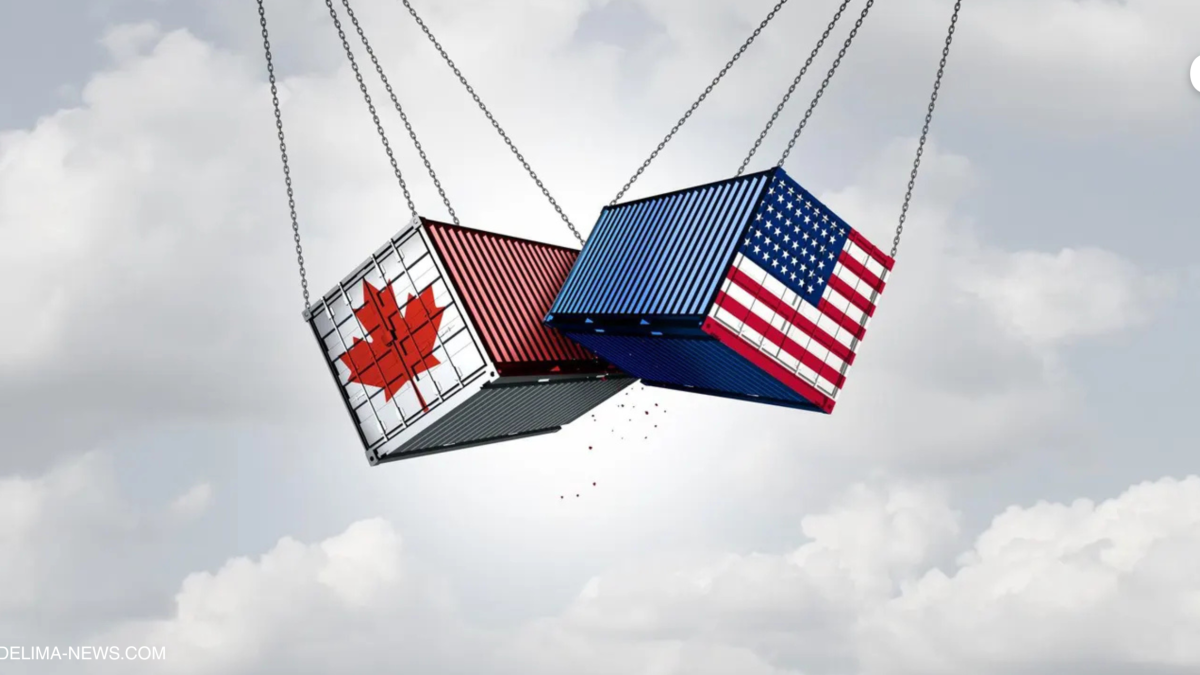
Canada has imposed new tariffs on approximately $20 billion worth of U.S. imports, marking another escalation in the increasingly costly trade dispute between two of North America’s largest trading partners.
The measures, which took effect Tuesday, cover a broad range of American products, including clothing, cheese, metal components and wood products. The tariffs are intended to mirror duties previously imposed by US President Donald Trump on Canadian goods after trade negotiations between the two countries broke down last month.
While the immediate economic impact of the latest measures is expected to remain relatively contained, given that the targeted imports represent only a fraction of annual bilateral trade, the broader concern is the potential for further retaliation. A prolonged cycle of tariff increases could raise costs for manufacturers, retailers and consumers while disrupting supply chains that have developed around deeply integrated US-Canadian trade.
Canada Adopts Harder Trade Position
Prime Minister Mark Carney has sought to present Canada as increasingly prepared to challenge Washington’s trade policies rather than accept unilateral US tariff measures.
Carney has described the dispute in increasingly forceful terms, at one point characterising the situation as a “war.” Canadian officials have repeatedly indicated that Ottawa intends to respond to US tariffs on a dollar-for-dollar basis, raising the prospect of further countermeasures if Washington expands its trade restrictions.
For Canadian businesses, the uncertainty surrounding future tariffs may prove more damaging than the immediate cost of the latest duties. Companies operating across the US-Canada supply chain could face higher input costs, additional compliance requirements and disruptions to established sourcing and distribution arrangements.
Trump Signals Further Pressure on Canada
The Trump administration has continued to take an aggressive approach toward Canada, while senior US officials have questioned the economic and strategic weight of their northern neighbour.
Trump has already threatened additional tariffs on Canadian automobile imports, a particularly sensitive area given the highly integrated North American automotive industry. He also suggested on Friday that Washington could consider significantly restricting or even halting bilateral trade.
Such measures would represent a substantial escalation given the scale of economic integration between the two countries. The United States and Canada maintain one of the world’s largest bilateral trading relationships, with companies in sectors ranging from automotive manufacturing and energy to agriculture and aerospace relying heavily on cross-border commerce.
Bombardier Becomes the Latest Flashpoint
Hours before Canada’s latest tariffs came into effect, Trump intensified his criticism of Canada on social media, specifically targeting Bombardier, the Canadian aircraft manufacturer.
Trump declared that there would be “NO MORE SELLING BOMBARDIER IN THE UNITED STATES!” although the statement did not immediately establish what specific policy or trade measure would be used to restrict the company’s US sales.
The remarks add another layer of uncertainty for Bombardier and the broader aerospace sector, where international supply chains, cross-border customers and regulatory approvals make trade restrictions particularly consequential.
For businesses on both sides of the border, the latest developments reinforce the growing risk that the dispute could move beyond targeted tariffs into a broader restructuring of North American trade.
The immediate economic consequences may remain manageable, but continued escalation could have wider implications for investment decisions, corporate costs and supply-chain planning. What began as a dispute over tariffs is increasingly becoming a test of the economic relationship between two closely integrated allies.