This article examines the Ceuta migration crisis, explaining why thousands attempted to enter Spanish territory, the economic and political factors behind the crossings, Morocco-Spain tensions, the Western Sahara dispute, and similarities with the 2021 border crisis.
Spanish enclave of Ceuta is once again in the headlines for the wrong reasons. It has been reported that some 50,000 have crossed illegally into the Spanish enclave of Ceuta. They risked their lives in chaotic conditions to get through to the Spanish territory. Why do Moroccans keep crossing the border, and aren’t the countries a sea apart?
Ceuta, along with Melilla, are the only European place connected to Africa by land, as they come under Spanish rule. Spain has had possession of these enclaves since 1580. Although Morocco does not officially recognise Ceuta, it refers to them as occupied lands. Even though Morocco claims sovereignty over Ceuta, Spain controls it, making it a territorial dispute for centuries.
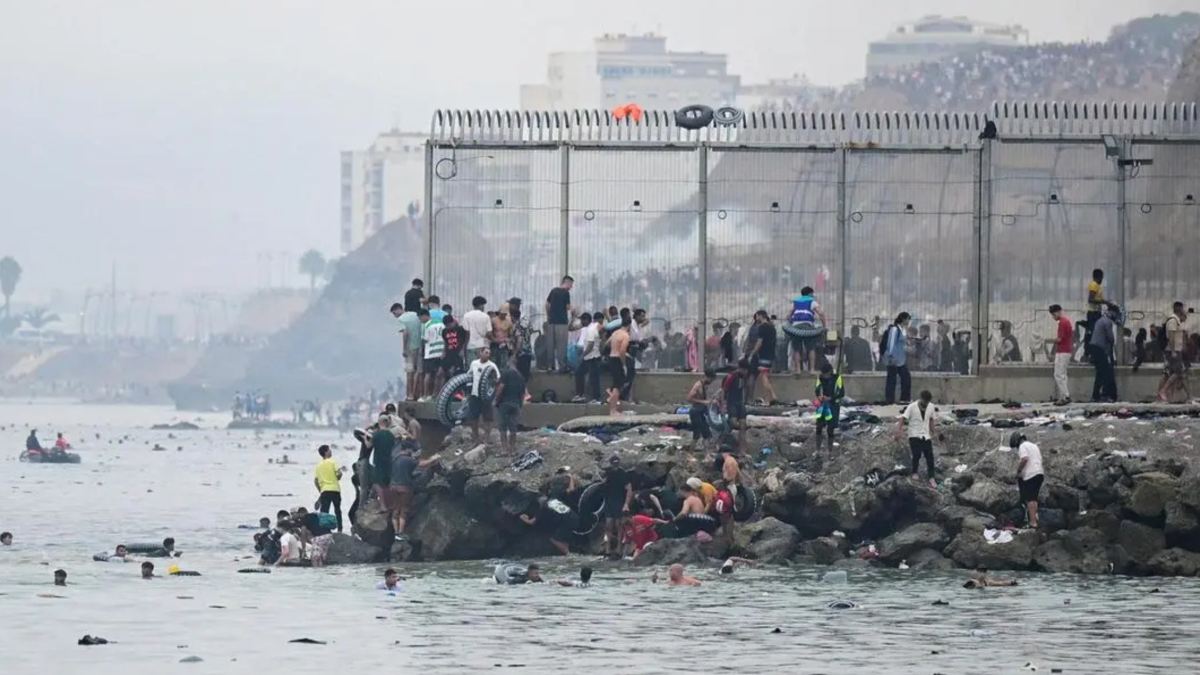
In late July 2026, approximately 50,000 people attempted to enter Ceuta by swimming around the barriers for kilometres using different makeshift flotation devices. The sudden entry of the migrants overwhelmed the authorities. Spain had deployed military personnel and police to tackle the problem and regain control of the border.
Morocco has a high youth unemployment rate, which has contributed to economic hardships and led people to migrate to other countries in search of better economic opportunities. Rising cost of living and a poor economic model have left Moroccans frustrated. They see Ceuta as a getaway to Europe, so they all try to enter the Spanish territory by hook or crook. Misinformation has only added fuel to the fire by misinforming the migrants that Spain will let them stay once they enter Ceuta.
Analysts have suggested that Political tensions might be a reason Morocco let them cross the border, as a response to the Spanish PM’s visit to Algiers, since Algeria supports Western Sahara’s sovereignty, which used to be Moroccan territory.
Ceuta is important because it puts European territory on African Soil, and maintaining control over the waters near the enclaves makes Spanish control over maritime borders stronger. Many Africans try to cross the heavily fortified border to enter the EU and seek asylum in Europe.
Spain has reinforced its border with Morocco and is deploying police and military to keep a close eye on the movement. Spain has provided humanitarian support to the migrants who have crossed the border. The majority of the people who crossed have been sent back to Morocco under Bilateral Cooperation. Even though they’ve sent them back, Spain is processing and will provide asylum to those who are eligible for it.
Morocco has denied any intentional participation in the border crossing and has accepted back the migrants. Many speculations claim that Morocco intentionally allowed the crossing, in an attempt to overwhelm the Spanish authorities. The debate over Morocco’s intention will always be in question as to how the African country allowed this to happen.
While crossing the sea, dozens of people lost their lives in an attempt to cross the border while they got away by the waves, and those who made it required food, water, shelter, and medical care. The situation was so grave that International organizations had to step in to oversee how Spain was handling the migrants and their return procedure.
This event highlighted a major issue and forced the lawmakers in Europe to review their migration policy in the wake of the Ceuta situation. European leaders were asked to draft stronger measures to curb this increasing problem.
A similar crisis happened in 2021, although the number was much lower than in the latest crossing, which was 8000. This crossing was a result of Morocco relaxing its border to encourage people to cross the border due to political tension regarding Spain’s support of Western Sahara. The current scene is compared to the one in 2021. To make sure that this never happens again, the leaders of both countries, as well as EU leaders, have to devise strategies to make sure this never happens again, and to protect themselves from illegal immigration.
The crisis matters because Ceuta is an EU gateway in Africa, linking migration, border security, humanitarian concerns, and Spanish-Moroccan tensions. It highlights Europe’s struggle to manage irregular migration while protecting borders, processing asylum seekers, and preventing migration from becoming geopolitical leverage.