Israel says Colombia will open its embassy in Jerusalem next week, making it the latest country to base its mission in the disputed city. President Abelardo De la Espriella restored ties with Israel after taking office in August. Protesters in Bogotá have rallied against the move.
Israeli Foreign Minister Gideon Saar announced on Thursday, October 8, that Colombia will open an embassy in Jerusalem, Al Jazeera reported, citing AFP.
“Next Wednesday, we are going to inaugurate … the Colombian embassy,” Saar told a conference in Jerusalem.
An official at Colombia’s Foreign Ministry told AFP that Foreign Minister Omar Bula Escobar would travel to Jerusalem on Sunday ahead of the opening.
A Reversal in Bogotá
President Abelardo De la Espriella, sworn in in August, promised close relations with Israel during his campaign. After taking office he restored diplomatic ties between the two countries. Colombia had previously cut ties with Israel over the war in Gaza.
Why Jerusalem Is Contested
Both Israelis and Palestinians claim Jerusalem as their capital. Most countries keep their embassies in Tel Aviv, because the international community does not recognise Jerusalem as Israel’s capital.
Since 2018, the following have opened embassies in the city, Al Jazeera reported:
- The United States
- Guatemala, Paraguay and Honduras
- Kosovo
- Papua New Guinea, Fiji and Nauru
- Somaliland, which only Israel has recognised as independent
Israel’s Next Targets
Saar said the Democratic Republic of the Congo would open its embassy in Jerusalem “very soon” and hinted at another opening. Of Brazil, where right-wing Senator Flávio Bolsonaro won the first round of the presidential election, he said: “I think that with the possible results in Brazil, they might have the same move.”
“We will work hard because this is the diplomatic battle over the truth,” Saar said. “And the truth is, Jerusalem was always the capital of one nation.” He dismissed Palestinian claims to the city.
Protest in Colombia
Protesters rallied in Bogotá on Wednesday against the government’s Israel policy, including the embassy decision.
“When diplomatic relations with Israel were broken off, the message was that we would not be a nation complicit in their atrocities,” protester Nicolás Isaza told Al Jazeera. “Today our government is no longer drawing a line against the atrocities being committed in Palestine.”
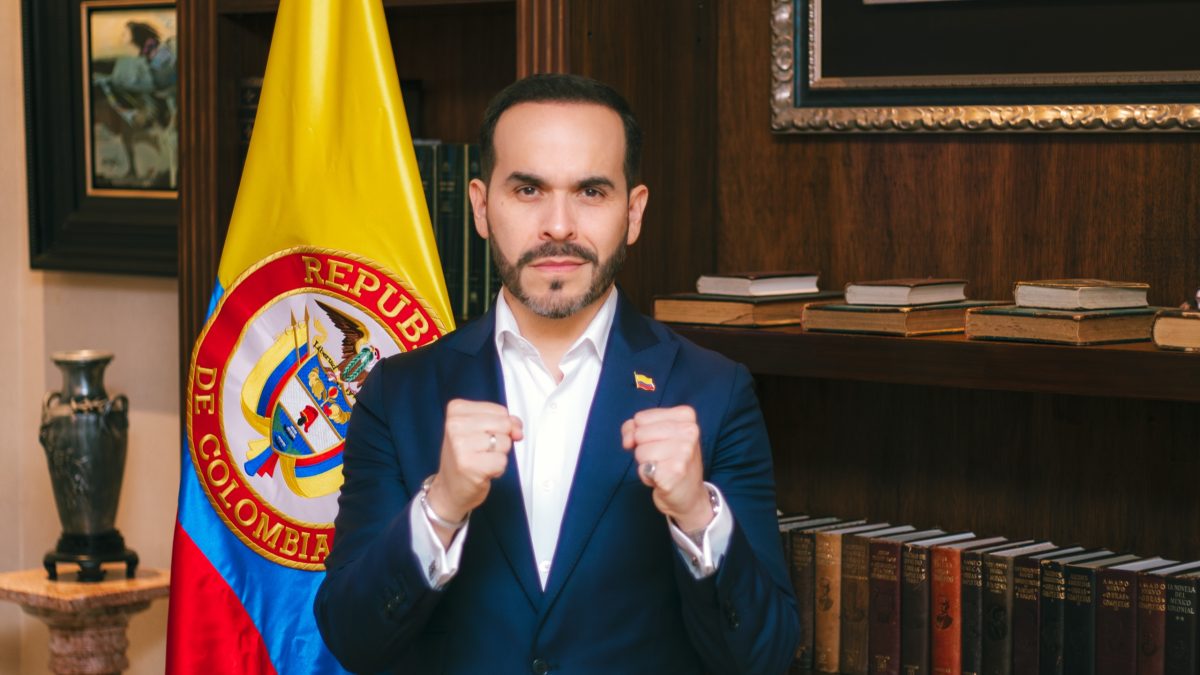
Image: Abelardo De la Espriella, pictured as a presidential candidate in May 2026 (file photo). Photo: Abelardo de la Espriella / Wikimedia Commons (CC0)