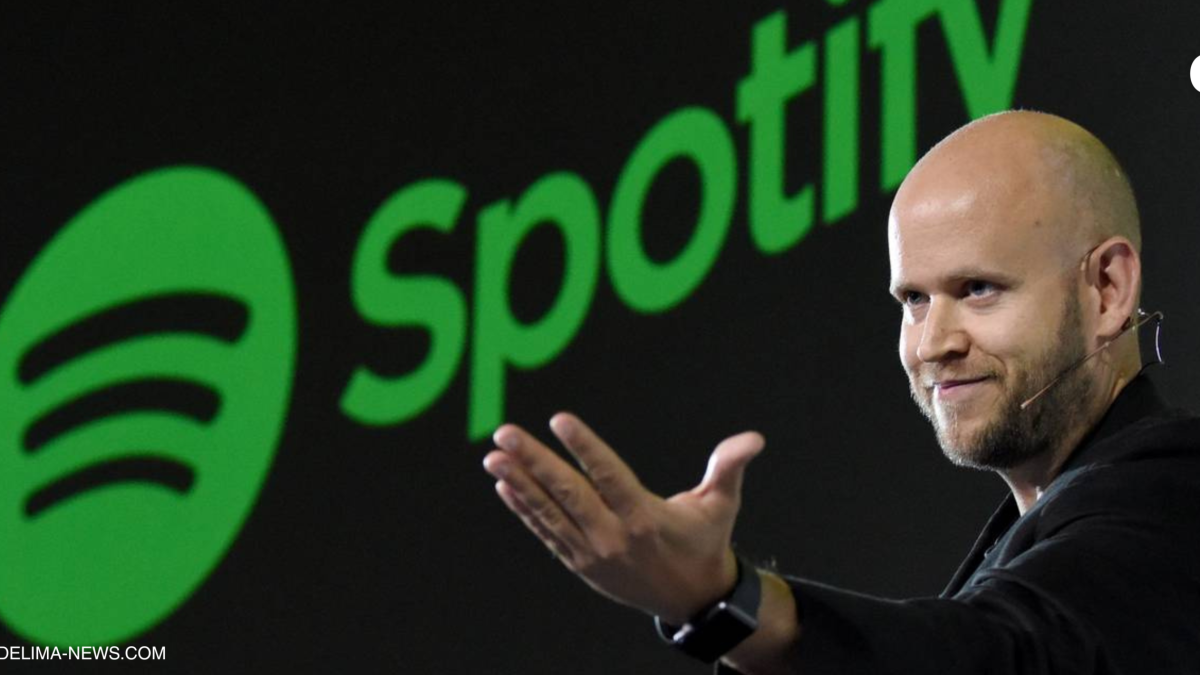
Daniel Ek is one of Sweden’s most successful technology entrepreneurs and the co-founder of Spotify. Born in Stockholm in 1983, Ek developed an unusual combination of interests in music, computers and entrepreneurship from an early age. Those interests eventually led him to create one of the world’s largest music-streaming platforms.
As of 2026, Ek is 43 years old and serves as Spotify’s Executive Chairman, after stepping down as CEO at the beginning of 2026 following almost two decades at the company’s helm.
Net-worth estimates fluctuate considerably with Spotify’s share price and Ek’s holdings. Forbes estimated his fortune at $8.7 billion in December 2025, while other 2025 estimates were higher, so any figure should be treated as an estimate rather than a fixed amount.
Early Life and Family
Daniel Georg Ek was born on February 21, 1983, in Stockholm, Sweden, and grew up in the Rågsved district of the Swedish capital. Technology and music entered his life remarkably early. Ek received a guitar at around five and a computer around the same period. His family also had strong connections to music: his maternal grandparents included an opera singer and a jazz pianist. His stepfather worked in IT, giving Ek an environment where both technology and music were familiar parts of everyday life.
His childhood was not that of a typical future billionaire. Instead, Ek became fascinated with computers and began experimenting with programming. By his teenage years, he had already realized that his technical skills could be turned into a business.
Daniel Ek’s Education
Ek attended IT-Gymnasiet in Sundbyberg, graduating from high school in 2002. He subsequently enrolled at KTH Royal Institute of Technology, one of Sweden’s leading technical universities, to study engineering. However, his university education was extremely short-lived.
After roughly eight weeks, Ek decided to leave KTH. He felt that the theoretical mathematics-heavy curriculum wasn’t what he wanted to spend his time doing. Instead, he wanted to pursue technology and business in the real world. His decision to drop out could easily have become a major setback. Instead, it became part of the unconventional career path that eventually made him a billionaire.
Becoming an Entrepreneur as a Teenager
Ek was already earning money from technology before reaching adulthood. During the late-1990s dot-com boom, he began creating websites for businesses while still a teenager. He recruited friends to help with coding and design and reportedly earned thousands of dollars per month from his projects.
By his mid-teens, Ek was experimenting with servers, web hosting and search technology. He even applied to work for Google at around 16 but was reportedly told that he needed a degree. Instead of waiting for an opportunity, he continued building his own.
After high school, Ek worked in the Swedish technology and internet sector, including positions at companies such as Jajja and Tradera. He later became involved with Stardoll and eventually founded Advertigo, an online advertising company.
Advertigo was acquired by TradeDoubler in 2006. That transaction helped establish Ek financially and, more importantly, connected him with the person who would become his most important business partner: Martin Lorentzon.
The Birth of Spotify
By 2006, the music industry was in crisis. Physical CD sales were declining while illegal file-sharing and piracy were widespread. Consumers wanted instant access to music, but the legal alternatives were often inconvenient. Ek believed technology could solve the problem. Together with Martin Lorentzon, he founded Spotify in 2006. Their idea was relatively simple but extremely ambitious: create a legal music service that was easier and more attractive than piracy.
Spotify eventually launched in Europe in 2008. Its combination of a free, advertising-supported tier and a paid subscription model helped it rapidly gain users. The company’s philosophy fundamentally changed how people consumed music. Instead of purchasing individual songs or albums, users could access enormous catalogs instantly through the internet.
From Startup to Global Giant
Ek remained at the center of Spotify as it expanded internationally. The company eventually went beyond music, adding podcasts, audiobooks and other forms of audio content. Spotify also made major acquisitions and signed high-profile podcast deals as it attempted to become a broader audio platform.
In 2018, Spotify became a publicly traded company through an unusual direct listing rather than a traditional initial public offering. The move gave the company another major milestone in its transformation from a Swedish startup into a global technology company. By 2025, Spotify had grown to hundreds of millions of users worldwide, making Ek one of the most influential figures in the modern music business.
Daniel Ek’s Personal Life
Despite his enormous wealth, Ek has generally maintained a relatively private personal life and has often been described as more introverted than the stereotypical celebrity billionaire. He married Sofia Levander in 2016, and the couple have two children.
Interestingly, Ek went through a period of personal uncertainty shortly after becoming wealthy. Forbes has reported that after selling his first major technology business, he purchased an expensive Stockholm apartment and a Ferrari and immersed himself in a lavish lifestyle.
But he eventually became unhappy with that life. He sold the Ferrari, withdrew from the social scene and spent time in a cabin, playing music and meditating. During this period, he seriously considered becoming a musician. That experience helped him realize that his two greatest passions were technology and music—a combination that ultimately became the foundation of Spotify.
Daniel Ek’s Career After Spotify
Spotify isn’t Ek’s only business interest. He established Prima Materia, an investment firm focused on ambitious technology companies and problems that he believes require long-term investment. He has also become involved in companies working in areas such as healthcare and artificial intelligence.
One notable investment is Helsing, a European defense-technology company developing AI-based systems. Ek became chairman of Helsing, reflecting his increasing interest in technologies beyond consumer entertainment. He has also been involved with Neko Health, a health-technology company focused on preventative healthcare.
Why Daniel Ek Stepped Down as Spotify CEO
After nearly 20 years as Spotify’s CEO, Ek announced in September 2025 that he would step down from the CEO position effective January 1, 2026. He was succeeded by Spotify executives Alex Norström and Gustav Söderström, who became co-CEOs.
Ek, however, did not leave Spotify. He transitioned into the role of Executive Chairman, allowing him to concentrate more heavily on long-term strategy, capital allocation and the company’s broader direction. The change marked the beginning of a new phase in his career: moving from running Spotify’s daily operations to focusing on its long-term future and his growing portfolio of technology investments.
Daniel Ek’s Net Worth
Daniel Ek’s wealth is closely tied to his ownership and economic interests in Spotify, meaning his net worth can change significantly as the company’s stock price moves. Forbes estimated Ek’s net worth at approximately $8.7 billion in December 2025. Earlier in 2025, Forbes estimates had placed his wealth above $9 billion, illustrating how quickly billionaire wealth can fluctuate with public-market valuations.
His fortune is therefore not simply money sitting in a bank account. A significant portion represents the value of his investments and ownership interests in companies.
The Legacy of Daniel Ek
Daniel Ek’s story is ultimately about combining two seemingly different interests: music and technology. He was a teenager building websites, a university dropout, a young millionaire who briefly lost his sense of direction, and eventually the founder of a company that transformed the way hundreds of millions of people consume music.
His greatest achievement wasn’t simply becoming wealthy. It was identifying a problem—music piracy and the outdated way music was being distributed—and building a product that made legal access to music more convenient. Spotify helped turn streaming into the dominant model of music consumption and made Daniel Ek one of the most important technology entrepreneurs of his generation.
His journey demonstrates a lesson that runs throughout his career: education can provide knowledge, but curiosity, experimentation and the willingness to solve difficult problems can create entirely new industries.