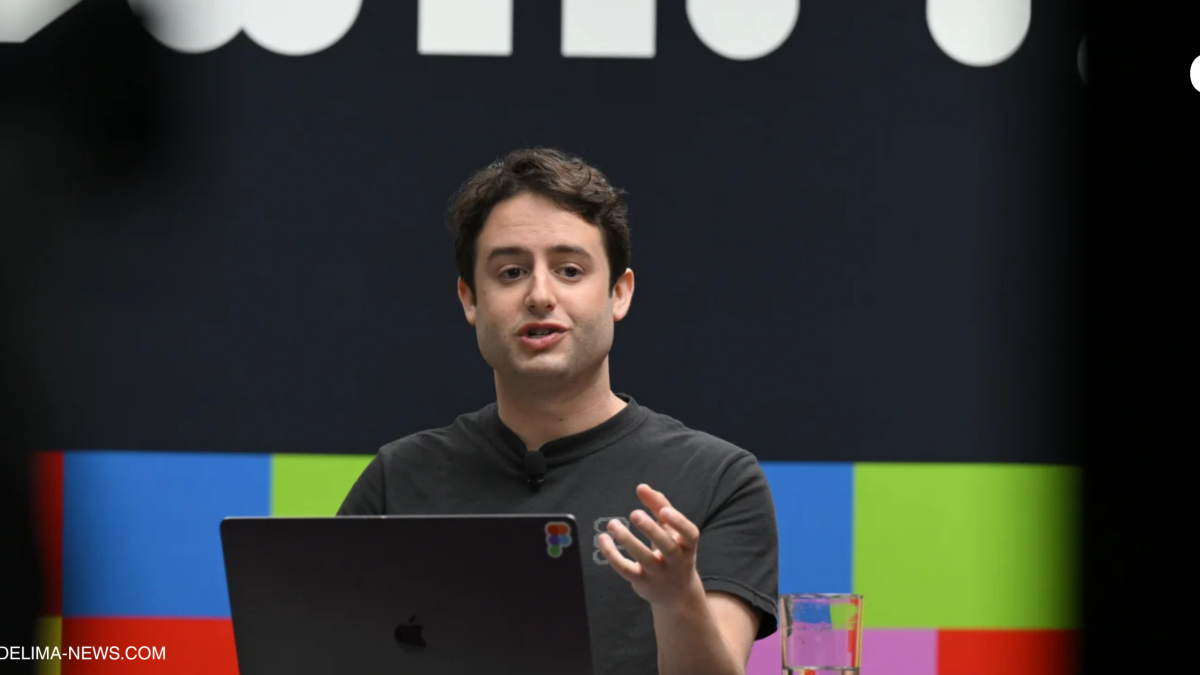
Dylan Field’s story is one of the more unusual journeys in Silicon Valley. He left Brown University before completing his degree, accepted a $100,000 Thiel Fellowship, experimented with several startup ideas and eventually co-founded Figma, a company that transformed how designers collaborate online.
Today, Field is the CEO and co-founder of Figma and, following the company’s 2025 stock-market debut, one of the most prominent young figures in the technology industry. As of August 29, 2026, Forbes estimates his net worth at approximately $1.6 billion.
Early Life and Family
Dylan Field was born in 1992 and grew up in Penngrove, California, in Sonoma County. His fascination with technology began remarkably early. According to profiles of Field, he taught himself to use his family’s computer when he was only three years old.
His interests quickly moved beyond ordinary computer use. As a teenager, Field became fascinated by mathematics, robotics and programming. At around 13, he was already taking university-level mathematics courses. He eventually attended a technology-focused magnet high school in Sonoma County, where he built robots and websites for friends.
Interestingly, technology wasn’t his only childhood experience. Field also spent part of his childhood as a child actor, appearing in commercials, including one connected to Windows XP.
Details about Field’s parents and wider family have remained relatively private. His father has occasionally spoken publicly about Field’s unusual intelligence and early interests, but Field has generally kept his family life away from the spotlight.
Education: Brown University and the Decision to Drop Out
Field attended Brown University, where he studied computer science and mathematics. He entered Brown in 2009 and quickly became heavily involved in the university’s computer-science community.
His résumé during college was already unusually impressive. He served as president of the undergraduate computer-science group and worked as a teaching assistant and research assistant. His LinkedIn profile says he completed approximately two and a half years at Brown before taking a leave of absence in 2012.
But college wasn’t the only place where Field was learning. He accumulated internships and professional experience at companies including Microsoft, LinkedIn and Flipboard. His time at LinkedIn proved particularly valuable because it introduced him to people who would later become supporters and investors in his entrepreneurial career. Then came the decision that changed his life.
The $100,000 Thiel Fellowship
In 2012, Field was selected for the Thiel Fellowship, founded by billionaire entrepreneur Peter Thiel. The fellowship offered young entrepreneurs $100,000 to leave university and spend two years working full-time on ambitious projects.
Field accepted. He left Brown without completing his degree and moved toward Silicon Valley entrepreneurship. Figma’s own account of his journey describes the fellowship as one of the pivotal moments in the company’s history. At the time, however, there was no guarantee that the decision would work.
Before Figma: Failed Ideas and Experimentation
Field and his future co-founder Evan Wallace met at Brown while studying computer science. After leaving university, the pair moved to San Francisco and began experimenting with different startup ideas. Their early projects included software related to drones and even a meme generator. None became the breakthrough they were looking for.
Eventually, Field and Wallace focused on a much bigger problem: design software was largely trapped inside desktop applications. The dominant tools were powerful but weren’t designed around the same kind of real-time collaboration that people had begun experiencing with products such as Google Docs.
Field saw an opportunity. What if designers could work together on the same design, inside a web browser, from anywhere? That idea became Figma.
The Birth of Figma
Field and Wallace began developing Figma in 2012. Building the technology was far more difficult than simply coming up with the idea. The company spent roughly four years developing the product before its first public release. The central concept was revolutionary for the design industry: make professional design collaborative and browser-based.
Instead of sending large design files back and forth, teams could work on the same project together. Figma gradually attracted designers and major companies, eventually becoming a major competitor to Adobe’s established design ecosystem. Companies such as Airbnb, Netflix and Zoom became users, while Figma developed a reputation as something like “Google Docs for designers.”
From Startup to $10 Billion Valuation
Figma’s growth accelerated dramatically. By 2021, the company had reached a valuation of around $10 billion following a major funding round. Field was still only in his twenties, but he had already built one of Silicon Valley’s most influential software companies.
His approach was also different from the stereotypical aggressive Silicon Valley founder. People who worked with or around Field have frequently described him as curious, collaborative and unusually humble. The Financial Times, for example, characterized him as a relatively low-key technology billionaire despite his enormous influence over Figma.
The $20 Billion Adobe Deal — and Its Collapse
Perhaps the most dramatic chapter of Field’s career came in 2022. Adobe announced plans to acquire Figma for approximately $20 billion, one of the largest acquisitions ever involving a private software company. At the time, Forbes estimated that Field’s roughly 10% stake could be worth more than $2 billion if the acquisition closed.
But regulators in the United States, United Kingdom and European Union raised serious competition concerns. After more than a year of regulatory pressure, Adobe and Figma abandoned the deal in December 2023. Instead of destroying Figma, however, the collapse ultimately became a turning point. Figma remained independent. And Field continued building.
Figma Goes Public
The biggest validation of Field’s strategy arrived in July 2025, when Figma went public on the New York Stock Exchange. The company initially listed at a valuation of nearly $20 billion, but its shares more than tripled on the first trading day. Forbes reported that Figma’s market capitalization eventually approached $70 billion on a fully diluted basis, while Field’s fortune surged into the multibillion-dollar range. The IPO transformed Field from a successful startup founder into one of America’s youngest technology billionaires. Figma’s public-market success also demonstrated something important: the company didn’t need Adobe to validate its business.
Dylan Field’s Net Worth
Field’s wealth has fluctuated significantly with Figma’s valuation and share price. Immediately following Figma’s IPO in July 2025, Forbes estimated Field’s fortune at approximately $6.4 billion after the stock surged on its first day. However, his estimated wealth has subsequently fallen as Figma’s share price changed.
As of August 29, 2026, Forbes lists Field’s real-time net worth at approximately $1.6 billion. That figure should be understood as an estimate rather than cash sitting in a bank account. Much of Field’s wealth is connected to his ownership of Figma stock, meaning his net worth can rise or fall with the company’s market value.
Personal Life
Despite becoming a major figure in Silicon Valley, Field has maintained a relatively private personal life. He is married to Elena Nadolinski, and the couple has one child. Field revealed his wife’s pregnancy publicly in 2021 around the same period that Figma introduced FigJam.
He has also developed interests outside traditional software entrepreneurship. In 2021, Field attracted considerable attention after selling a CryptoPunk NFT for approximately $7.5 million worth of Ethereum. He has described himself as an avid collector of digital art and an investor in crypto-related projects.
What Makes Dylan Field’s Story Different?
Field’s journey isn’t simply another “college dropout becomes billionaire” story. His success came from a combination of technical ability, early experimentation, networking, product vision and patience. He left Brown at roughly 20 years old with a $100,000 fellowship. His first ideas failed. Figma took years to build. The company faced an existential threat when its $20 billion Adobe acquisition collapsed.
Yet Field continued. Rather than treating the Adobe deal as the ultimate destination, he and his team used independence to keep expanding Figma. The eventual IPO proved that the company could stand on its own.
Today, Field remains Figma’s CEO and chairman, leading a company that has evolved from a small startup into one of the world’s most important collaborative design platforms. Figma’s 2025 regulatory filing confirms that Field has served as CEO and president since 2012 and became chairman of the board in 2025.
The Bigger Lesson
Dylan Field’s biography is ultimately a story about long-term conviction. At 20, dropping out of Brown looked like an enormous gamble. At 24, Figma was still largely an experiment. At 29, it was worth billions. At 30, Adobe wanted to buy it for $20 billion. At 33, Figma went public and Field briefly became worth more than $6 billion.
His story shows that extraordinary entrepreneurial success rarely comes from one brilliant idea alone. It often comes from finding a problem worth solving, surviving the years when nobody is watching, and continuing to build when the obvious exit disappears. And for Dylan Field, the most interesting part of the story may be that his biggest success came after the $20 billion acquisition he once seemed destined to accept fell apart.