A devastating Nepal flash flood struck Rasuwa district near the Tibet border, killing at least nine people and leaving hundreds missing. The disaster destroyed homes, roads, bridges and hydropower infrastructure, while disrupting vital trade routes. The suspected ice and rock avalanche highlights the growing vulnerability of Himalayan communities to floods, landslides and other climate related disasters.
A devastating flash flood along Nepal’s border with Tibet has killed at least nine people, left hundreds missing and destroyed homes, roads and hydropower infrastructure. Beyond the immediate tragedy, the disaster is another warning that extreme floods, landslides and glacier related events are becoming an increasingly familiar threat across the Himalayas.
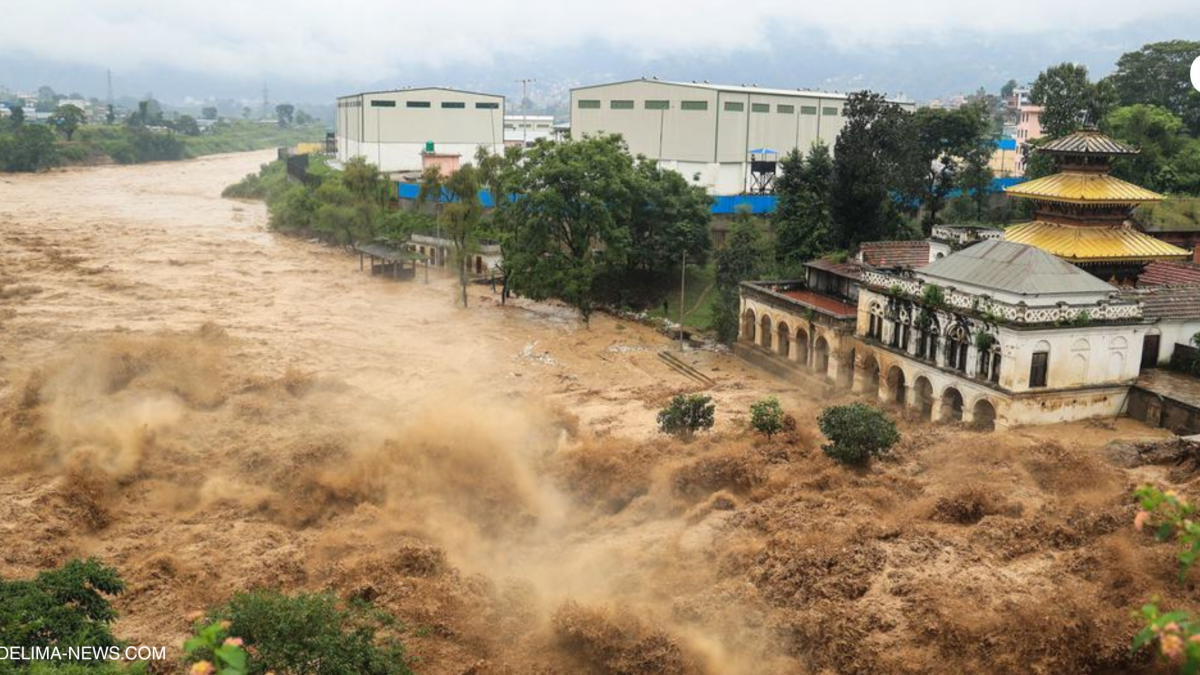
A sudden and devastating flash flood tore through northern Nepal on Wednesday, August 26, sweeping away homes, vehicles, roads, bridges and hydropower infrastructure along the Nepal Tibet border.
The disaster struck in Rasuwa district, particularly around the settlements of Timure and Syapru Besi, after a dramatic surge of water entered the Bhote Koshi River system. At least nine people had been confirmed dead in the latest reports, while hundreds of people were still unaccounted for. Officials warned that the casualty figure could rise as rescue teams reach isolated areas.
The disaster has also raised alarm because of the large number of travelers believed to be missing. Reports citing the Nepal Tourism Board indicated that as many as 384 people were unaccounted for, including 291 foreign nationals and 93 Nepali citizens. Among the missing foreign nationals were at least 105 Indians.
Unlike a conventional monsoon flood that develops over several hours or days, flash floods can occur with extraordinary speed.
In this case, experts believe an ice and rock avalanche may have blocked a river upstream before the obstruction suddenly failed, sending a huge volume of water, mud and debris downstream. The event appears to have affected the Lhende Khola and Bhote Koshi river system and produced a destructive surge through the valley.
The precise chain of events is still being investigated, meaning the cause should not yet be described as definitively established. Satellite imagery and preliminary expert assessments, however, point toward an ice rock avalanche as a possible trigger.
The Himalayan landscape makes such disasters particularly dangerous. Steep valleys allow enormous quantities of water and debris to accelerate rapidly downhill, leaving communities and infrastructure with very little time to respond.
The flooding caused widespread destruction across Rasuwa.
Homes and vehicles were swept away, while roads and bridges were damaged or destroyed. A major concern has been the damage to Nepal’s hydropower infrastructure, an increasingly important part of the country’s economy.
Reuters reported that around 430 megawatts of electricity generation was disrupted, representing more than 12 percent of Nepal’s hydropower capacity. The destruction also affected important transport and trade links between Nepal and China.
The disaster has therefore become more than a humanitarian emergency. It is also an infrastructure and economic crisis for a country heavily dependent on its mountainous transport corridors and hydropower resources.
Authorities have warned people living along rivers in several districts, including Rasuwa, Nuwakot, Dhading, Chitwan and Gorkha, to remain alert because blocked waterways and unstable terrain could produce further flooding.
Nepal’s army, police and other security agencies have been mobilised for search and rescue operations.
But the same geography that makes the Himalayas spectacular also makes disaster response exceptionally difficult. Roads have been destroyed, debris has blocked access routes and poor weather has complicated helicopter operations.
Authorities have also warned about the possibility of another surge if water remains trapped behind debris upstream.
India and China have been involved in coordinating assistance, while rescue teams continue searching for missing people.
For families waiting for information about missing travelers, the situation remains particularly uncertain.
The Nepal disaster is devastating on its own, but its significance becomes clearer when placed against the broader pattern of disasters affecting the Himalayas.
The Hindu Kush Himalaya region, which stretches across countries including Nepal, India, Bhutan, Pakistan and China, is experiencing a growing combination of extreme rainfall, rapid glacier melt, landslides, glacial lake outburst floods and flash floods.
Such events are becoming an increasingly serious concern as the region experiences rapid environmental change. Scientists have warned that warming temperatures are accelerating glacier loss across the Hindu Kush Himalaya, increasing the risks associated with unstable ice, rock and glacial lakes.
That distinction is crucial. Climate risk is not simply about receiving more rain. Increasingly, it is about when, where and how intensely the rain falls.
The Himalayan region is warming rapidly, and its glaciers are retreating. As glaciers shrink, landscapes that have remained relatively stable for centuries can become increasingly unstable.
Melting ice can contribute to the formation and expansion of glacial lakes. When natural dams collapse or are overwhelmed, enormous quantities of water can rush downstream in what is known as a glacial lake outburst flood.
But climate change is only part of the problem.
Rapid infrastructure development, road construction, hydropower projects and settlements in vulnerable valleys can increase the consequences when extreme events occur.
The result is a dangerous combination: a changing climate colliding with increasingly exposed communities and infrastructure.
Wednesday’s disaster is particularly alarming because Rasuwa experienced another major flood disaster only last year.
The region suffered severe flooding in 2025, highlighting how vulnerable the Nepal Tibet border has become to sudden water related disasters. The recurrence of major flooding in the same broad region has intensified concerns about disaster preparedness and the resilience of infrastructure.
Elsewhere in the Himalayas, the pattern has been equally disturbing.
In October 2023, the collapse of a glacial lake in India’s Sikkim state triggered a devastating flood that killed or left missing scores of people and destroyed critical infrastructure. Similar flash floods and landslides have repeatedly struck Himalayan communities in Nepal, India, Bhutan and Pakistan.
These are not isolated incidents occurring in completely unrelated places. They form part of a wider pattern of increasing exposure to multiple hazards across one of the world’s most fragile mountain environments.
The implications extend far beyond Nepal.
The Himalayas are often described as the Water Towers of Asia because their glaciers and snowfields feed some of the world’s major river systems. Hundreds of millions of people depend directly or indirectly on water originating in the mountains.
When extreme weather damages roads, bridges, dams and power projects, the consequences can spread far beyond the immediate disaster zone.
India, Pakistan, Bhutan and Bangladesh have all experienced destructive floods, landslides and extreme rainfall events in recent years.
The growing frequency of such disasters is forcing governments across South Asia to reconsider how communities are built, how infrastructure is protected and how quickly warnings can reach people living in vulnerable areas.
It would be premature to claim that every individual flood is directly caused by climate change. Floods are natural phenomena, and Nepal’s geography has always made the country vulnerable to them.
What is changing is the risk environment.
Warmer temperatures can destabilise glaciers and increase the amount of water stored in vulnerable mountain systems. Extreme rainfall can overwhelm rivers and slopes within minutes. Meanwhile, expanding roads, settlements and infrastructure place more people and assets directly in harm’s way.
This creates a dangerous cycle in which disasters that were once considered exceptional can become increasingly familiar.
The 2026 Nepal flash flood is therefore not simply another natural disaster. It is a warning about the future of the Himalayas.
For the communities of Rasuwa, the immediate priority is simple: find the missing, rescue the stranded and rebuild what has been destroyed.
But the longer term challenge is much larger.
Nepal and its neighbours will have to invest in better early warning systems, stronger disaster response networks, climate resilient infrastructure and detailed monitoring of glaciers, unstable slopes and glacial lakes.
The Himalayas cannot be made completely safe. But the human cost of living in them can be reduced.
The tragedy unfolding in Nepal demonstrates why that work cannot wait. Across South Asia, floods, landslides and glacier related disasters are no longer rare interruptions to life. They are becoming recurring threats that governments and communities must prepare for as part of the region’s new climate reality.
Nepal’s latest disaster highlights a worrying pattern across the Himalayas, where extreme rainfall, glacier retreat, landslides and flash floods are becoming increasingly dangerous. With millions dependent on Himalayan water systems and infrastructure expanding into vulnerable valleys, recurring disasters threaten lives, economies and connectivity. The event underscores the urgent need for stronger early warning systems, resilient infrastructure and regional disaster preparedness.