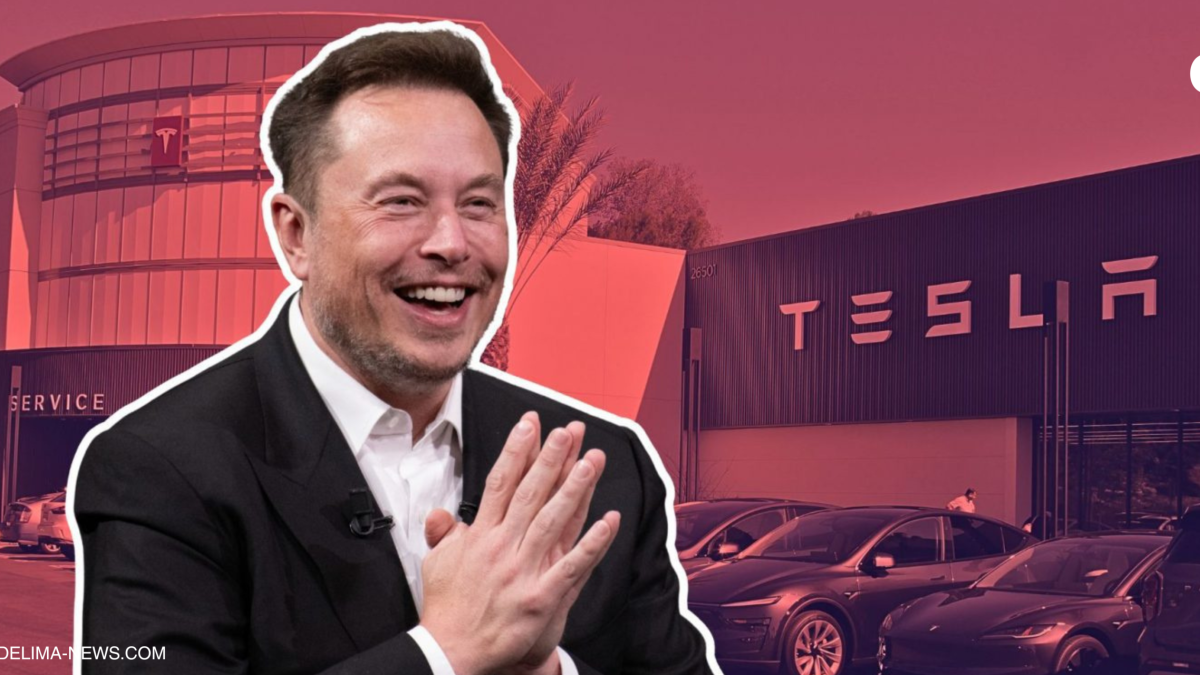
Elon Musk’s acheivements speak for itself. This article is about his work, family, businesses he built, and the impact he has on the world.
Few entrepreneurs have influenced as many industries at once as Elon Musk. From electric cars and reusable rockets to artificial intelligence, social media and brain-computer interfaces, Musk has repeatedly placed himself at the center of technological revolutions. His journey, however, began far from Silicon Valley, in Pretoria, South Africa, where he was born on June 28, 1971. At 55, Musk remains one of the world’s most powerful and controversial business figures.
Elon Reeve Musk was born to Errol Musk, an engineer and entrepreneur, and Maye Musk, a model and dietitian. He grew up in Pretoria alongside his younger brother, Kimbal, and sister, Tosca. Musk has described his childhood as difficult. He was intensely interested in computers and science from an early age and often spent hours reading and teaching himself. At just 12, he created a simple video game called Blastar and sold its code for about $500. His childhood interests were already pointing toward the future. Rather than simply consuming technology, Musk wanted to understand how it worked—and eventually how he could build things himself.
Musk attended schools in South Africa before moving to Canada in 1989. He later studied at Queen’s University in Ontario and transferred to the University of Pennsylvania, where he earned degrees in physics and economics/business. Tesla confirms that Musk holds a B.A. in physics and a B.S. in business from Penn’s Wharton School. After graduating, Musk moved to California and briefly enrolled in a graduate program at Stanford University. But the internet boom was beginning, and Musk decided that entrepreneurship offered a greater opportunity than remaining in academia. He left Stanford after only a few days. That decision became one of the defining moments of his life.
In 1995, Musk and his brother Kimbal founded Zip2, a company that provided online city guides and business directories to newspapers. Four years later, Compaq acquired Zip2 for more than $300 million. Instead of retiring with his newfound wealth, Musk reinvested it into another idea. He founded X.com, an online financial-services company that eventually became part of PayPal. PayPal transformed online payments and was acquired by eBay in 2002 for $1.5 billion. Musk’s share of the deal gave him the financial resources to pursue ambitions that were far larger than internet payments. At this point, Musk could have followed a conventional path: invest his money, build a comfortable life and enjoy his success. Instead, he chose some of the riskiest industries on Earth.
In 2002, Musk founded SpaceX with an extraordinary objective: dramatically reduce the cost of spaceflight and eventually make humanity a multiplanetary civilization. The early years were brutal. SpaceX’s first three Falcon 1 launches failed. Musk was running out of money and faced the possibility that both SpaceX and his other ventures could collapse. The fourth Falcon 1 launch succeeded in 2008, making it the first privately developed liquid-fuel rocket to reach orbit. SpaceX subsequently transformed the economics of rocket launches through reusable technology.
The company’s Falcon 9 rockets and Dragon spacecraft helped establish a new era of commercial spaceflight, while Starship represents Musk’s much larger ambition: developing a reusable transportation system capable of carrying people and cargo to the Moon, Mars and beyond. SpaceX therefore represents more than another successful company. It represents Musk’s belief that humanity should not remain confined to one planet.
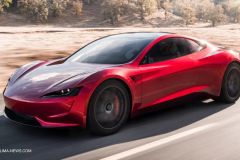
Musk’s most visible impact on everyday life may come through Tesla. He joined Tesla as an early investor in 2004 and became its CEO in 2008. At the time, electric cars were widely viewed as expensive, impractical and limited in range. Tesla attempted to change that perception by making electric vehicles desirable rather than merely environmentally responsible. The Roadster demonstrated that an electric car could be exciting. The Model S showed that an electric sedan could compete with luxury vehicles. The Model 3 subsequently pushed Tesla toward the mass market. Tesla’s influence extends beyond its own vehicles. Traditional automobile manufacturers have accelerated their electric-vehicle programs partly because Tesla demonstrated that there was enormous commercial potential in electrification. Musk’s role at Tesla has therefore helped move the automobile industry toward a future increasingly defined by batteries, software and autonomous-driving technology.
Musk’s ambitions did not stop with Tesla and SpaceX. He co-founded Neuralink, which is developing brain-computer interfaces designed to connect human brains with computers. He also founded The Boring Company, which focuses on tunneling and transportation infrastructure. In 2022, Musk acquired Twitter for approximately $44 billion and later renamed it X, transforming the platform while making himself an even more influential figure in global public discourse. He also founded xAI, bringing him directly into the rapidly developing artificial-intelligence race. This combination is unusual. Musk is not simply building software companies. His businesses operate across transportation, energy, aerospace, artificial intelligence, communications and biotechnology.
Musk’s personal life has been equally eventful. He has been married multiple times and has a large family, with publicly reported children from different relationships. His former partners have included Canadian author Justine Musk and actress Talulah Riley. His relationships and family life have frequently attracted intense media attention, but Musk generally presents himself publicly through his work and technological ambitions. His personality is equally distinctive. He is known for extraordinarily long working hours, aggressive deadlines, unconventional management decisions and a willingness to take enormous financial risks. Those qualities have helped create some of his greatest successes, but they have also generated significant criticism.
Musk’s influence extends beyond business. His ownership of X has given him a powerful platform from which to comment on politics, technology and culture. His political involvement increased significantly during the 2024 U.S. presidential election and his subsequent involvement in the Trump administration in 2025. He later acknowledged that he had become too involved in politics. Musk is therefore both admired and criticized. Supporters see him as a visionary willing to attempt projects that established companies consider impossible. Critics argue that his management style, political interventions and public statements can be reckless or polarizing. Both sides, however, recognize his extraordinary ability to attract attention, capital and talent toward ambitious technological projects.
Musk’s greatest significance may not be any single company. It is the way he has encouraged society to reconsider what is technologically possible. Tesla helped accelerate the transition toward electric transportation. SpaceX demonstrated that private companies could become major players in space exploration and helped normalize reusable rockets. Starlink is attempting to provide internet connectivity through a large satellite network. Neuralink is exploring a future in which computers and human brains can communicate directly.
xAI places Musk inside the race to develop increasingly powerful artificial intelligence.
Together, these projects reveal a consistent philosophy: identify enormous problems, apply engineering and capital aggressively, and attempt solutions on a scale that conventional businesses might consider unrealistic.
Elon Musk’s story is far from finished. At 55, he remains deeply involved in several industries that could determine the direction of the next few decades. His vision stretches from electric vehicles and artificial intelligence to space exploration and human-computer integration.
Whether all of his ambitions succeed is impossible to know. Mars colonization remains an enormous technological challenge. Artificial intelligence presents both extraordinary opportunities and serious risks. Autonomous transportation and brain-computer interfaces are still developing.
But Musk has already changed the trajectory of several industries.
His life illustrates an unusual philosophy of entrepreneurship: do not simply build a better version of what already exists—try to change the boundaries of what people believe can exist.
That philosophy has made Elon Musk one of the defining—and most controversial—figures of the technological age.
Elon Musk is a visionary. He is betting on space future, electric cars. Mars colonisation, he is humanity’s biggest hope, despite his eccentric nature.