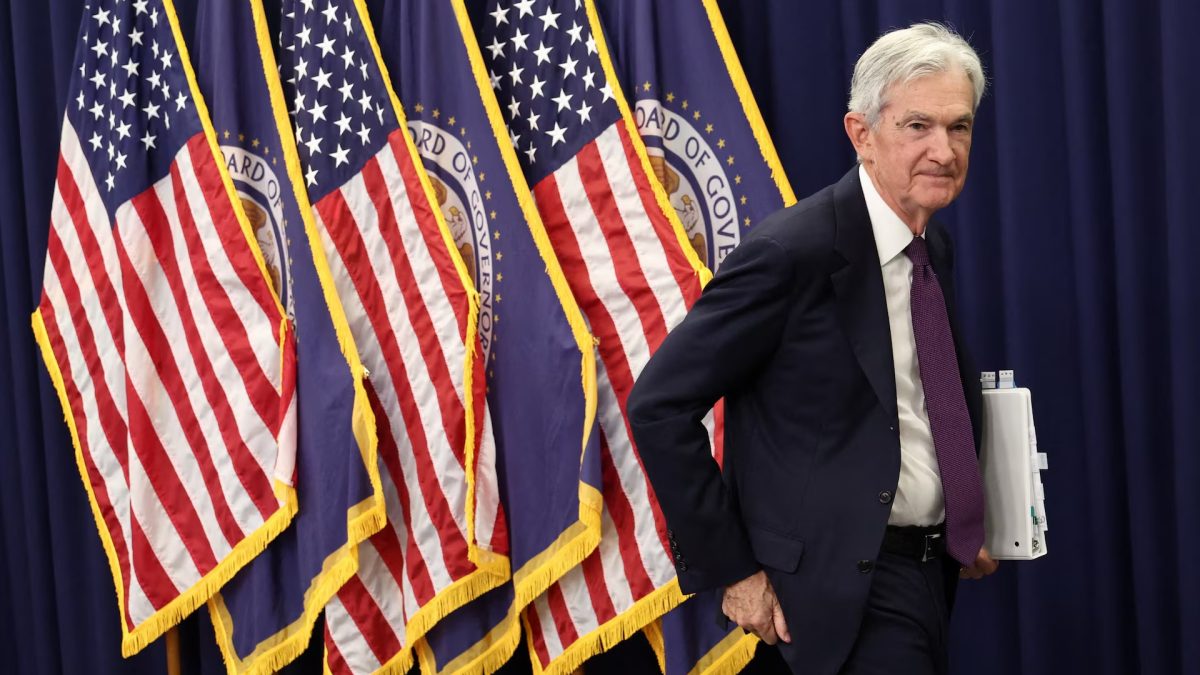
The Federal Reserve raised its target range for the federal funds rate by a quarter point to 3.75% to 4% at its 15–16 September meeting, on a 12-0 vote, and its policymakers meet again on 27 and 28 October. The statement said inflation “remains elevated” and that the move “will support a timelier return to the Committee’s 2 percent goal.” The September projections put 2026 inflation at 3.7%. With energy prices climbing again, the question is whether the hike was enough, too much, or aimed at the wrong problem.
The case for the hike is in the Fed’s own forecasts. The median projection for PCE inflation in 2026 rose to 3.7% from 3.6% in June, and core PCE inflation to 3.4% from 3.3%. Growth is solid: the statement says economic activity “is expanding at a solid pace,” the median projection for 2026 real GDP growth rose to 2.3% from 2.2%, and the projected unemployment rate fell to 4.1% from 4.3%, with the statement noting that job gains “have kept pace with the workforce”; unemployment is projected to stay at 4.1% through 2028. Prices are also the public’s main concern: in a Strength In Numbers/Verasight poll of 2,028 adults, 63% named prices and inflation as one of their top three problems, and 39% named it first.
The case against rests on where the inflation is coming from and where it is heading. The same projections have PCE inflation falling to 2.3% in 2027 and 2.1% in 2028, which suggests the Fed expects the pressure to ease without further action. The International Monetary Fund names high energy prices from the US-Iran war as the main risk to the global outlook, and Brent crude has climbed to about $112 a barrel, a supply shock that interest rates do not directly address. The rate path has also moved up: the median projection for the federal funds rate in 2027 is now 4.1%, against 3.6% in June, so borrowing costs are expected to stay higher for longer, and the median longer-run rate is 3.2%, well below the 4.1% projected for 2026 and 2027. The October meeting is also not one of the quarterly meetings with new projections, so markets will have only the statement and the data to go on. A Washington Post/ABC/Ipsos poll found seven in 10 say gasoline is becoming unaffordable, a pressure that a rate rise does not remove. The committee was united in September, voting 12-0, so any split in October would be a new signal about how policymakers read the energy shock.
The decision matters far beyond Washington. The dollar’s policy rate shapes borrowing costs for households, companies and governments abroad, and the IMF’s October outlook, which puts global growth at 3.1% in 2026, warns that energy prices are the main downside risk. After October, the committee’s next meeting is 8 and 9 December, which does include new projections, and the statement promised that the Committee “will deliver price stability.” The Fed’s choice on 28 October will land days before the 3 November midterms, when cost of living is the issue voters rank first.
The September hike answered the inflation numbers. October will show whether policymakers think the energy shock needs a second answer.