The Gaza ceasefire marked its first anniversary on 10 October 2026, and more than 100 humanitarian and human rights organisations say it exists “in name only”. According to figures cited by Al Jazeera, 1,493 Palestinians have been killed and 5,299 wounded since the truce began.
Al Jazeera reported on 13 October that, as of 12 October, Israeli attacks since the ceasefire had killed 1,493 people and wounded 5,299 in the Gaza Strip, and that the cumulative death toll since October 2023 stands at 74,382. These are the figures Al Jazeera cites for the anniversary. The charity Islamic Relief said Israeli forces “kill or wound a Palestinian every 90 minutes” under the arrangement.
More than 100 humanitarian and human rights groups said in a joint statement that the ceasefire is a truce in name only. They described aid access that falls far short of what was agreed. According to the report, aid trucks are entering Gaza at roughly one-third of the agreed rate, 44 percent of essential medicines are completely out of stock, and not one of Gaza’s 36 hospitals is operating at full capacity after a year.
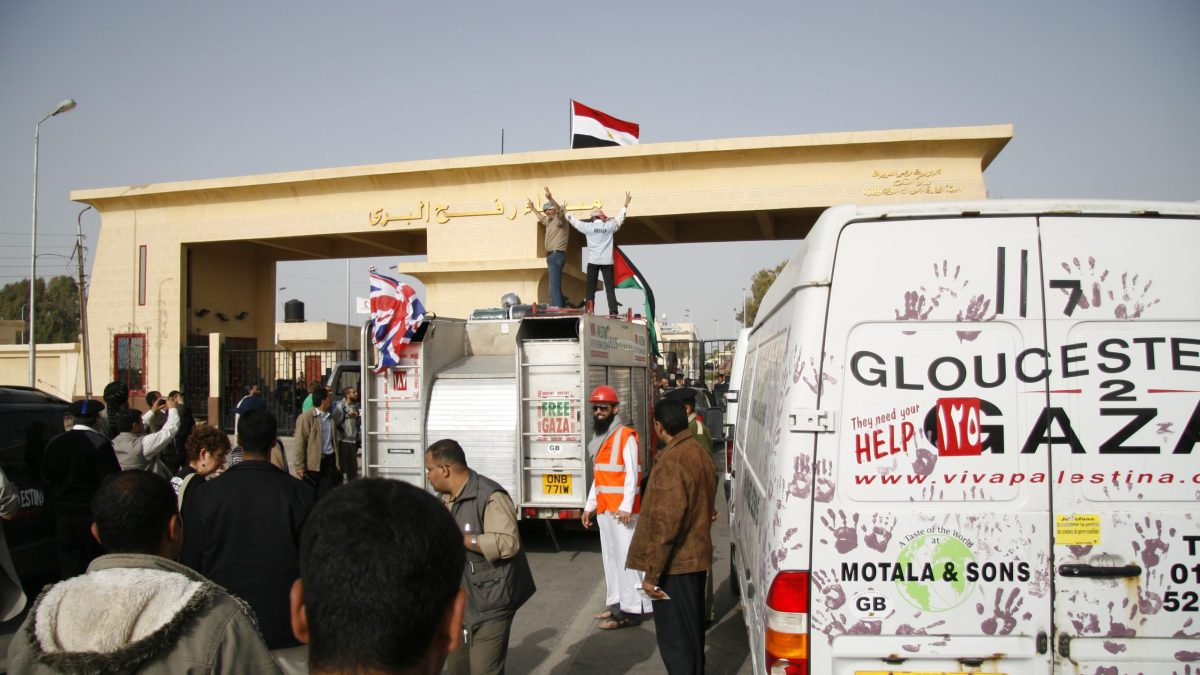
Medical evacuation is a key concern. The report says that no patient was allowed to leave through the Rafah crossing last week, that more than 18,500 patients need to be evacuated for medical treatment, and that more than 1,000 people have died while waiting. The Rafah crossing is the strip’s border point with Egypt, and the numbers show how the closure of exit routes affects the sick and wounded.
Violence is not confined to Gaza. The report mentions that a Palestinian was killed on 7 October during a settler attack on olive pickers, in the occupied West Bank. The olive harvest takes place in the autumn.
The anniversary also comes close to Israel’s parliamentary election. Al Jazeera notes that Israeli voters go to the polls on 27 October 2026, and Delima News is covering the election separately, including the latest polling and the rules of the contest.
The truce grew out of the US-led Gaza peace plan that President Trump announced on 29 September 2025, which was signed on 9 October and took effect on 10 October, according to Wikipedia. The United Nations Security Council endorsed it on 17 November 2025. The plan calls for a ceasefire, the return of all hostages, prisoner exchanges, the demilitarisation of the Gaza Strip, an International Stabilization Force, transitional governance by Palestinian technocrats under international supervision, and large-scale reconstruction. Aid groups’ complaints suggest that parts of this agenda, especially access and reconstruction, remain unmet a year on.
According to Wikipedia, the plan drew support from many countries, including France, Germany, Italy, Spain, the United Arab Emirates, Egypt, Turkey, Qatar, Jordan, Indonesia, Pakistan, Canada and the United Kingdom, although the State of Palestine was not involved in the negotiations.
Delima News has not independently verified the casualty and aid figures, which are those quoted by Al Jazeera. Israel’s own account of events since the ceasefire is not set out in the sources reviewed for this article, and readers should treat the figures as one side’s data until further statements are issued. We will update the story if Israeli officials respond to the aid groups’ claims.
Image: The Rafah border crossing between Gaza and Egypt (file photo, not from the events described). Photo: gloucester2gaza / Wikimedia Commons (CC BY-SA 2.0)