Germany’s far-right Alternative for Germany is considering dropping its long-standing demand that the country leave the euro. A strategy paper proposes a referendum instead, and only if partners refuse reforms. Analysts say the party is trying to look fit to govern.
The far-right Alternative for Germany (AfD) is moving to soften its commitment to quitting the euro, Politico reported on October 8.
The shift is set out in a party strategy paper, first reported by the newspaper Bild am Sonntag.
What Would Change
| Position | |
|---|---|
| Current platform | Germany should withdraw from the euro in an “orderly” manner |
| Proposed | A national referendum on the euro, if partners refuse a series of radical reforms to the currency union |
Not Yet Official
The proposal is not party policy. The AfD’s manifesto at last year’s federal election still called for leaving the euro, and a party convention is expected to consider changes only next year.
René Aust, who leads the group in the European Parliament to which the AfD belongs, argued that the paper merely elaborates an existing position.
What Analysts Say
“The AfD is now trying to sand down its most controversial edges,” said Carsten Brzeski, global head of macro research at ING. “It probably wants to look more fit for government.”
“This will make them sound less mad,” said Stefan Gerlach, chief economist at EFG Bank.
Politico described it as the kind of pragmatic step that radical parties across Europe have taken as rising support has brought them closer to power.
A Break With the Party’s Origins
The symbolism is significant. The AfD began as an anti-euro party, formed in reaction to the bailouts of Greece, Ireland and Portugal during the sovereign debt crisis of 2010 to 2012.
After its founder, Bernd Lucke, was pushed out in 2015, immigration and cultural issues took over, and opposition to the euro faded into the background.
A Win for Weidel
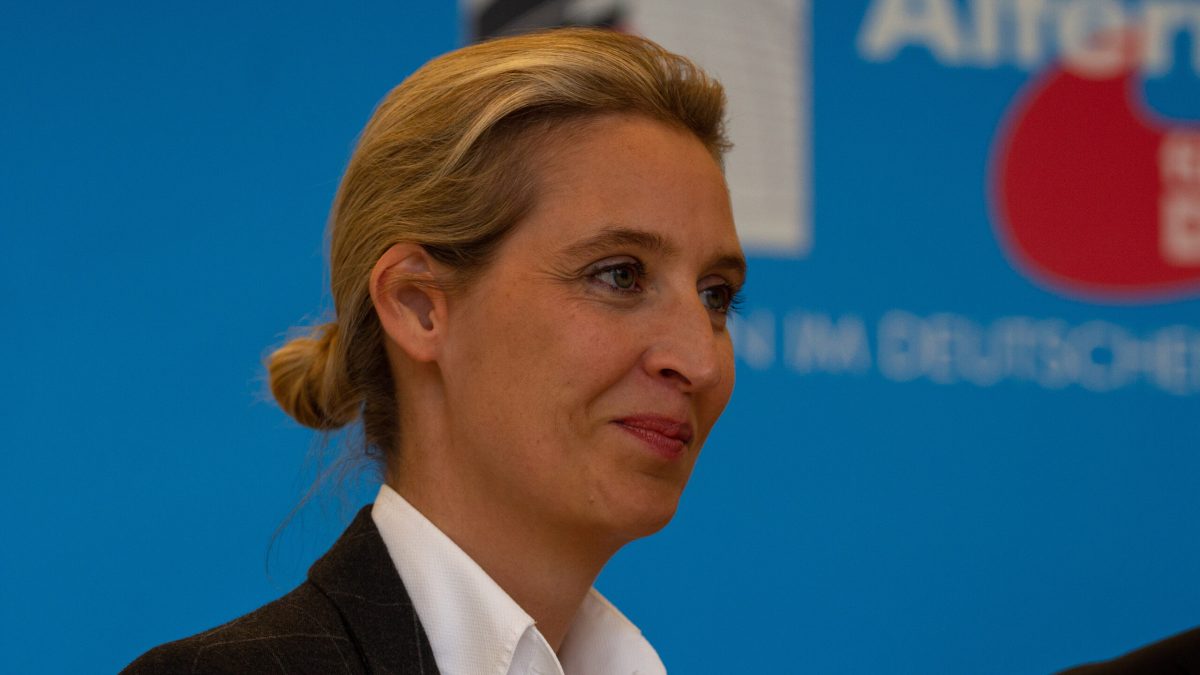
The change appears to be a victory for party leader Alice Weidel, who has her sights on the chancellery.
Why It Matters Beyond Germany
Germany is the largest economy in the eurozone. A party that might one day govern it softening its opposition to the single currency removes one of the bigger theoretical risks to the euro, while leaving open the question of what “radical reforms” it would demand in return.
Image: Alice Weidel at an AfD press conference in 2019 (file photo). Photo by Olaf Kosinsky via Wikimedia Commons, CC BY-SA 3.0 DE.