Eight countries have issued a joint statement saying they ‘regret and strongly disagree’ with US sanctions on the International Criminal Court and pledging to stand united behind its independence, impartiality and integrity.
The foreign ministers of Canada, Denmark, Germany, France, Italy, Japan, the Netherlands and the United Kingdom issued a joint statement on 9 October 2026 expressing “unwavering support for the independence, impartiality, and integrity” of the International Criminal Court, according to the text published by Global Affairs Canada. All eight are States Parties to the Rome Statute, the treaty that created the court.
The statement explicitly addresses sanctions announced by the United States against the Court. The ministers wrote that they “regret and strongly disagree with the announcement of sanctions” from the United States. The text published by Canada does not describe the sanctions in detail, so the measures, the officials they target and the date of their announcement are not covered in the sources reviewed.
The ministers acknowledged the effect that the sanctions could have. They said that the measures “will have a significant impact on the Court’s work, its dedicated staff and their families”, the people who prosecute serious international crimes and support victims every day. The wording makes it clear that the concern is for the functioning of the institution and for individuals, though it does not say what steps the eight states would take to protect them.
The signatories pledged to remain “united in our support for the ICC” and said that they would engage in constructive dialogue with states that are not parties to the Rome Statute ahead of the Assembly of States Parties in December 2026. The aim, according to the statement, is to support the Court’s vital work, uphold the rules-based international system and advance accountability. The Assembly of States Parties is the court’s governing body, which meets once a year.
The list of signatories is notable for who is not on it. The eight include several large European countries and Japan, but the statement does not name other States Parties, and the sources reviewed do not say whether other governments plan to join it.
The statement comes as the court is under pressure from several directions. The sources reviewed describe only the sanctions, so other pressures are not discussed here. The United States is not a party to the Rome Statute, which is the reason the statement refers to dialogue with non-States Parties.
The wording is also careful. By saying they regret and strongly disagree with the sanctions, and by committing to dialogue, the eight governments combined criticism with an offer to talk, a mix that is typical of diplomatic statements among allies. They did not announce countermeasures, and the text does not mention any.
Because the court relies on its member states for funding, arrests and cooperation, public statements of support are one of the few forms of backing that governments can give quickly. The practical effect of the sanctions on staff, banks and contractors is the matter on which the statement does not say how the signatories would respond.
The next step is the Assembly of States Parties in December, where the future of the court’s work under sanctions is likely to be discussed.
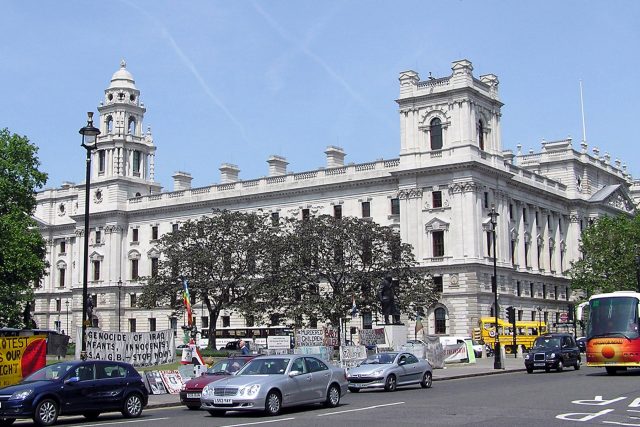
Image: The International Criminal Court building in The Hague (file photo). Photo: Ymblanter / Wikimedia Commons (CC BY-SA 4.0)