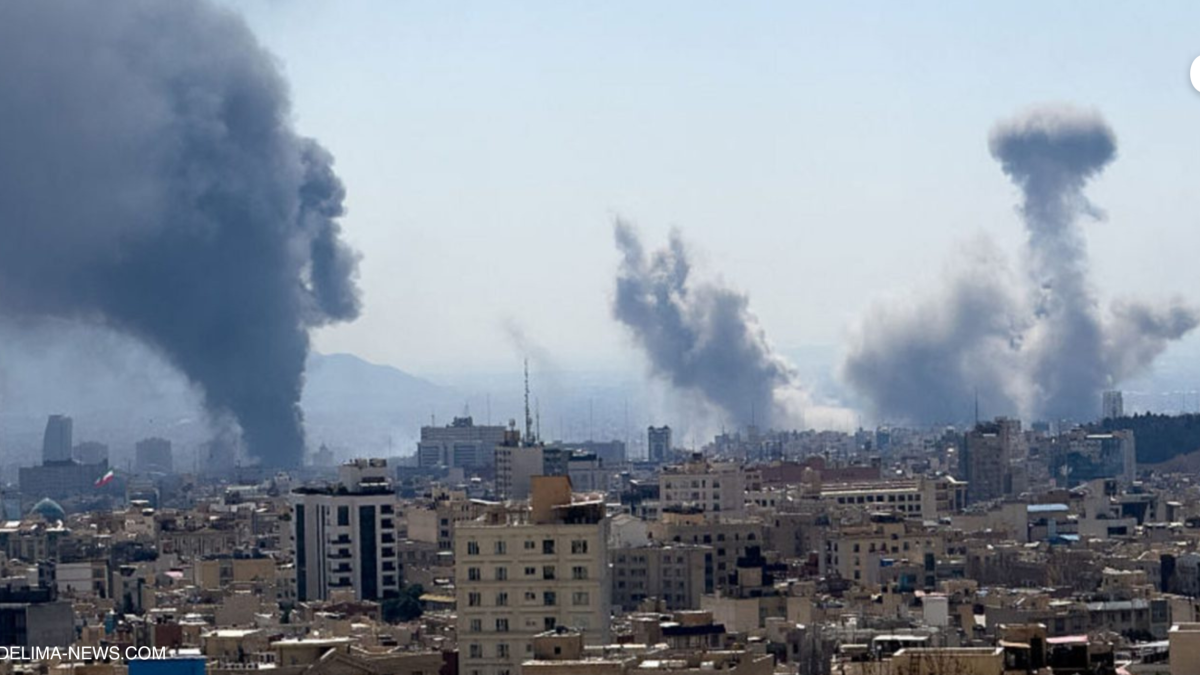
After a brief respite, US and Iran have resumed exchanging the firepower, with US targeting Military bases, while Iran destroyed US bases in Middle East.
A new and grim flashpoint has emerged in the widening confrontation between Washington and Tehran. Overnight strikes hit the coastal town of Kuhestak, in Sirik County, Hormozgan province, and Iranian officials say the toll includes people who had gathered for a wedding celebration. Local authorities named several of the dead, including a four-year-old child, and said dozens more were wounded, some seriously. The incident has sharpened an already dangerous standoff along the Strait of Hormuz and raised fears that a fragile lull in the fighting has collapsed entirely.
What Happened at the Wedding?
According to Iranian officials, a missile strike sent shrapnel into a residential home in Kuhestak on Tuesday evening local time, during a wedding celebration. The Hormozgan governor’s office identified four of the dead — a four-year-old boy and three adults — while Iranian state media put the overall toll at five, with more than 60 wounded, most of them women and children. The wounded were reportedly taken to a hospital in the nearby city of Minab.
Footage released by the Iranian Red Crescent showed extensive damage to the building and to a nearby telecommunications tower, with survivors’ voices audible in the background. Independent analysts examining fragments recovered at the site suggested they may be consistent with a U.S.-made AGM-84K SLAM-ER cruise missile, though the precise weapon and intended target remain unconfirmed.
Why Iran Is Calling It a “War Crime”
Iranian officials have been quick to frame the strike as a deliberate atrocity. Foreign ministry spokesman Esmaeil Baghaei described the attack on the Kuhestak home as brutal and vowed that Iran would respond. He also linked it to earlier strikes he said hit a school in Minab and a sports hall in Lamerd on the war’s first day. Iran’s Red Crescent has since called for an investigation by the International Criminal Court.
It’s important to note that “war crime” remains an Iranian characterization at this stage, not a legal finding. Whether a strike that causes civilian casualties while aimed at a military objective meets the legal threshold for a war crime is a determination that would fall to an independent investigative or judicial body — not to either side’s public statements.
America’s Response
U.S. Central Command has said its strikes were aimed at Iranian military capabilities — including air defenses, radar sites, and maritime assets — rather than civilians. A CENTCOM spokesperson acknowledged awareness of the civilian-casualty reports but noted they originated with Iranian state media, and reiterated that the U.S. military does not target civilians.
That leaves a familiar and consequential distinction at the center of the dispute: an intentional strike on a civilian gathering is treated very differently under the laws of armed conflict than civilian harm resulting from an operation aimed at a legitimate military target — even when the human toll looks the same on the ground.
Iran Strikes Back
Iran has followed with retaliatory strikes of its own, part of what is now described as the largest exchange between the two sides since fighting resumed. Beyond Iranian territory, the conflict has spilled outward, with reports of attacks or heightened alert affecting U.S. positions and partners in Jordan, Bahrain, Kuwait, and Iraq. Iranian forces have also reported strikes near Bandar Abbas, Konarak, and Qeshm Island.
The Strait of Hormuz: The Bigger Battlefield
Much of this is unfolding along the edges of the Strait of Hormuz, one of the world’s most important oil chokepoints, which Iran has kept effectively blockaded since the war began earlier this year. Any escalation there reverberates well beyond the region: oil markets have already reacted, with Brent crude climbing toward the mid-$90s a barrel amid fears that a war many had hoped was winding down is instead reigniting. Washington has framed its strikes near the strait as necessary to counter Iranian threats to commercial shipping and to U.S. forces stationed nearby.
From Ceasefire to Renewed War
The Kuhestak strike lands against the backdrop of a war that had shown signs of settling into an uneasy calm after months of fighting. That calm now looks badly strained. Diplomatic efforts to lock in a durable truce have repeatedly run up against fresh rounds of strikes and counterstrikes, and the pattern that’s emerged — a U.S. strike, an Iranian retaliation, then further U.S. action — is exactly the kind of escalatory loop that ceasefire negotiations were meant to break.
Could This Become a Wider Middle East War?
The strikes on U.S.-linked positions in Jordan, Bahrain, Kuwait, and Iraq underscore how quickly a bilateral confrontation can pull in the wider region. Gulf states hosting American forces, shipping routes through the Strait of Hormuz, and the interests of outside powers including Israel, Russia, and China all sit within the blast radius of further escalation, even if none of them is a direct party to the fighting. The longer the exchange of strikes continues, the harder it becomes to contain the fallout to just Iran and the United States.
Humanitarian Cost
Whatever the legal characterization eventually settles on, the human cost in Kuhestak is not in dispute: a wedding meant to celebrate a new beginning ended with a child and several adults dead, dozens wounded, and a community dealing with the wreckage of a residential building. As the war grinds on, civilian casualties are becoming a more central part of the story — and with them, harder questions about proportionality, distinction between military and civilian targets, and military necessity under the laws of war.
Conclusion — A Dangerous New Phase
The strike on a wedding in Kuhestak, and Iran’s accusation that it amounts to a war crime, mark one of the most fraught moments yet in a conflict that many hoped was cooling off. The legal and factual questions — what exactly was targeted, what weapon was used, and whether the harm to civilians was foreseeable or incidental — remain subject to investigation. But the larger question hanging over the region is harder to resolve by any single inquiry: can Washington and Tehran break the cycle of strike and retaliation before this escalates into a much broader regional war? The wedding strike may have lasted seconds, but its political and military consequences look likely to last far longer.
Middle East’s stability means oil shipment stability. The past is the proof, as it made oil expensive and threatened supply.