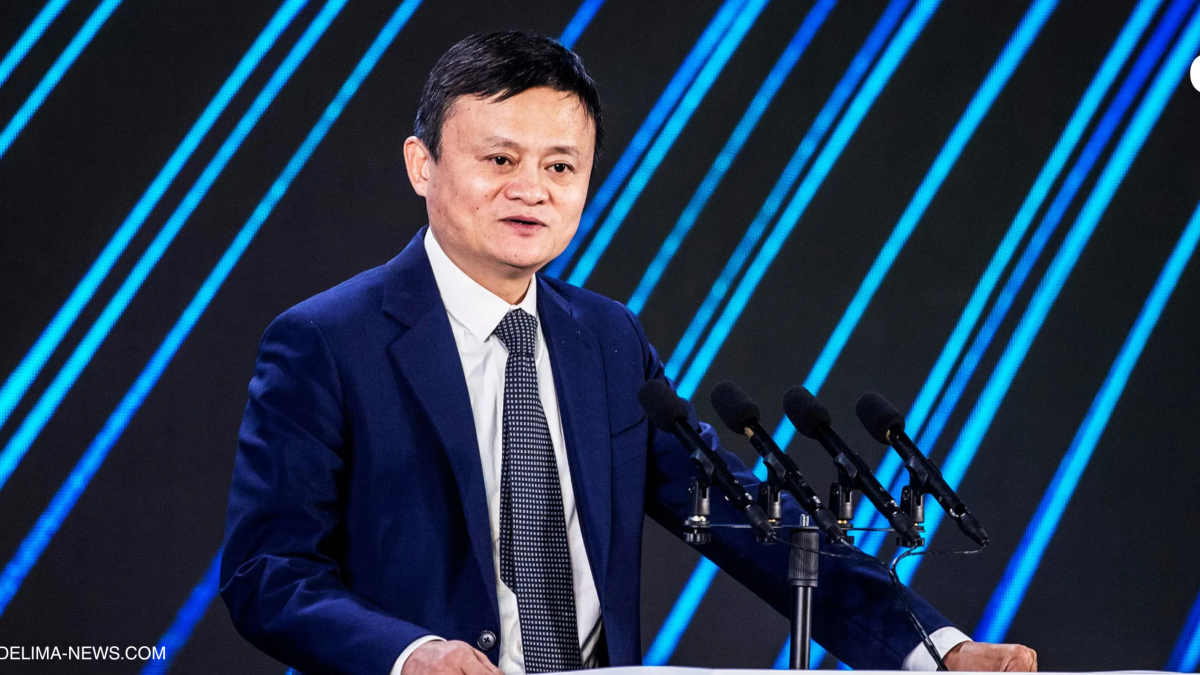
This article is about Jack Ma, Chinese Billionaire, and founder of Alibaba Group. His story of resilience, grit, and preservance. Now he has stepped down from Alibaba’s managerial role and spends his time doing philanthropy.
Before Jack Ma became the founder of Alibaba and one of China’s most influential entrepreneurs, he was a man defined far more by failure than success. His early life did not suggest greatness. In fact, it suggested the opposite. Yet, over time, those repeated setbacks became the foundation of one of the most remarkable business stories of the modern era.
Born Ma Yun in Hangzhou, China, in 1964, Jack Ma grew up in modest circumstances. He was not a standout student. In fact, academics were a constant struggle. He failed China’s highly competitive university entrance examination twice before finally gaining admission to Hangzhou Teachers Institute, where he studied English. After graduating, he worked as an English teacher. It was a stable job, but not one that hinted at global ambition. However, teaching was only the beginning of his journey, not its destination.
Long before business success, Ma was driven by curiosity and a desire to learn. As a teenager, he would wake up early and cycle to hotels in Hangzhou, where foreign tourists stayed. He offered free tours of the city in exchange for the chance to practice English with them.
He had no formal training, no private tutors, and no academic advantage. Yet he learned through persistence and real-world interaction. One of the foreign families he befriended even invited him to Australia, an experience that opened his eyes to a much larger world and expanded his sense of possibility. Looking back, Ma’s greatest strength was not intelligence or technical skill. It was curiosity combined with persistence.
After university, Ma entered the job market—and quickly discovered that rejection would follow him everywhere. He applied for dozens of jobs and was turned down repeatedly. One of the most famous stories from his early life is his application to KFC. Out of 24 applicants, 23 were hired. Jack Ma was the only one rejected.
This was not an isolated incident. Whether it was academic exams or job applications, failure seemed to be a constant companion.But Ma did not allow rejection to define him. Instead of seeing failure as proof of inadequacy, he treated it as redirection. This mindset would later become central to his entrepreneurial philosophy.
In 1995, Ma traveled to the United States for the first time. There, he encountered the internet—a technology that was still in its early stages globally, and almost nonexistent in China. He searched for “China” online and was shocked to find very little information. That moment sparked an idea. Ma did not understand coding or software engineering, and he had no technical background. But he understood something more important: the internet had the potential to connect businesses across borders.
He returned to China and launched China Pages, one of the country’s earliest attempts at building a web-based business directory. The project struggled. The internet was still unfamiliar to most Chinese companies, and convincing them to go online was extremely difficult.Although China Pages failed to scale, it gave Ma a crucial insight: Chinese small businesses needed a way to reach global markets. He had not yet found success—but he had found his mission.
In 1999, Ma gathered 17 friends and colleagues in his apartment in Hangzhou. With limited funding of around $60,000, they founded Alibaba.The idea was simple but ambitious: create an online platform that would connect Chinese manufacturers and small businesses with international buyers.
At the time, the concept seemed unrealistic. China’s internet infrastructure was still developing, e-commerce was not widely trusted, and Alibaba had no major competitors or established reputation. Ma himself had no experience running a global technology company. But he was not thinking small. His vision was to empower small businesses to compete on a global scale.
Alibaba’s early years were far from successful. The company struggled to generate revenue, and operating costs quickly became a concern. Investors were uncertain about its future, and many doubted whether the model would work. Despite this, Ma focused on building something more important than short-term profit: a strong ecosystem of users. His philosophy was clear—build the platform first, monetize later.
The real test came in 2003 when eBay entered the Chinese market with significant financial power. Instead of retreating, Ma launched Taobao, a direct competitor. Taobao offered free listings, which helped it rapidly attract users. While eBay relied on its global dominance, Ma focused on understanding local consumer behavior and small business needs.
The strategy worked. Taobao eventually overtook eBay in China, forcing the American company to withdraw from the market. This moment became a defining lesson in Ma’s career: success is not always about resources, but about understanding customers better than your competitors.
Following Taobao’s success, Alibaba expanded rapidly. The company developed additional services such as Alipay, which helped build trust in online transactions, and other platforms that strengthened its digital ecosystem. Major investors, including Yahoo and SoftBank, recognized Alibaba’s potential and provided significant funding, helping the company scale globally.
Over time, what began as a small apartment startup evolved into one of the world’s largest technology companies.The turning point came on September 19, 2014, when Alibaba went public on the New York Stock Exchange. The IPO raised approximately $21.77 billion, making it one of the largest in history at the time. The English teacher who once struggled to find employment had helped build a global business empire.
Alibaba’s success made Jack Ma one of China’s wealthiest individuals. At his peak, his net worth placed him among the top billionaires in the country, with estimates reaching tens of billions of dollars. However, Ma’s story is not defined by wealth alone. What makes his journey remarkable is the contrast between where he started and where he ended up. He was not a top student. He was not a programmer. He did not come from a wealthy or influential family. Instead, he faced repeated rejection, academic failure, and early business setbacks. Yet he continued to adapt, learn, and persist.
Ma’s journey did not remain smooth after Alibaba’s rise. In 2020, he publicly criticized aspects of China’s financial system. Shortly afterward, regulatory scrutiny increased, and the planned IPO of Ant Group was suspended. His public presence also became less frequent. In 2019, Ma stepped down as executive chairman of Alibaba, transitioning leadership to a new generation. He later shifted his focus toward education, philanthropy, and personal interests.
Jack Ma’s life is often simplified into a motivational tale of rejection and success. But the deeper lesson is more meaningful. He did not succeed because he avoided failure. He succeeded because failure did not stop him. Each rejection redirected him. Each setback taught him something new. His academic struggles built resilience. His early business failures taught him market realities. His competition with global giants taught him the importance of understanding customers.Most importantly, he saw opportunity where others saw limitation.
When he first encountered the internet, he did not see complexity. He saw possibility—the possibility of connecting Chinese businesses to the world. That idea, born in a small apartment with 18 people, eventually became Alibaba. Jack Ma’s story is not just about building a company. It is about transforming rejection into persistence, persistence into opportunity, and opportunity into global impact.