The article examines Netanyahu’s rejection of Trump’s 15-point Gaza peace roadmap. The key dispute concerns Hamas’s disarmament and Israeli withdrawal, with Netanyahu demanding complete disarmament first, while Hamas and Washington support a phased process linking both.
Israeli Prime Minister Benjamin Netanyahu has rejected a US-backed 15-point roadmap aimed at ending the Gaza conflict, creating an unusually public disagreement with US President Donald Trump and putting a major obstacle in the way of Washington’s latest peace initiative.
Speaking at a cabinet meeting on Sunday, Netanyahu said Israel would not accept the 15-point document and insisted that the Israel Defence Forces (IDF) would not withdraw from Gaza until Hamas had been completely disarmed. He stressed that disarmament must include heavy weapons, light weapons and all other military capabilities.
The rejection comes despite Trump’s assertion last month that Israel and Hamas had agreed to the broad framework. The proposal envisages Hamas giving up its weapons while Israeli forces withdraw from Gaza in stages. An International Stabilisation Force would help maintain security, while a new Palestinian technocratic administration would gradually assume responsibility for civilian governance.
The roadmap, released by Trump’s Board of Peace at the end of July, sets out a phased process linking Hamas’ disarmament to an Israeli military withdrawal.
Under the proposal, civilian administration would eventually be transferred to a National Committee for the Administration of Gaza (NCAG). The committee would oversee public institutions and services during the transition, while an international verification mechanism would monitor whether Israel and Palestinian factions were fulfilling their obligations.
The plan also calls for Gaza to operate under the principle of “One Authority, One Law, One Weapon.” Heavy weapons, weapons depots, military production facilities and tunnels would be decommissioned and placed under Palestinian authority. An International Stabilisation Force would be deployed to help separate Israeli forces from areas controlled by the new Palestinian administration and assist with security and humanitarian operations.
The final element is reconstruction. The Board of Peace and the Palestinian transitional authority would oversee a timetable for rebuilding Gaza and securing international financing. The roadmap also links the process to a longer-term political pathway toward Palestinian self-determination and statehood.
Hamas has signalled its continued commitment to the roadmap, although the group has avoided describing its position as a straightforward agreement to “disarm.”
According to Reuters, Hamas has agreed to hand over weapons for storage under a US-backed Palestinian technocratic administration rather than surrendering them directly to Israel. Hamas has also argued that implementation depends on Israel fulfilling its own obligations, particularly regarding military withdrawal and the cessation of attacks.
That difference over sequencing has become the central dispute.
For Netanyahu, disarmament must come first. Under the roadmap, however, the two processes are intended to proceed together, with Israeli withdrawal taking place in stages as Hamas weapons are decommissioned and verified.
Nickolay Mladenov, Trump’s Gaza envoy, has said Israeli forces would withdraw sector by sector once Hamas weapons had been removed and rendered unusable.
Despite Netanyahu’s rejection, there have been signs of a temporary reduction in Israeli military activity.
Reuters reported that Israel had significantly scaled back attacks in Gaza since Monday following a meeting between Netanyahu and Mladenov. According to a source familiar with Israel’s position, Israeli forces were expected to act only against what they considered immediate threats and had stopped carrying out targeted assassinations that had previously occurred frequently. Discussions with Washington over the roadmap remain ongoing.
This suggests that Netanyahu’s rejection of the document has not completely ended negotiations. Instead, Israel and the United States are continuing to discuss modifications and conditions.
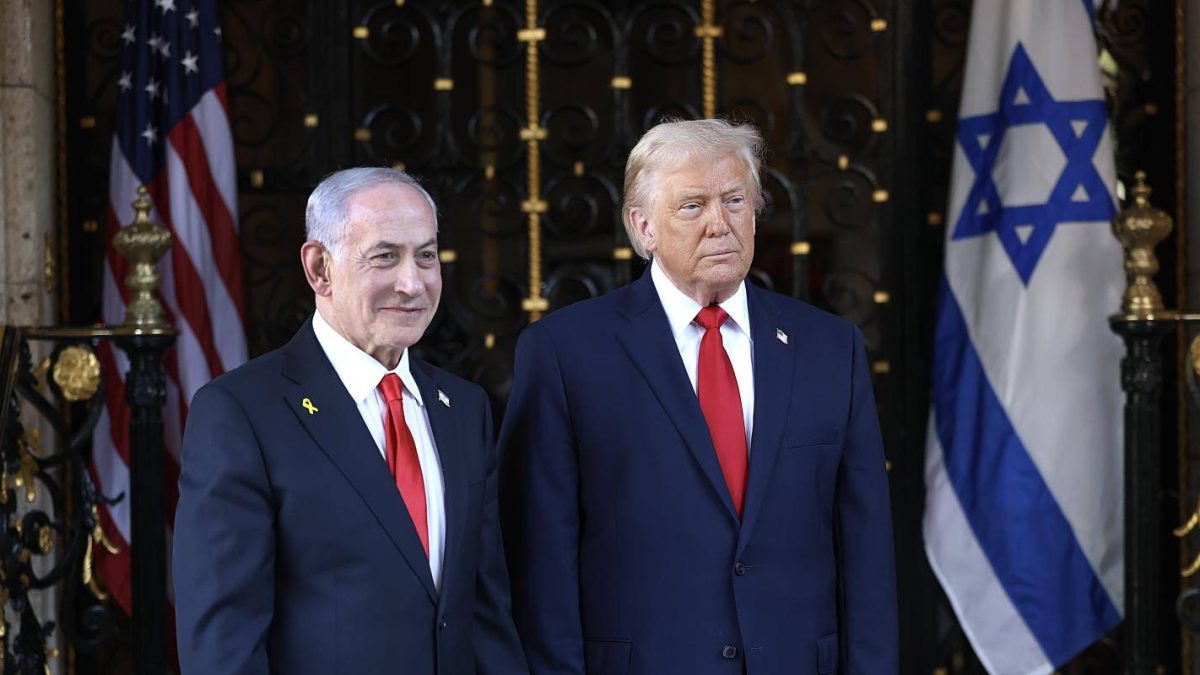
The dispute represents one of the clearest public disagreements between Netanyahu and Trump, who have generally maintained a close political relationship.
Trump wants the Gaza initiative to produce tangible progress toward ending the conflict, while Netanyahu faces pressure from powerful members of Israel’s right-wing coalition who oppose any withdrawal that could allow Hamas to survive.
Netanyahu is also facing a difficult political environment ahead of Israel’s October 27 election. Reuters reported that he is struggling in the polls while attempting to balance pressure from far-right allies against Trump’s demand for progress on the Gaza issue.
Netanyahu has presented his position as a matter of Israeli security and sovereignty, arguing that Israel must be prepared to resist even pressure from its closest allies when it believes its security is at stake.
The immediate future of the Gaza peace process now depends largely on whether Washington can persuade Israel to accept a revised implementation mechanism.
The Board of Peace has defended the proposal as the best available route to prevent another cycle of war, while Hamas is urging the United States and other mediators to pressure Netanyahu to follow the agreed roadmap.
For now, the biggest disagreement is not necessarily over the ultimate goal of disarming Hamas, but when and how it must happen. Netanyahu wants complete and verified disarmament before any Israeli withdrawal. Hamas wants the Israeli withdrawal and cessation of military operations to form part of the process leading to disarmament.
That sequencing dispute could determine whether Trump’s latest peace initiative becomes a genuine pathway toward ending the Gaza war or another diplomatic effort that stalls under competing security and political demands. As of 10 August 2026, negotiations between Washington and Jerusalem are continuing, but Netanyahu’s categorical rejection of the 15-point document has left Trump’s Gaza strategy facing its most serious challenge since the roadmap was unveiled.
The dispute could determine whether Trump’s Gaza peace initiative succeeds or collapses. A breakthrough could enable Israeli withdrawal, Hamas disarmament, Palestinian governance and reconstruction, while failure could prolong the conflict and deepen tensions between Washington and Jerusalem.