Nvidia contributed key Vera Rubin rack and compute tray designs to the Open Compute Project on 12 October and joined other companies in publishing open standards for AI factories, including a grid resilience specification.
Nvidia announced a set of contributions to the Open Compute Project at the OCP Global Summit in San Jose on 12 October 2026, according to the company’s blog. It said it was contributing key rack and compute tray designs for its Vera Rubin architecture to the project through its open MGX architecture. The MGX 1.2 specification enables rack deployments of up to 250 kilowatts with blind-mate liquid cooling and interoperable interconnect infrastructure, according to the post.
The announcement is built around the idea of an AI factory, a data centre designed for the production of AI. Nvidia said that it and hyperscalers published open standards for next-generation AI factories, including design standards and grid resilience, with partners that include Cisco, Google, Meta, Microsoft, AMD, Visionbay and Vertiv. The post lists the Open Data Center Specification version 0.7, developed with AMD, Google and Meta.
The OCP Grid Resilience Specification was developed with Google, Meta and Microsoft. It is meant to maintain the connection to the electricity grid and to restore a data centre to near-full load in less than two seconds, according to the blog. That addresses a concern of utilities: AI data centres draw large amounts of power and can disconnect suddenly during a grid disturbance, which would cause further strain on the grid. The sources reviewed do not describe a particular incident.
Nvidia also launched four open-source software components for its DSX AI Factory: the NVIDIA Config Manager for network configuration, the Cluster Readiness Engine for hardware validation, the Rack Management Service for firmware management and the Cluster API Provider for NVIDIA Infrastructure Controller for bare-metal deployment. Together these tools are for setting up and running large clusters.
On power, Visionbay’s K-1 platform uses an 800-volt direct current architecture for future Vera Rubin deployments, which the post says reduces the amount of copper cabling and power conversion equipment needed. Higher voltage means lower current for the same power, which cuts the copper needed, though the post does not quantify the saving.
The networking announcements involve Meta, Cisco and Google. Meta is adopting Nvidia’s Spectrum-6 switches at 102.4 terabits a second, Nvidia and Cisco are publishing a standard called USFP for optics at 400 gigabits per lane that has four times the bandwidth density of 200-gigabit alternatives, and Google announced support for its Falcon transport on Nvidia’s ConnectX-10 network cards, according to the blog.
A day later, other news involving Nvidia came from Britain. A tech roundup of 14 October says that Nvidia committed $250 million over five years to support research on AI safety and robotics in the UK, with about $50 million a year in computing access, with partners that include Imperial College London and two research labs, and that it planned a minority investment in the French healthtech company Doctolib, for an undisclosed amount. Those items come from a news roundup and not from Nvidia’s own statement.
The company’s publication of open designs is a strategic choice. By contributing designs to a shared project, Nvidia makes it easier for server makers and data centre operators to build around its architecture, which fits its position in the market, though the sources reviewed do not discuss the commercial motives.
The next step is the adoption of the standards by the companies that build and operate data centres, and the availability of the Vera Rubin systems, for which the sources reviewed do not give a date.
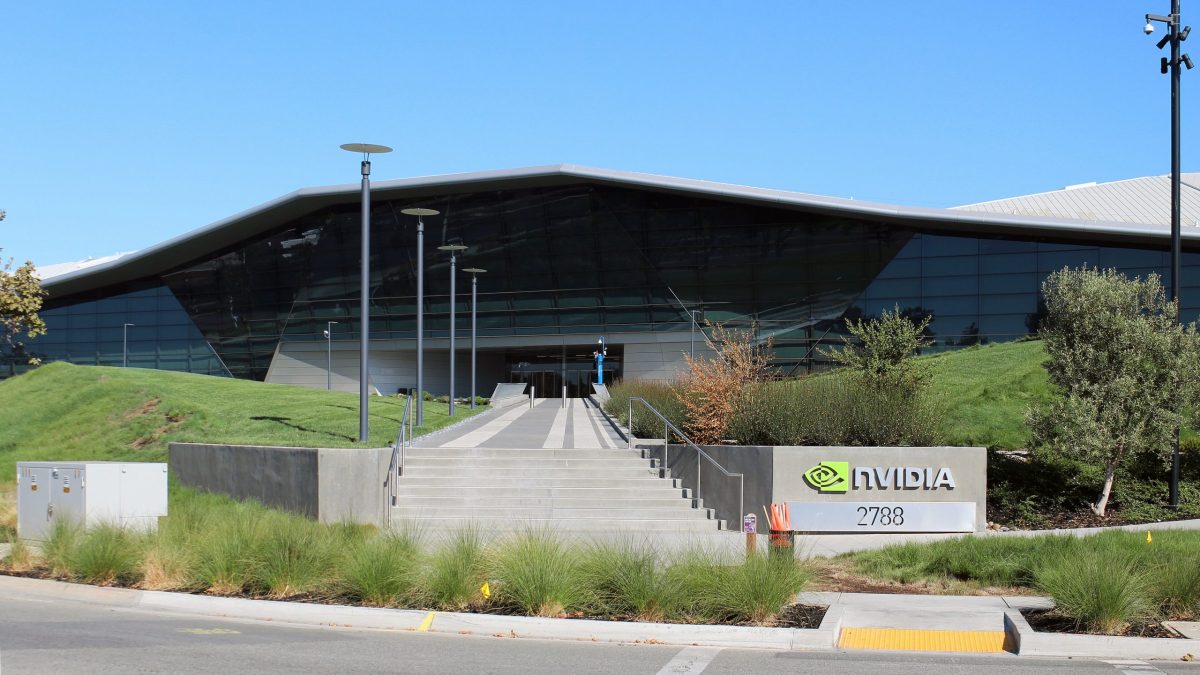
Image: Nvidia’s headquarters in Santa Clara, California (file photo). Photo: Coolcaesar / Wikimedia Commons (CC BY-SA 4.0)