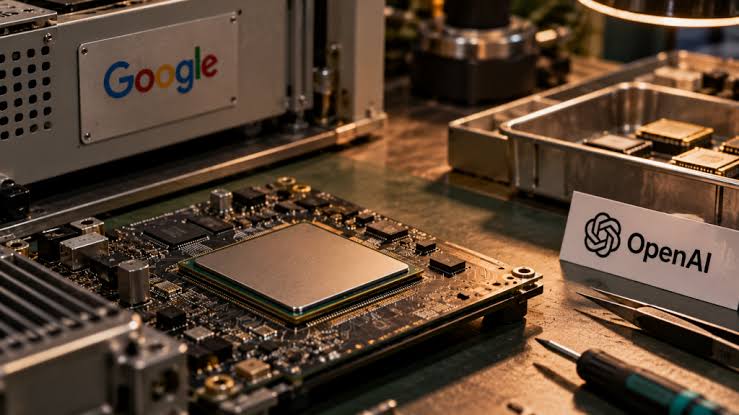
The Information reported on 27 October, citing a person familiar with the matter, that OpenAI plans to buy Google's artificial intelligence chips, known as tensor processing units or TPUs, and Reuters carried the report. No financial terms were disclosed and OpenAI declined to comment. OpenAI began renting Google's TPUs in June 2025 but said then that it was only testing them and had no plans to deploy them at scale. Google began selling TPUs directly to some customers this year, and Oracle has said it plans to offer them on its cloud from 2027. The report matters because OpenAI has been one of the biggest buyers of chips from Nvidia, whose processors power most of the world's AI systems.
The argument that Nvidia should be worried is that its largest customers are now building real alternatives. Analysis in the Motley Fool, drawing on Nvidia's own filing, notes that OpenAI's current and planned commitments total about 12 gigawatts of Nvidia computing, with Nvidia putting the opportunity at about 600 billion dollars through 2030. If a customer of that size moved a large share of its planned purchases to Google, Nvidia's sales could take a noticeable hit, and future alternatives could also weigh on its pricing. The stock reflects some of that caution, having closed at 217.94 dollars on 27 October, about 9 percent below its record of 239.24 on 6 October. Nvidia has also agreed to guarantees capped at 105 billion dollars covering parts of the lease and power payments for an Ohio data centre OpenAI will lease, which ties its fortunes closely to a single customer.
The counter-argument is that demand for chips is so large that no single customer decision threatens Nvidia in the near term. Nvidia's revenue for the quarter ended 26 July was 96.2 billion dollars, up 106 percent from a year earlier, and it expects about 70 percent revenue growth in its next fiscal year. The company says its outlook is supply constrained and that supply will remain a bottleneck at least through the end of fiscal 2028, and chief executive Jensen Huang has said demand is much higher than that. Supplier commitments rose to 279 billion dollars from 119 billion three months earlier. The report also describes OpenAI adding chips, not replacing Nvidia's, and the shares trade at about 14 times analysts' average fiscal 2028 earnings forecast, which suggests investors already expect a slowdown.
The story matters well beyond two companies. AI chips are a bottleneck for every country trying to build data centres, and competition between Nvidia and Google could eventually lower prices and widen access for smaller firms and governments. It also shows how much of the AI boom depends on a few buyers, which is a risk if their plans change. Regulators and investors in the United States, Europe and Asia will watch how supply and demand settle.
The report does not prove that Nvidia is losing its lead, because it comes from one unnamed source and no deal has been confirmed. It does show that OpenAI wants more than one supplier. For now, chip shortages protect Nvidia, but they will not last forever.