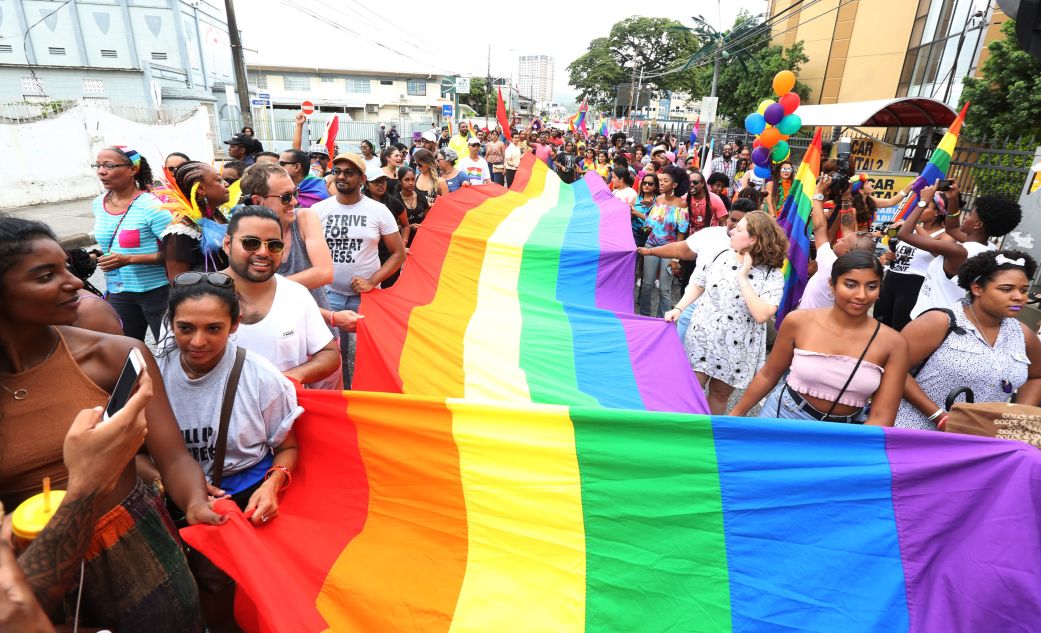
Laws criminalising same-sex intimacy in Trinidad and Tobago have been overturned by the Judicial Committee of the Privy Council in London, the Caribbean country's final court of appeal. The court ruled that the laws were not in keeping with the fundamental individual right to respect for private and family life. The judgment ends an 11-year legal battle brought by dual citizen Jason Jones, 62, and is the first time the committee has ever decided a case on decriminalising same-sex intimacy. Campaigners hope it will prompt similar challenges elsewhere in the Commonwealth.
Supporters of the ruling point to the strength of the legal reasoning and the reach of the decision. Lord Sales told the court the laws cannot be regarded as reasonably justifiable in a society that has proper respect for the rights and freedoms of an individual. Before the decision, Trinidad and Tobago was one of some 34 Commonwealth countries still criminalising homosexuality under colonial-era British laws, which punish consensual same-sex intimacy with imprisonment and in some cases the death penalty. Jones's lawyers argued that the laws violated privacy rights and that changes made in 1986, which introduced stricter punishments, meant the protection of savings clauses no longer applied. Jones said the laws told LGBTQ+ people they were criminals in their own country and that the message ends today. His lawyer, Anand Ramlogan SC, called the judgment a landmark victory for gay rights, equal dignity and respect for private and family life in Trinidad and Tobago.
The government's case, rejected by the court, deserves to be recorded. The Attorney General of Trinidad and Tobago had argued that the law was shielded from challenge by savings law clauses, which carried existing British laws over into newly independent states. That argument had persuaded the Trinidadian Court of Appeal, which overturned Jones's earlier win in the High Court in 2018. The ruling also came from a court sitting in London, and the Trinidadian courts had earlier sided with the government on appeal, so the two levels of the justice system reached opposite conclusions on the same question.
The decision matters well beyond one island. Because this is the first time the Privy Council has decided such a case, campaigners hope its reasoning will spark similar successful challenges elsewhere in the Commonwealth. Jones said he hoped the ruling would accelerate the fight for full equality, adding that the laws never reflected who we are as a people and a nation, which he described as diverse, multiracial and secular. For LGBTQ+ people in Trinidad and Tobago, it removes the threat of prosecution under laws that, in some versions, carry severe penalties. For the Commonwealth, where some 34 countries retained these laws before this ruling, it marks a significant shift in the legal landscape and a new reference point for courts and lawmakers considering their own statutes.
The Privy Council has ruled that private life is protected even where colonial-era laws say otherwise. Jones's 11-year fight has ended in victory, and campaigners elsewhere will now look at the judgment closely. How governments and legislatures respond will determine how far its effect spreads.