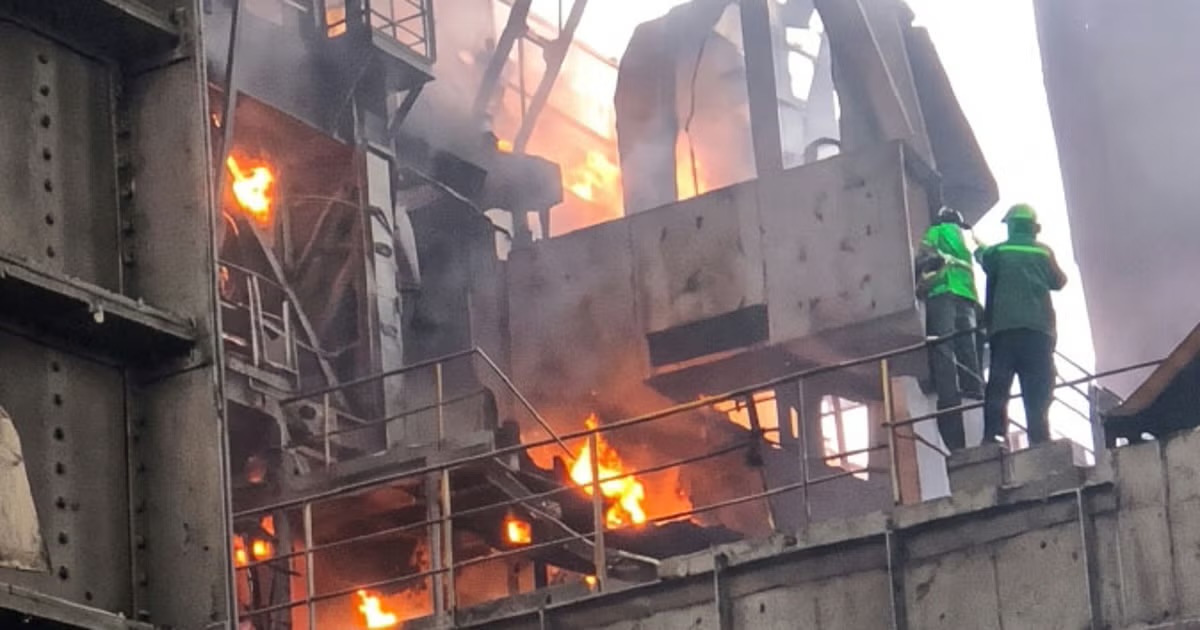
At least 17 people have died and 12 others have been injured in an explosion at an iron and steel factory near the port city of Izmir in western Turkey, according to the BBC. All those killed and injured were workers at the Habas Demir Celik plant in Aliaga, one of the country's leading steel producers, authorities said. Footage from the scene showed a large fire inside the facility and a towering column of smoke. The local governor, Süleyman Elban, said the blast happened around midday on Monday after a crane carrying a replacement boiler collapsed, causing materials to fall into a furnace below. Some eyewitnesses said the explosion shook the ground so hard that they first believed an earthquake had struck.
The first question the authorities have answered is what happened, and the company's version fits the governor's. In a statement, the company that runs the factory said the accident occurred during scheduled maintenance work on one of the plant's electric arc furnaces. President Recep Tayyip Erdoğan confirmed the deaths after a cabinet meeting on Monday and said investigations were under way while search and rescue operations continued. Erdoğan originally put the death toll at 16, but Health Minister Kemal Memişoğlu later announced that one of those who had been critically injured had died, taking the toll to 17. The governor said some people were believed to still be under the rubble, so the figure was not necessarily final when the reports were filed.
The second question, who is responsible, is where the argument begins. At least five people have been arrested, according to the BBC's Turkish service citing local media reports, which signals that prosecutors are treating the lifting of a heavy load over a working furnace as a potential case of negligence and not simply as a freak accident. The company's description of the work as scheduled maintenance cuts both ways: it suggests the job was planned and therefore should have been risk-assessed, and it also suggests that the workers who died were doing exactly what their employer asked of them. Workplace accidents, the independent civil society group Turkish Health and Safety Labor Watch said, remain a chronic problem in Turkey, a point that makes it harder to present this explosion as an isolated failure of one plant.
The location adds to the weight of the story. The Habas plant is in the Izmir district of Aliaga, which is a major port and one of Turkey's main shipbreaking hubs, so heavy industry and dangerous work are concentrated there. The factory is also described by the BBC as one of the country's leading steel producers, which means that the investigation will test whether a major, well-established operator met safety standards for lifting and maintenance work around furnaces.
The immediate priorities are to complete the search of the debris, to identify and care for the injured, and to establish exactly how a crane carrying a replacement boiler came to fall into an operating or recently operating furnace. The reports do not say whether the furnace was shut down for the maintenance work, which is likely to be central to the inquiry. For the families of the 17 workers, the questions of safety planning, supervision and accountability are likely to matter as much as the cause itself. The arrests suggest the authorities intend to pursue those questions in court, and the outcome will show whether a chronic problem produces consequences beyond this one plant.