The United States has asked European countries to unfreeze some of the Russian sovereign assets held since the 2022 invasion and put them in a vehicle overseen by Washington, but European delegates turned the proposal down, according to the Financial Times.
The United States proposed to European governments that they unfreeze some Russian sovereign assets immobilised after the invasion of Ukraine and transfer them to a vehicle overseen by Washington, in an attempt to restart stalled peace talks, the Financial Times reported on 14 October 2026, according to U.S. News and ThePrint, which carried the report. Reuters said that it could not immediately verify it.
The proposal was put forward by the US special envoy Steve Witkoff and Jared Kushner, the son-in-law of President Donald Trump, according to the report. European delegates rebuffed it. The report does not say which governments were in the room, how the delegates responded or whether the US will make a revised offer.
The sources reviewed do not give the amount of assets involved or describe how the vehicle would work, who would manage it or what it would pay for.
The report appears alongside other accounts of a wider diplomatic effort. A Washington Post report summarised by Meduza on 14 October says that the United States and Europe are developing a new plan to end the war that offers incentives and security arrangements in exchange for a ceasefire along the current front line, and Ukrainska Pravda on 13 October describes a plan to improve the post-war position of both Ukraine and Russia. A search summary describes a four-part framework that trades territorial concessions for security guarantees and economic agreements, but the summary does not name its sources.
These reports differ in what they describe, and they do not confirm one another. The first concerns a request about assets that was rejected, and the others concern a plan that is still being drafted. The sources reviewed do not say whether the assets proposal is part of the plan or is separate from it.
The talks come as the fighting continues. Delima News reported on 14 October that a Russian missile hit a Kyiv power plant days after President Trump announced an energy ceasefire, which shows how far the diplomacy is from a ceasefire on the ground.
A second dispute involving the United States and Ukraine emerged the same day. Senator Thom Tillis asked Elon Musk whether disruptions to Starlink terminals in Ukraine were intended, as Delima News reports in a separate article.
The report leaves several things unclear, which matter for how much weight it can bear. It is a single newspaper report, relayed by other outlets, that Reuters could not confirm. It names the two US negotiators who raised the idea but not any European official who rejected it. It gives no date for the meeting, no figure for the assets and no description of what the vehicle would be used for. Delima News therefore reports the rejection as the Financial Times’ account and not as an established fact.
A further point is the stated purpose. The report says the aim was to revive peace talks, which implies that the talks are not currently moving, but the sources reviewed do not describe when they last met or who took part, so the state of the negotiations cannot be given.
Whether European governments will agree to any use of the frozen assets is likely to depend on the legal and financial risks they see, but the sources reviewed do not describe their reasons for rejecting the proposal, so Delima News does not speculate about them.
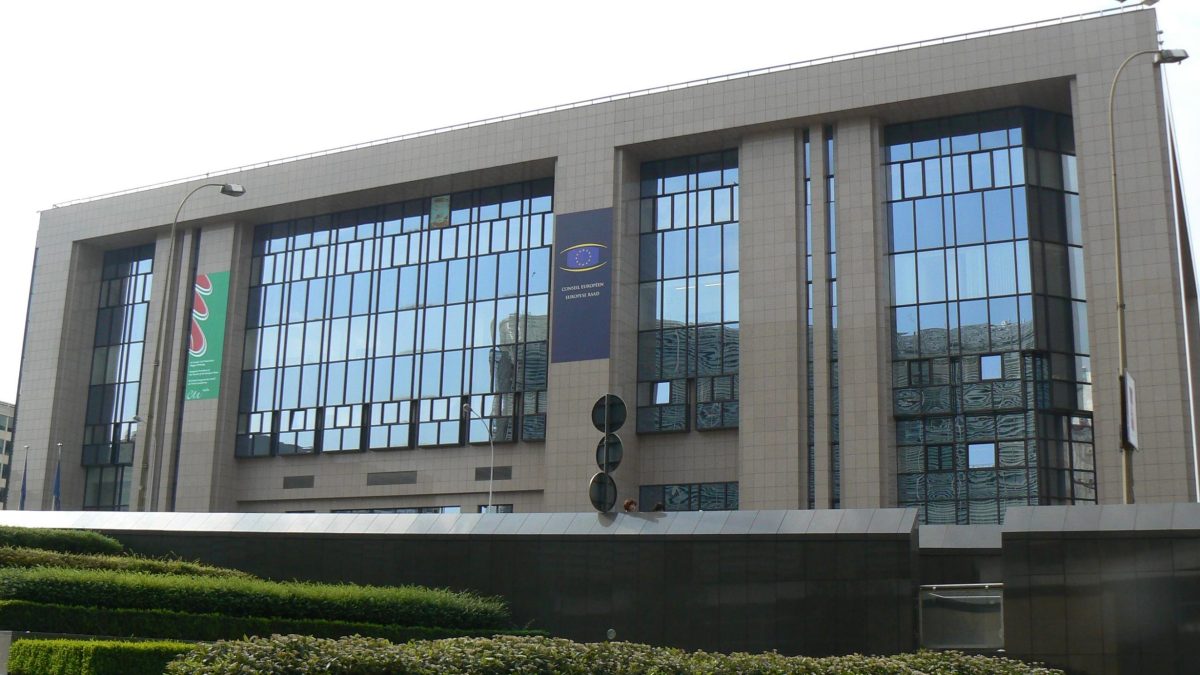
Image: The European Council building in Brussels (file photo; a stand-in image). Photo: Antoine Meissonnier / Wikimedia Commons (CC BY-SA 3.0)