Six AI companies signed a voluntary accord at the White House on 29 September that Donald Trump called morally binding, but which has no enforcement, no named auditor and no timeline.
President Donald Trump and the heads of six leading artificial intelligence companies signed a voluntary agreement at the White House on 29 September 2026, according to Al Jazeera. The signatories were Dario Amodei of Anthropic, Greg Brockman of OpenAI, Sundar Pichai of Google, Mark Zuckerberg of Meta, Elon Musk of xAI and Jensen Huang of Nvidia, according to a search summary of other coverage. The pact is known as the White House Accord on Super Intelligence, and its text is titled the Joint Commitment on Frontier Responsibilities.
The companies commit to four layers of internal controls to monitor AI models during training and deployment, to set up oversight teams, to work with independent external auditors and to create independent board committees to review the reports of the internal and external evaluators, according to Al Jazeera and the summaries of other coverage. That is a set of governance steps for the companies, and it does not impose technical limits on any model.
The pact is voluntary and non-binding. Al Jazeera says that it has no enforcement penalties, does not require the public disclosure of audit findings and does not establish a government oversight authority, and that companies keep control over how they carry out the safeguards. Summaries of other reports add that the accord names no auditor and sets no timeline for compliance.
Trump described it as having a tremendous self-policing aspect and called it morally binding, though he acknowledged that it might eventually make sense to put these steps into law or regulation, according to the same report. The statement is reported as his words, and the sources do not say whether the administration has a plan for legislation.
Some of the signatories have said in the past that they want stronger rules. Al Jazeera notes that OpenAI’s Chris Lehane has called for mandatory federal safeguards and that Anthropic’s chief executive, Dario Amodei, has asked for more serious and binding regulation, which creates a contrast between their public statements and a voluntary pact.
Lawmakers have responded with competing proposals. The report says that Senator Bernie Sanders has proposed the Ban Artificial Superintelligence Act, which would impose prison sentences of up to 20 years for violations and create a cabinet-level department for AI. A separate item in search results says that bipartisan senators, including Maria Cantwell and Mike Rounds, wrote a letter to national security officials asking them to address AI threats, but the letter was not reviewed.
The signing took place in the weeks before the midterm elections, in which AI data centres are listed among the issues, according to Wikipedia’s page on the elections. Delima News has a separate article on the forecasts for the midterms, and the sources reviewed do not link the accord to the campaign directly.
What does the accord change? On paper it commits six of the largest developers to external assessment of their safety practices, which would be a new level of scrutiny if it is carried out. In practice, the lack of an auditor, a timeline and a penalty means that the sources give no way to judge whether the companies are keeping to it.
The next test will be whether the companies publish the details of their controls and which outside auditors they hire, since the accord does not require either. Delima News will report any of those disclosures if they are made.
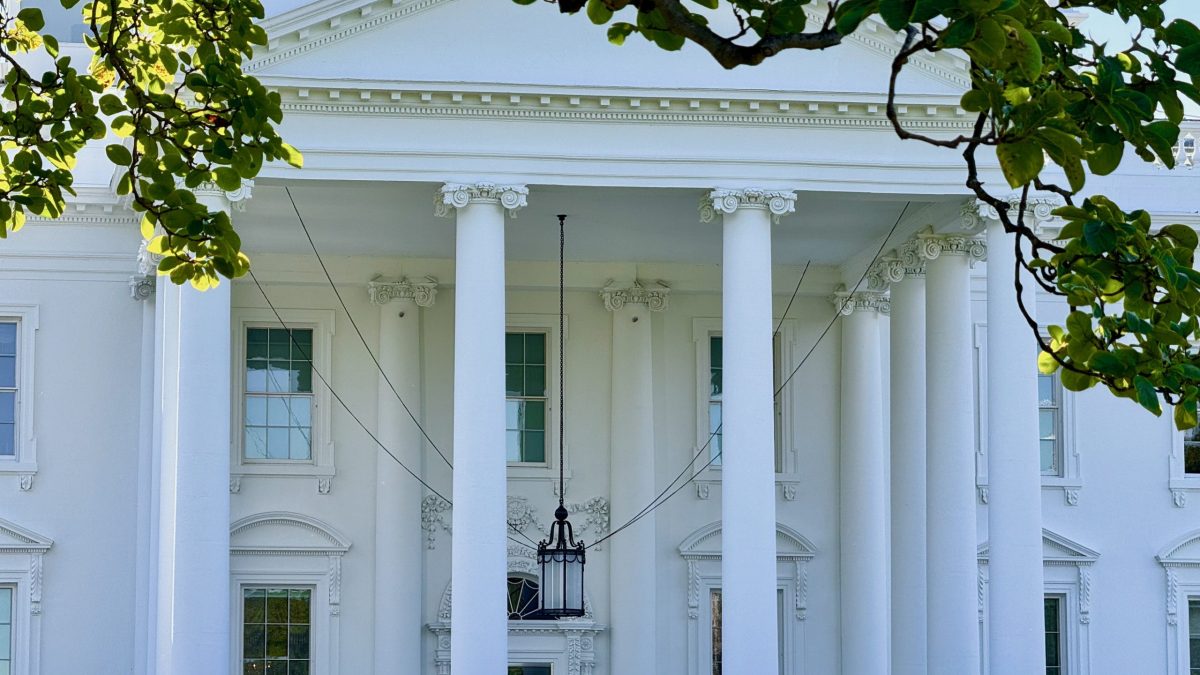
Image: The White House in Washington (file photo). Photo: Harrison Keely / Wikimedia Commons (CC BY 4.0)