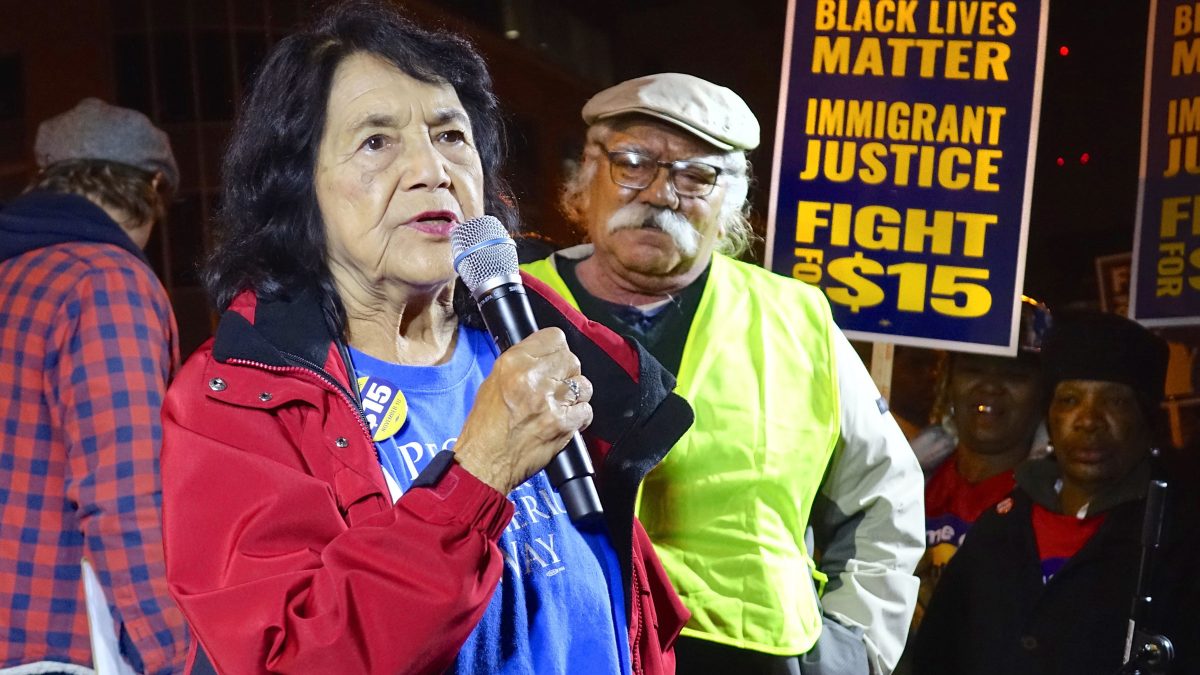
Dolores Huerta, the labour leader and civil rights activist who co-founded the union that became the United Farm Workers, died on Wednesday, 28 October, at the age of 96. Her family announced her death, saying they were “deeply saddened” and asked for privacy, and said they would share plans to celebrate her life and legacy. According to NBC Bay Area, she was born Dolores Clara Fernández in Dawson, New Mexico, in 1930 and raised in the San Joaquin Valley and Stockton, California. She is survived by 13 children and by the foundation that bears her name in Bakersfield. Community members gathered in Stockton to honour her.
The case for her place in American history rests on what she built. After working as a teacher, she went to Delano and, in 1962, co-founded the National Farm Workers Association with César Chávez, which later became the United Farm Workers of America after merging with a Filipino-led group. From 1965 to 1970, the union organised the Delano grape strike, which ended with major gains for farmworkers’ labour rights. Huerta said about 17 million Americans stopped eating grapes during the boycott that began in 1968. She said she coined the phrase “¡Sí, se puede!” in Arizona in 1972, during a 25-day water-only fast by Chávez, in reply to people who said “No se puede”. She later became a leading voice for women’s rights and immigrant rights, and her foundation works on issues including the school-to-prison pipeline. Journalist Maria Hinojosa said of her, “She was a fighter.”
The case for a fuller account is that her story, and the movement’s, is more complicated than the tributes alone suggest. In March 2026, after The New York Times published an investigation into sexual abuse by Chávez of women and girls in the farmworkers’ movement, Huerta said publicly that he had raped her. NBC Bay Area reports that she said she had two children as a result and sent them to live with family and friends. According to Democracy Now, her account of those events changed across her interviews with Hinojosa, and she had defended Chávez for decades, once saying that speaking out would hurt the movement. The slogan she says she coined is often credited to Chávez, and a 2017 documentary quotes Angela Davis crediting it to Huerta. In that film, Huerta said she “left a couple of my children behind” during her activism.
Her death matters because she was a leading figure of the generation that built the modern farmworker movement, and because the way she is remembered now includes a more complete account of that movement’s history. Her life links labour organising to the rights of women and immigrants, and her disclosure of abuse brought a painful part of that history into public view. Her foundation continues her work on education, environmental and economic issues.
Dolores Huerta spent more than six decades fighting for people who worked the land, and in her final year she spoke publicly about the harm done inside the movement she helped create. Her words, “Sí, se puede”, remain her best-known legacy.