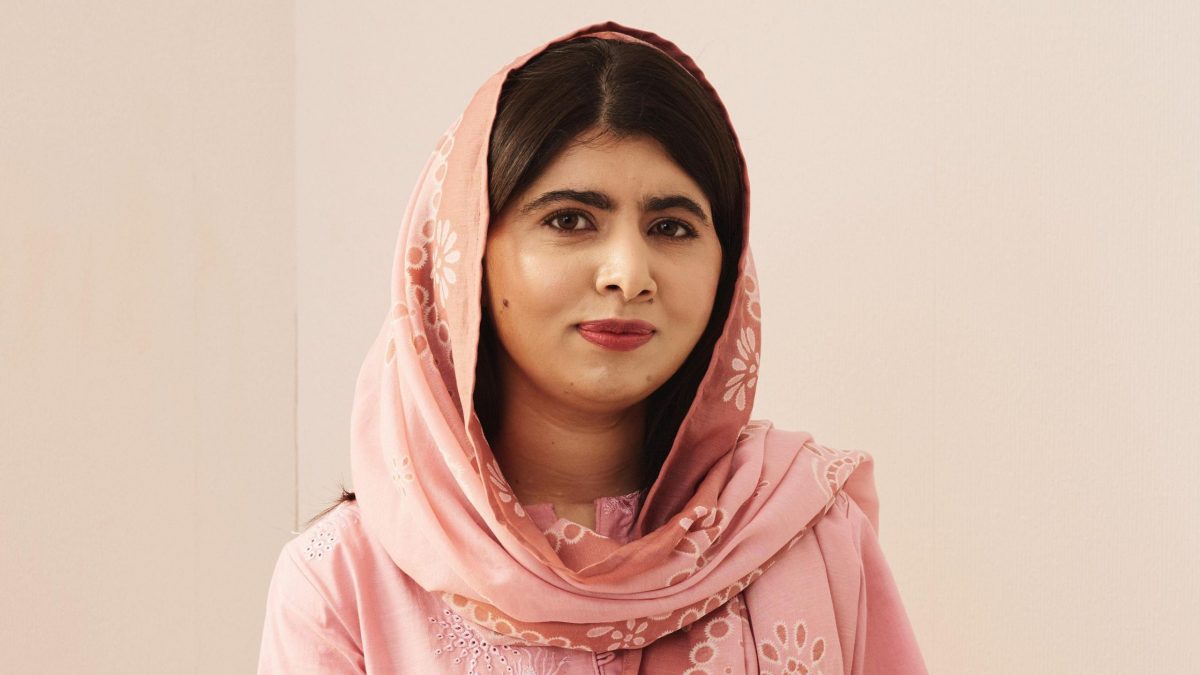
Malala Yousafzai (born 12 July 1997) is a Pakistani activist for female education and the youngest person ever to receive a Nobel Prize. She became known as a schoolgirl in the Swat Valley who spoke out against Taliban restrictions on education, and in 2012 she survived being shot by a gunman. In 2014, at the age of 17, she shared the Nobel Peace Prize with Kailash Satyarthi of India. This biography follows her life and work up to November 2026.
Malala Yousafzai at a Glance
| Full name | Malala Yousafzai |
| Born | 12 July 1997, Mingora, Swat District, Khyber Pakhtunkhwa, Pakistan |
| Age | 29 (as of November 2026) |
| Profession | Education activist, author and co-founder of the Malala Fund |
| Education | Edgbaston High School, Birmingham; Lady Margaret Hall, Oxford (BA in Philosophy, Politics and Economics, 2020) |
| Nobel Peace Prize | 2014, shared with Kailash Satyarthi (she was 17) |
| Organisation | Malala Fund (founded 2013) |
| Books | I Am Malala (2013); Finding My Way (2025) |
| Spouse | Asser Malik (married 9 November 2021) |
Early Life in Swat
Malala was born in Mingora, in Pakistan's Swat Valley, to Ziauddin Yousafzai, an educator who ran a school, and Toor Pekai Yousafzai. She grew up in a family that valued learning, and her father encouraged her to speak up for girls' right to go to school. When the Taliban gained control of parts of Swat and began banning girls from attending school, she kept studying.
The Gul Makai Diary and Early Activism
On 3 January 2009 the BBC Urdu website published the first entry of a diary by a schoolgirl writing under the pseudonym Gul Makai, which described life under Taliban rule. The diary ran until 12 March 2009, and she was later revealed to be its author. She went on to give interviews and speak out in public about girls' education, which made her a target.
The 2012 Attack
On 9 October 2012, when she was 15, a Taliban gunman boarded her school bus in Swat and shot her. Two other girls were also wounded. She was first treated in Pakistan and then flown to the United Kingdom on 15 October 2012 for treatment at the Queen Elizabeth Hospital in Birmingham, where she recovered and where her family settled. The attack prompted international condemnation.
Nobel Prize and the Malala Fund
In 2013 she published the memoir I Am Malala and co-founded the Malala Fund. The organisation works for a world in which every girl can complete 12 years of education, and says that it has made more than 400 grants. Its focus countries are Afghanistan, Brazil, Ethiopia, Nigeria, Pakistan and Tanzania.
In October 2014 the Norwegian Nobel Committee awarded her the Nobel Peace Prize jointly with Kailash Satyarthi for their struggle against the suppression of children and young people and for the right of all children to education. At 17 she was the youngest Nobel laureate in any category, and she said in her Nobel Lecture that she would give the prize money to the Malala Fund.
Education and Later Work
She finished secondary school at Edgbaston High School in Birmingham in 2017 and was awarded honorary Canadian citizenship in the same year, when she addressed the House of Commons of Canada. She then studied Philosophy, Politics and Economics at Lady Margaret Hall, Oxford, and graduated in 2020. After the Taliban retook Afghanistan in August 2021 she condemned the ban on girls' secondary education and has urged world leaders to hold the Taliban to account. In 2025 she published a second memoir, Finding My Way.
Personal Life
Malala married Asser Malik, who works for the Pakistan Cricket Board, in Birmingham on 9 November 2021.
## Legacy
Malala has turned a personal story of survival into a global campaign, and her Nobel Prize at 17 made her a symbol of the right of every girl to an education. Her work continues through the Malala Fund and through her campaigning for Afghan girls, whose access to secondary education she has urged world leaders to defend.