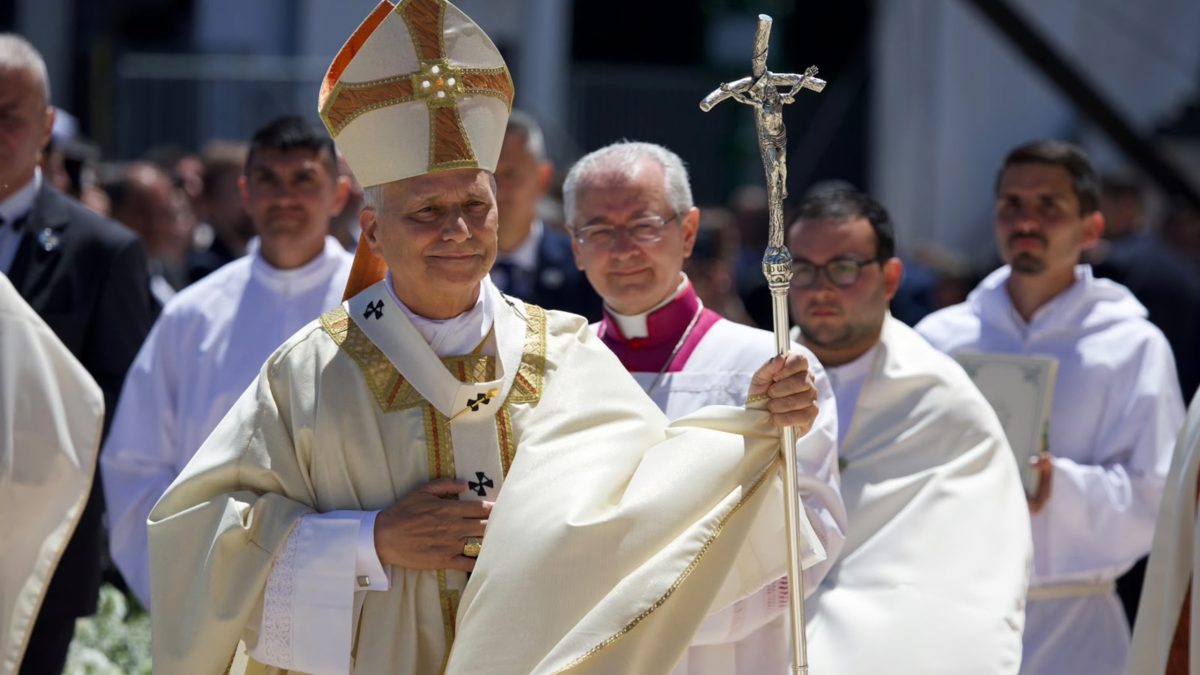
Pope Leo XIV celebrated an open-air Mass in Buenos Aires on this week's visit to Argentina, drawing about 2.5 million people, according to the Vatican, which called it the largest event of his papacy. Buenos Aires city officials gave a lower figure of more than two million, according to AFP. The visit is the second stop on a 12-day tour of Latin America, which the pope began only three weeks after surgery to remove a lung tumour. The Vatican says his doctors report that the cancer has not spread. It is also a homage to his predecessor Francis, who never returned to his native Argentina during his papacy.
The argument that the pope's message deserves attention starts with the latest poverty data. Speaking as he arrived, Leo said the economy "must be at the service of the people, rather than people being at the service of the economy" and urged particular concern for those affected by illness, dependency and disability, a veiled reference to cuts in disability assistance. The national statistics bureau INDEC reported in September that 32.3 percent of people were living in poverty in the first half of 2026, up 4.1 percentage points from 28.2 percent at the end of 2025. Extreme poverty rose 1.2 points to 7.5 percent, and 9.7 million people were counted as poor in the 31 urban areas surveyed. Church leaders have long said that President Javier Milei's cuts to public spending hit the poorest hardest.
The government's counter-argument is that its policies have cut poverty sharply since the crisis it inherited, and that the recent rise is a setback rather than a failure. According to INDEC figures reported by the Buenos Aires Times, poverty stood at 52.9 percent in the first half of 2024, after runaway inflation at the end of the previous government, and fell to just over 28 percent in the second half of 2025, the lowest level since 2018. In the year-on-year comparison, the latest rate is only 0.7 points higher. Milei answered the pope by saying his government was working to avoid "punishing the Argentines of tomorrow in order to benefit the Argentines of today", and in his welcome speech he defended the rights to life, liberty and property as the backbone of the constitution. He also struck a conciliatory tone, calling Francis an "exceptional figure" and "undoubtedly the most important Argentine in history", despite having once called him "evil on earth".
The visit matters for Argentina's politics because Milei, who has said he will seek re-election next year, has staked his government on austerity,, and the Catholic Church has denounced the cuts. The pope also asked leaders to show "a willingness to listen" and to make "careful use of words", which the BBC read as an apparent rebuke of Milei's combative style. Milei is a strong supporter of US President Donald Trump, who has criticised Leo for opposing the Iran war, so the visit also touches a wider argument about the pope's role in global politics.
The crowd in Buenos Aires showed that the pope's voice still carries weight with ordinary Argentines, while the poverty figures show why the economic argument is not settled. Milei can point to the progress since 2024, and the pope can point to the 9.7 million people in poverty, and both claims rest on official numbers.