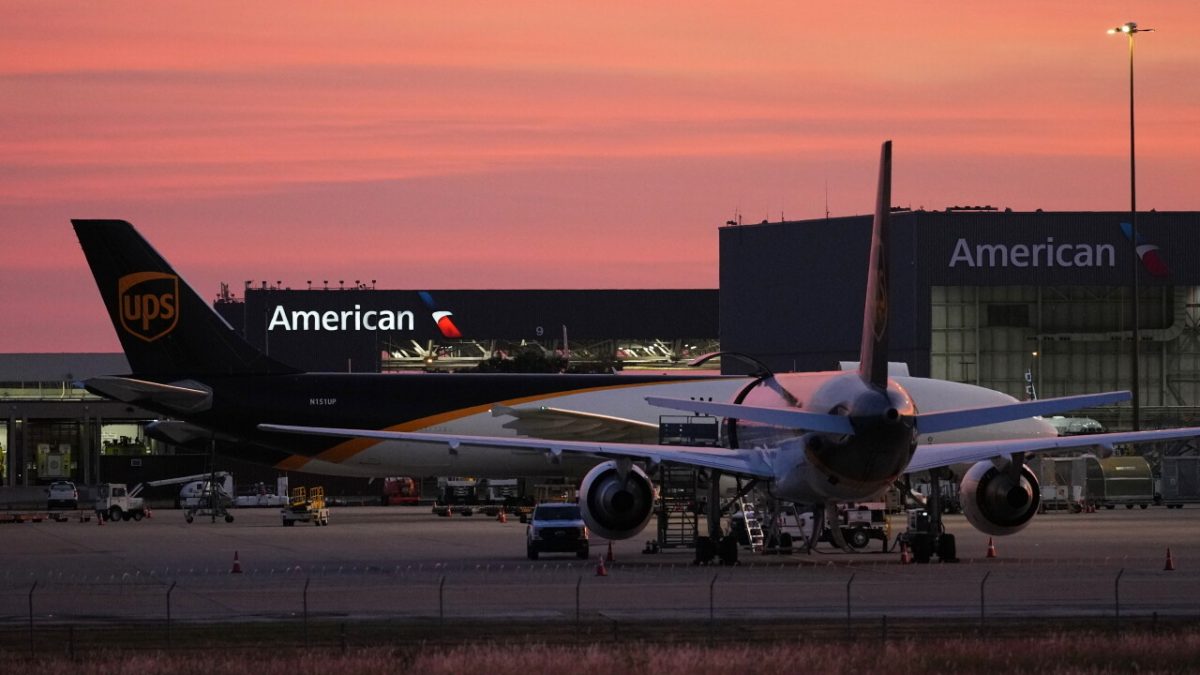
The United States briefly stopped flying on Friday. At 3:54pm Eastern Time, the Federal Aviation Administration ordered a nationwide ground stop of all departing flights, citing "extraordinary circumstances" tied to a communication issue affecting air traffic control centres. The order was lifted at 8:15pm ET after more than four hours, the longest nationwide stoppage since the attacks of 11 September 2001 and only the second since that day, according to the BBC and NPR. Homeland Security Secretary Markwayne Mullin said there was no indication of an attack and that "everybody's safe," and Transportation Secretary Sean Duffy said the airspace had been reopened but that recovery would be slow. The cause, officials said, was not a hostile actor but an ageing communications system that could not cope.
The scale of the disruption was large. According to the BBC, citing FlightAware, Friday's stoppage led to more than 8,500 delayed and nearly 8,000 cancelled flights, although the figures varied between trackers and over the course of the evening: NPR reported more than 8,000 delays and 7,000 cancellations as of 9pm ET, and Al Jazeera, citing FlightRadar24, reported more than 4,700 cancellations and 10,000 delays. More than 3,500 aircraft were in the air when the order came; those flights were allowed to continue to their destinations, while some were diverted. Aviation analytics firm Cirium said that after 4pm ET about 11,000 flights carrying more than 1.5 million passengers were still scheduled to depart, and that by 7:05pm at least 827 flights had been diverted, of which 670 returned to their departure airports and 157 landed elsewhere. The effects spread abroad: Eurocontrol suspended all US-bound air traffic from its 42 member states at the FAA's request, Sydney airport grounded US-bound flights, and Air Canada cancelled flights between Canada and the United States.
The government's explanation was blunt. Mr Duffy told a news conference that a legacy air traffic control communications system became overloaded. "This is analogue telecom. Our switches, our routers actually got overloaded with data and they went down," he said, adding that the failure affected both communications and radar, although he said it did not amount to a total loss of either. "We have old switches, old routers. We use 1980s little copper lines," he said. He argued that the system needs a complete overhaul, put the price at $50 billion, and warned: "It's going to continue to fail." Mr Mullin said new technology introduced into the old system had overwhelmed it, and that there was "zero evidence" of a cyber-attack. He also ruled out any link to the global Microsoft outage that began on Thursday. The FAA said the problem affected the Air Route Traffic Control Centres, the regional facilities that handle high-altitude traffic.
Outside experts partly support that account. Todd Curtis, an aviation safety expert and chief executive of AirSafe.com, told Al Jazeera that the failures appeared concentrated in the country's air route traffic control centres, of which there are 21 across the United States. Tony Stanton, a former senior executive at Australia's Civil Aviation Safety Authority, pointed to a Government Accountability Office report published in September that warned of ageing copper cables dating back to the 1960s and cautioned that delays in modernising the system could lead to further disruptions. According to that report, as described by Mr Stanton, the FAA was prioritising speed in making changes and not scheduling them properly, so that switches often happened at the same time and could overwhelm the system. Officials conceded on Friday that new technology being added to the system had overloaded antiquated parts of it. In other words, the argument for the official diagnosis is that the warning signs had been published and the explanation matches them.
There are, however, reasons for caution. When reporters pressed Mr Duffy on exactly why the systems would be overwhelmed on an otherwise normal travel day, he did not have a ready answer, NPR reported, and the FAA's own leaders did not brief the media at the White House news conference or provide further technical detail. A former FAA official told Al Jazeera that "nobody really knows what is going on." One company, Air Space Intelligence, which makes an AI-enhanced tool called SMART that the FAA has recently begun rolling out, publicly stated that the ground stop was not caused by its system or any of its products. Senator Richard Blumenthal called for a "prompt, penetrating investigation," saying a communications outage of that scale is "a clear danger to national security" as well as to safe and convenient travel close to the holidays. The 2023 precedent is a reminder that early explanations can change: that stoppage, caused by a failure in the Notice to Air Missions system, lasted one hour and 52 minutes, delayed about 9,500 flights and cancelled about 1,300, according to aviation expert Guy Gratton, and was initially feared to be a cyber-attack before the FAA determined that contract workers had inadvertently deleted critical files.
For travellers, the human cost was immediate and unevenly managed. Mr Duffy said tens of thousands of people were stranded, many "without any knowledge of where they're going to sleep tonight," and warned that the ripple effect would last for a few days. Delta and United said they were resuming operations, American Airlines said it was focused on flying as many remaining flights as possible, and JetBlue said it would restart on Saturday morning. At Dallas Fort Worth, Regina Harling, who was travelling to San Diego for a family emergency, said she learned of the nationwide grounding only by checking the news on her phone, long after her scheduled departure. A passenger at Los Angeles airport who had travelled from New Zealand told Al Jazeera that the lack of information was what bothered him most, saying "please just let us know what's going on." The problem was made worse by the fact that Thursday had already brought nearly 7,000 flight delays, according to NPR.
Why does it matter? Because this is a systems problem, not a one-day story. Air travel in the United States depends on layers of communication between pilots and controllers, and on centres that hand aircraft from one to the next. If the underlying network is built on decades-old copper and routers that can be overloaded, then every upgrade, every new tool and every busy holiday weekend becomes a potential stress test. Mr Duffy's $50 billion figure will become a political marker in the debate over how much Congress is willing to spend, how fast modernisation can safely happen and who is accountable when it fails. The fact that a cyber-attack was quickly ruled out by the Homeland Security secretary is reassuring, but it also means the cause is something the government could have prevented.
The practical conclusion is straightforward. The airspace is open, the planes are moving, and the backlog will take days to clear, but the questions remain. Independent investigators will want to know why the overload happened on this particular afternoon, what role the new technology played, and why passengers received so little information. Lawmakers from both parties are likely to press for answers, with the holiday travel season approaching and the memory of Friday still fresh. Until the equipment is replaced, officials themselves have said the system could fail again, which is the clearest argument for treating this outage as a warning rather than an anomaly.