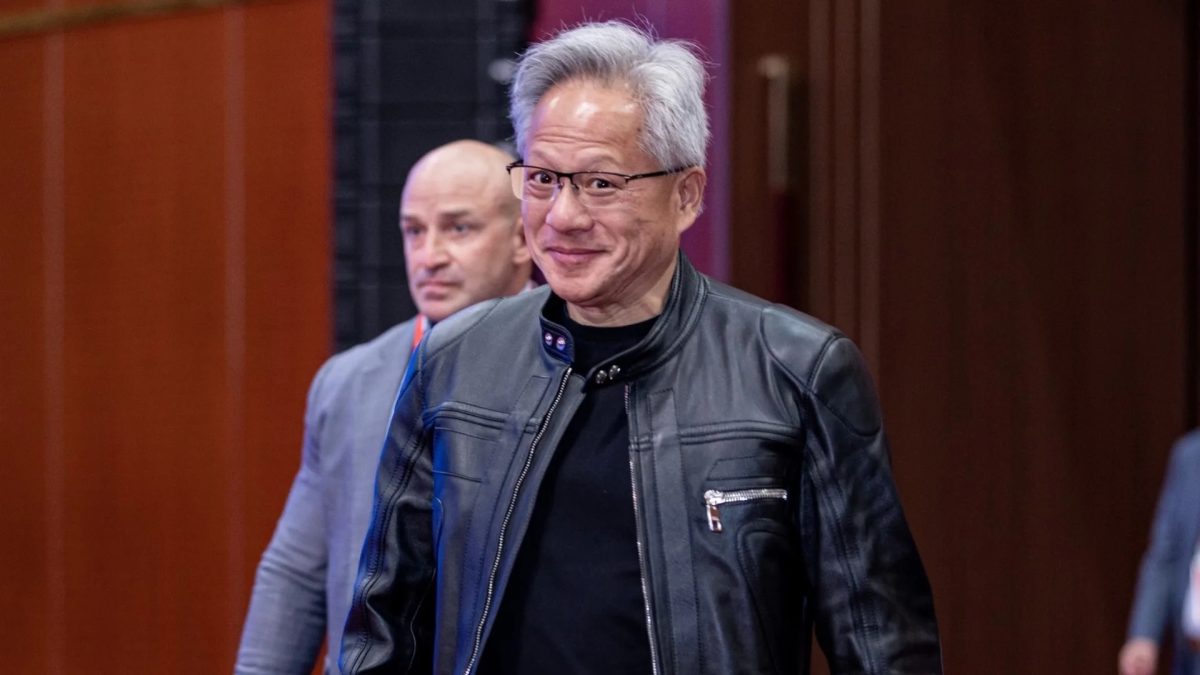
One of the world's most valuable companies is now looking for a new leader. Jensen Huang, the co-founder who has been Nvidia's public face since 1993, resigned abruptly as chief executive on Thursday after reports of extramarital affairs, one of them with a businesswoman suspected of links to Chinese intelligence. Nvidia has lost $550bn (£415bn) in stock market value in five days, according to the BBC, and shares opened more than 13% lower in New York shortly after the resignation was announced. Chief financial officer Colette Kress is running the company on an interim basis. What began as a personal scandal has widened into a corporate governance question, a national security inquiry and a rare public dispute inside President Donald Trump's cabinet over how to control exports of artificial intelligence chips to China.
The facts as reported so far are these. Mr Huang admitted on Sunday that he had been "unfaithful" to his wife, after reports of a relationship with Alice Huang, who is of no relation and was an executive at Singapore-based firm Megaspeed. The New York Times reported that she is suspected of being an intelligence asset for China, an allegation Beijing has rejected as a smear. US Attorney General Todd Blanche said on Thursday that the Justice Department had not yet drawn conclusions about whether she was engaged in espionage. On Wednesday, US media reported a second relationship, with a long-time Nvidia executive who reported directly to him. Nvidia said it launched an independent investigation into whether its chief executive had been "the target of a foreign intelligence effort", and its board has said it has "no reason to believe that either national security or Nvidia secrets were compromised." Those statements remain unproven either way, and the BBC notes that an investigation is still under way.
The argument that the affair is a national security matter rests on Mr Huang's access. According to the BBC, he was one of the few business leaders with direct access to the US president, had met Mr Trump repeatedly, travelled with him to Britain, and joined him on Air Force One for his trip to China in May. Washington has restricted exports of Nvidia's most advanced processors to China since 2022 on the view that they could help Beijing's military and technological development. Mr Huang has long argued that the restrictions are counterproductive because they shut Nvidia out of a huge market and encourage Chinese firms to build their own alternatives, and Mr Trump appeared sympathetic: last year he allowed Nvidia to resume sales of certain chips to China in return for a share of the revenue, although the most advanced Blackwell chips remain off limits. The possibility that a foreign intelligence operation was targeting someone with that kind of influence over the policy debate is what has alarmed lawmakers.
The fallout has moved to Commerce Secretary Howard Lutnick, whose department controls exports of sensitive technology. Megaspeed is an Nvidia customer suspected of helping divert advanced chips to China, and the BBC reports that a highly classified memo about concerns around Alice Huang and Megaspeed was shared with Mr Lutnick, who resisted taking action against the company. Treasury Secretary Scott Bessent told CNBC that several government agencies "were in favour of putting Megaspeed on the entity list for months," but that "Commerce has the pen," and that he was "frustrated" by delays and by reports of chips leaking into China. The Financial Times separately reported that the department was delaying efforts to add the firm to the list. Mr Bessent also pointed at Nvidia itself, saying the real question was "did Nvidia know their client" and whether the company made a robust effort to ensure it was not selling to "obviously pass-through shell companies." Megaspeed's chief executive, Tan Yong Pong, said the company takes its compliance obligations "extremely seriously" and has cooperated with Commerce Department inspections. Mr Lutnick's department told US media he had "proactively" agreed to testify.
Congress is moving quickly. Senator Tim Scott, the Republican chairman of the Senate Banking Committee, has asked Mr Huang to appear voluntarily on 3 December, warning that the panel could subpoena him, and has asked Mr Lutnick to appear in December. Three House committees, covering intelligence, foreign affairs and China, have asked Mr Huang for a closed-door interview on 1 December. Democrats Richard Neal and Ron Wyden are opening investigations into how Nvidia was allowed to sell chips to Chinese companies; they say the advanced H200 chips could be sold to Chinese firms if first imported from Taiwan into the United States for inspection, subject to a 25% tariff under a section of the Trade Act that they argue is meant to address imports that risk national security. They say Mr Trump's use of that law "appears to have done the opposite." Republican John Moolenaar, who chairs the House Select Committee on China, said companies "should never jeopardise our nation's security" by giving Chinese firms access to their most advanced chips, and Senator Elizabeth Warren said Mr Huang's resignation "did not absolve him of responsibility."
The business question is who leads Nvidia next. Ms Kress, who has more than 30 years in the industry, including time at Cisco and Microsoft, has fronted every earnings call alongside Mr Huang and is seen by eToro analyst Josh Gilbert as a "familiar and trusted voice for the market at a time when it badly needs one," although he suggested the board might want an engineer. Co-founder Chris Malachowsky and high-performance computing chief Ian Buck have been named as possible engineering-focused candidates, and external names such as Arm chief executive Rene Haas have also been mentioned by analysts. Mr Trump suggested on Truth Social that Tim Cook, who the BBC describes as Apple's former chief executive, should take the job, writing that "a Legend replaces a Legend." Analysts said Nvidia is likely to favour an internal appointment initially. Several major investment firms have downgraded their forecasts for the chip giant, a rare shift given investors' long-standing optimism.
Why does it matter? Nvidia's processors are widely regarded as the gold standard for AI development, which means the company sits at the centre of both the AI boom and the US-China technology rivalry. Ten Cap portfolio manager Jun Bei Liu said the issue "is no longer simply about personal conduct" but about "corporate governance, national security concerns and maintaining confidence in the leadership of one of the world's most strategically important companies." The episode has also embarrassed the administration by exposing a disagreement over China policy: Mr Huang wanted market access, other officials worried about the national security consequences, and Mr Lutnick was caught between them.
The outcome will turn on facts not yet established. If the independent inquiry and the Justice Department find no compromise of secrets, the story may settle into a governance case study about key-person risk. If investigators find that sensitive information or export controls were affected, the consequences could reach well beyond one company, into licensing rules, enforcement priorities and congressional oversight of AI chip sales. Either way, the next three weeks of hearings and interviews will decide how much of this scandal is about one executive and how much is about a system that allowed advanced chips to flow towards China.