The partition of India in 1947 was the division of British India into two independent dominions, the Union of India and the Dominion of Pakistan. The Union of India is today the Republic of India, and the Dominion of Pakistan is today the Islamic Republic of Pakistan and the People's Republic of Bangladesh. The partition involved the division of two provinces, Bengal and the Punjab, on the basis of district-wide non-Muslim (mostly Hindu and Sikh) or Muslim majorities. It also involved the division of the British Indian Army, the Royal Indian Navy, the Indian Civil Service, the railways and the central treasury between the two new dominions. The partition was set out in the Indian Independence Act 1947 and resulted in the end of the British Raj, or Crown rule in India. India and Pakistan legally came into existence at midnight on 14-15 August 1947.
The Human Cost
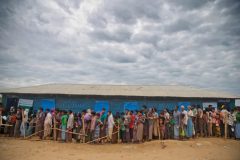
The partition displaced between 12 and 20 million people along religious lines, creating overwhelming refugee crises as a result of the mass migration and population transfer across the newly constituted dominions. There was large-scale violence, and estimates of the loss of life before, during and after the partition are disputed; as of 2009 the estimates still varied between 200,000 and two million. The violent nature of the partition created an atmosphere of hostility and suspicion between India and Pakistan that plagues relations between the two countries to the present day.
The Princely States
The Indian Independence Act provided that the princely states were released from their subsidiary alliances and other obligations to the British, while the British withdrew from their obligations to the states, leaving the rulers to decide whether to accede to India or Pakistan or to remain independent outside both. Sardar Patel said in a speech in January 1948 that "on the lapse of Paramountcy, every Indian State became a separate independent entity". The political integration of the princely states into the two new dominions began with many accessions in August 1947, but mostly followed later. Critically, the rulers of the states of Hyderabad, Jammu and Kashmir and others chose independence.
What Partition Did Not Include
The term partition of India does not cover the earlier separations of Burma, now Myanmar, and Ceylon, now Sri Lanka, from the administration of British India. It does not cover the incorporation of the enclaves of French India into India between 1947 and 1954, or the annexation of Goa and other districts of Portuguese India in 1961. The secession of Bangladesh from Pakistan in 1971 was a later partition of Pakistan, not of India.
Roots: The Partition of Bengal in 1905
The Bengal Presidency was a large administrative unit in British India. In 1905 the Viceroy, Lord Curzon, split it into the Muslim-majority province of Eastern Bengal and Assam and the Hindu-majority province of Bengal. The Swadeshi campaign, a boycott of British goods, and the slogan "Bande Mataram" drove the protests against the decision, and some of the protesters resorted to political violence, bombing public buildings and assassinating British officials. The overwhelming, predominantly Hindu protest against the partition of Bengal, along with the fear of reform of the political system, helped to shape the politics of the following decades.
The Idea of Pakistan
In 1933 Choudhry Rahmat Ali produced a pamphlet, Now or Never, in which the term Pakistan, "land of the pure", was coined for the first time, comprising the Punjab, North West Frontier Province, Kashmir, Sindh and Balochistan. It attracted little political attention, and a Muslim delegation to the Parliamentary Committee on Indian Constitutional Reforms dismissed the idea as "chimerical and impracticable". The Government of India Act 1935 introduced provincial autonomy and increased the number of voters in India to 35 million, and for the first time law and order were devolved from British authority to provincial governments headed by Indians, which increased Muslim anxieties about eventual Hindu domination. In the 1937 provincial elections, the Congress, with 716 wins in the total of 1,585 provincial assembly seats, was able to form governments in seven of the 11 provinces of British India, and the Muslim League did best in Muslim-minority provinces. The 1937 elections also showed the limits of the Congress approach: it contested just 58 of the 482 Muslim seats and won only 26, and in the United Provinces, where it won, it offered to share power with the League on condition that the League stopped functioning as a representative of Muslims only, which the League refused, a refusal that further alienated Congress from the Muslim masses. In March 1940, at the League's annual session in Lahore, Muhammad Ali Jinnah gave a two-hour speech in English laying out the arguments of the two-nation theory.
Towards Independence
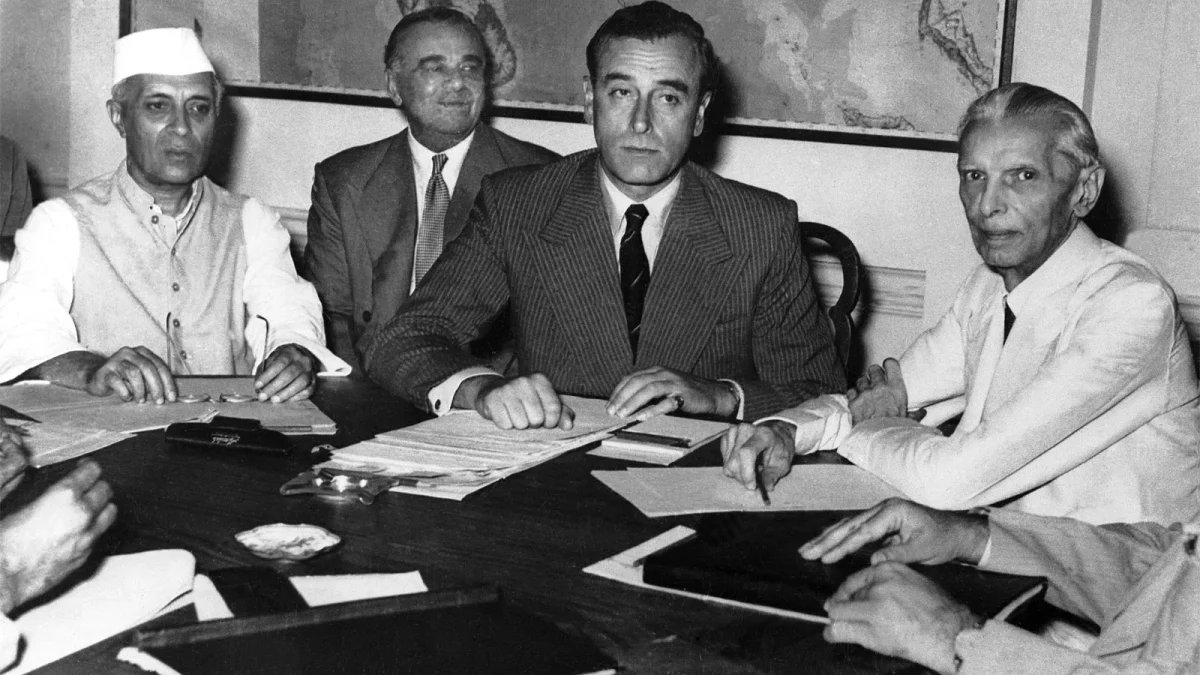
Late in 1945 the British government decided to end the Raj, and in early 1947 Britain announced its intention to transfer power no later than June 1948. A Cabinet Mission was sent to India, led by the Secretary of State for India, Lord Pethick-Lawrence, and including Sir Stafford Cripps, but the plan it proposed was effectively torpedoed. After it broke down, Jinnah held a press conference in Bombay in July 1946 and the Muslim League called for Direct Action Day in August 1946. Prime Minister Clement Attlee appointed Lord Louis Mountbatten as India's last viceroy, giving him the task of overseeing independence by 30 June 1948 with instructions to avoid partition and preserve a united India, but with adaptable authority to ensure a British withdrawal with minimal setbacks. As violence mounted, Mountbatten advanced the date, allowing less than six months for a mutually agreed plan for independence. When he formally proposed the plan on 3 June 1947, Patel gave his approval and lobbied Nehru and other Congress leaders to accept it.
The Boundary Line
In June 1947 nationalist leaders, including Jawaharlal Nehru, Vallabhbhai Patel and J. B. Kripalani for the Congress and Jinnah, Liaquat Ali Khan and Abdur Rab Nishtar for the Muslim League, agreed to the partition of the country along religious lines. The line dividing Punjab and Bengal became known as the Radcliffe Line.
Why It Matters
The partition created two of the world's most populous states and left a legacy of unresolved disputes, notably over Kashmir, that has marked South Asia for more than seven decades. It also left a scar in the memory of millions of families who were forced to leave their homes, and it has produced a large body of testimony, literature and film. In India, new neighbourhoods such as Lajpat Nagar and Patel Nagar in Delhi, which sprang up to house Hindu and Sikh refugees from West Punjab and the North-West Frontier Province, carry a distinctly Punjabi character to this day.