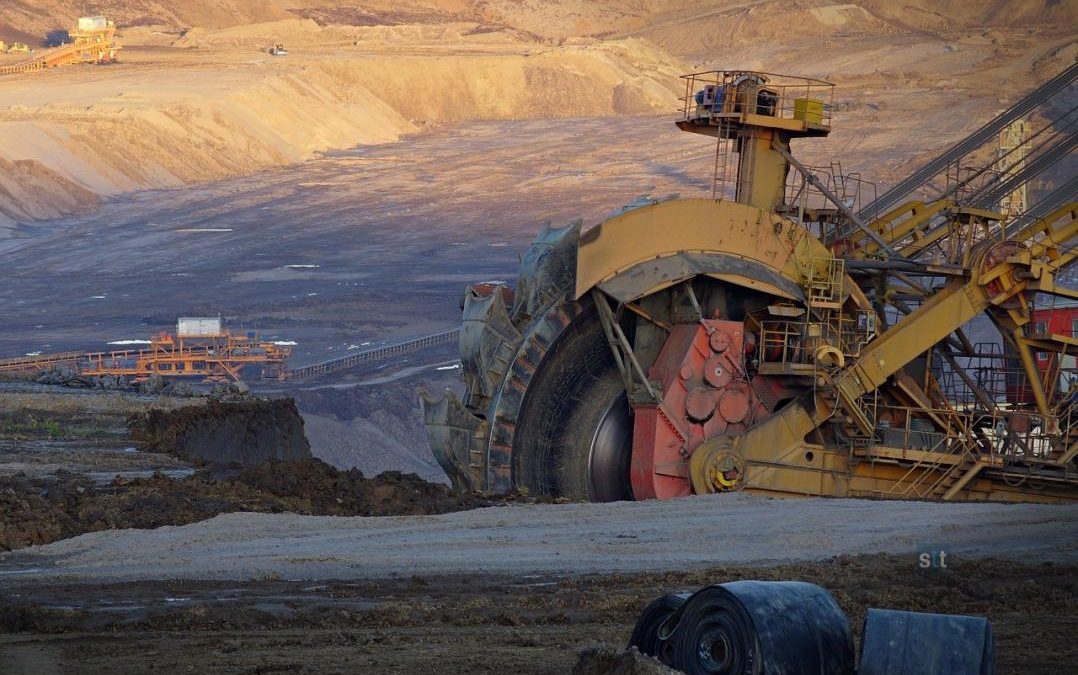
Every few years, a small patch of land somewhere in the world suddenly becomes the center of a very big argument. This week, that patch is Mrima Hill, about 390 acres of forest in Kwale County, close to Kenya’s Indian Ocean coast. Beneath it lies a prize large enough to attract bidders from three continents.
According to the BBC, a US-led consortium called Frontier Minerals has won the tender to develop the Mrima Hill mining project, beating seven bidders, including companies from China and Australia. The site is estimated to hold critical minerals worth more than $60 billion (£45 billion), including niobium, which is used in electric vehicles, aerospace and defense technology.
It is a big win for Washington. It is also, as the first complaints show, far from a settled story.
Who won, and what they say they will do
Frontier Minerals brings together three American companies: Bunker Hill Mining Corp, American Resources Corporation and ReElement Technologies Corporation. The BBC describes the group as combining expertise in mineral resource development, critical materials supply chains and advanced refining technologies.
The most eye-catching part of the pitch is where the work would happen. Frontier says its proposal aims to keep more of the economic benefits in Kenya through “processing and refining of minerals in-country.” That is a deliberate answer to a long-standing African complaint: that raw materials leave the continent cheaply, while the profitable processing and manufacturing happen elsewhere.
Brad Barnett of Frontier Minerals said the company wanted Kenya to capture more value from its mineral resources. “We intend to create lasting opportunities for Kenyan workers, businesses and the wider economy through capacity-building and targeted investment, while prioritising environmental management and performance,” he said, as quoted by the BBC.
Promises are easy to make during a tender and harder to keep afterward, but the emphasis on local refining is worth noticing. It reflects how the conversation about minerals in Africa has changed.
Why this matters beyond Kenya
To understand why the stakes feel so high, it helps to zoom out. China dominates the processing of several key minerals, and the BBC notes that the United States is playing catch-up with China’s dominance in critical minerals mining and processing across Africa. Washington has been pursuing partnerships with mineral-rich African countries, including the Democratic Republic of Congo and Zambia, as it seeks to strengthen supply chains for industries from electric vehicles to defense technology.
Kenya’s mining ministry, for its part, says the sector is an important part of its plan to diversify the economy beyond traditional sources of revenue such as tourism, agriculture and financial services.
Put those two things together and you can see the logic from both sides. The United States wants reliable alternatives to Chinese supply. Kenya wants new industries and new revenue. Mrima Hill is where those ambitions meet.
The part that is not finished yet
It would be a mistake to treat this as a done deal. The consortium must still obtain a prospecting licence and meet the necessary regulatory requirements before the project can proceed.
And the tender itself is already being challenged. The BBC, citing Reuters, reports that two rival companies intend to challenge the selection, with Australia’s RareX alleging that Frontier Minerals missed an earlier submission deadline. Kenya’s government has maintained that the process was open and transparent.
Disputes over tenders are common in the resource sector, and many are resolved without drama. But in a project this valuable, a legal fight can drag on, and it can shape how investors and communities view the entire arrangement.
The people who live next to the hill
It is easy, when you are talking about billions of dollars, to forget that somebody lives nearby. The BBC reports that the prospect of mining in the area has raised concerns among local residents, who fear the project could damage the forest and threaten their ancestral heritage. There are also questions over whether communities living near the site will benefit from the investment.
Those are not minor worries. A forest is not just trees; for people who have lived beside it for generations, it can be a place of memory, ritual and livelihood. Residents have a right to ask what they will actually receive in return for what they might lose, and whether that deal will be written down or only spoken.
Frontier’s promise of environmental management and local opportunity answers some of these concerns in principle. The test will be in the detail: independent environmental assessments, transparent agreements with local communities, and clear commitments on jobs and compensation. Without those, the best slogans in the world will ring hollow in Kwale.
A pattern across Africa
Kenya is not alone in facing this kind of moment. Across the continent, governments are being courted by powers that want access to minerals needed for batteries, wind turbines, missiles and microchips. The benefits can be real: investment, infrastructure, jobs. So can the risks: debt, environmental harm, and the sense that the same extraction story is being retold with new characters.
The phrase that African leaders increasingly use is “value addition,” meaning that countries want to process their own materials rather than just ship them out. Frontier’s promise of in-country refining speaks directly to that. Whether it is delivered is the question that will decide whether Kenyans see this as partnership or as a new version of an old pattern.
How the competition looks
There is a geopolitical layer, too. The BBC frames the win as part of Washington’s push to compete with China and reduce dependence on Chinese processing. For Chinese companies that lost the bid, it is a setback in a market where they have long been prominent. For the United States, it is a rare headline victory in a contest where it has often been seen as behind.
Still, one contract does not change the global balance. Mining projects take years to move from tender to production, and plenty never get there. The real measure of success will not be who won the bid but who builds a functioning mine, a working refinery and a fair relationship with the neighbors.
What to watch
Whether the consortium secures its prospecting licence and clears the regulatory steps.
How the challenges from rival bidders, including RareX’s claim about a missed deadline, play out.
What binding commitments are made to local communities and the forest.
Whether the in-country processing plan becomes a concrete refinery, with a timeline, a budget and jobs.
The bottom line
Mrima Hill is a good reminder that the clean-energy era and the arms of the future will be built from things dug out of the ground, and that the ground belongs to someone. In this case, it belongs to Kenyans, many of them living within sight of the forest in question.
If the project goes ahead, it could bring investment and a new industry. If it is handled badly, it could bring protest, litigation and mistrust. Between those two outcomes lies a long list of decisions that have not been made yet, and the people of Kwale have every reason to be paying close attention.